Africa contributes the least to global emissions yet its children bear the heaviest burden of the climate crisis.
According to the African Committee of Experts on the Rights and Welfare of the Child, millions of children across the continent face hunger, displacement, disease, and loss of education due to floods, droughts, and extreme heat.
Climate change is not gender- or age-neutral. It affects the youngest and most vulnerable most severely especially girls, children with disabilities, and those in rural or conflict-prone regions.
At PROSDOMA, we believe climate justice must include child justice. The voices of Africa’s children are too often unheard. It’s time to center their rights in every climate policy, plan, and budget.
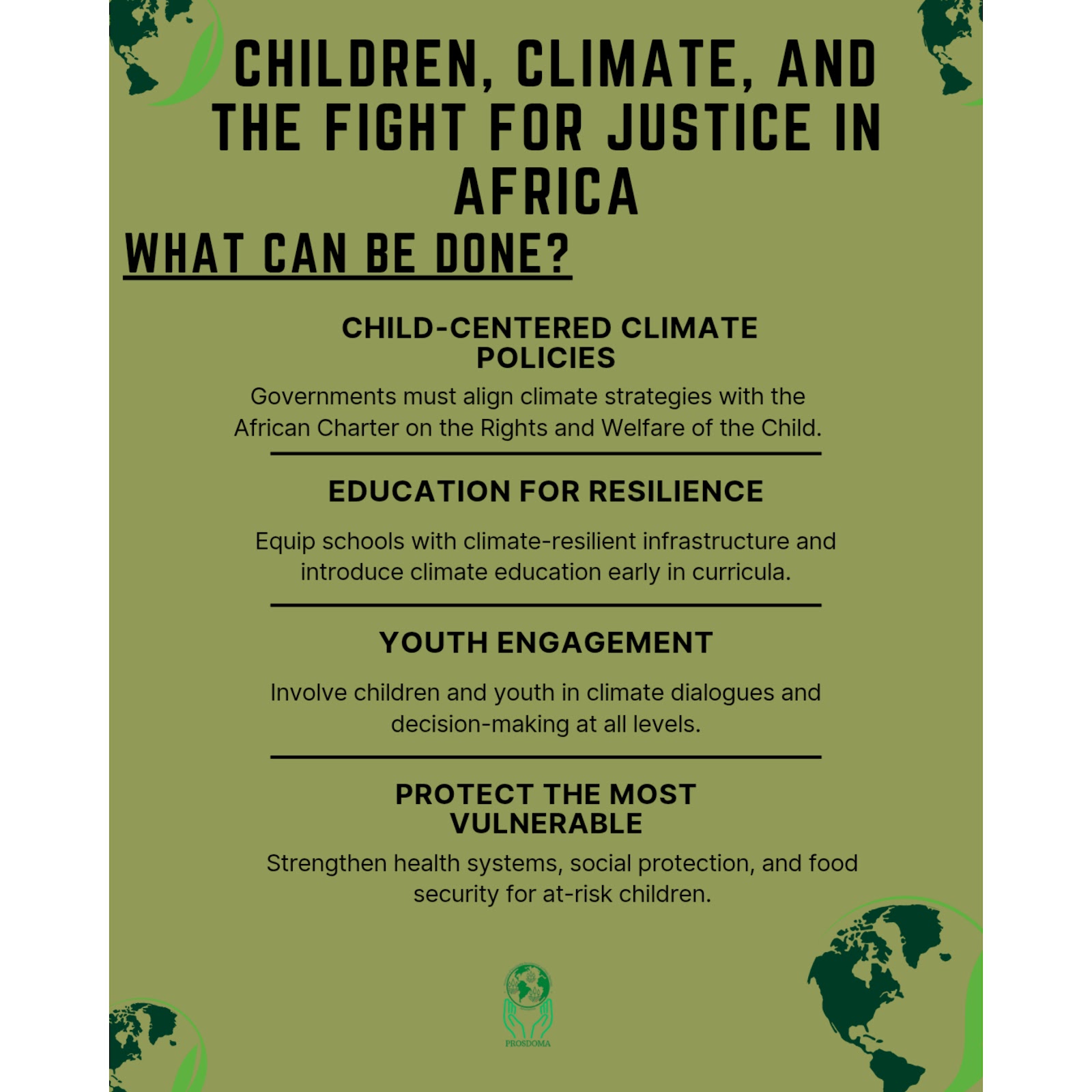
✅ What Can Be Done?
1️⃣ Child-Centered Climate Policies
Governments must align climate strategies with the African Charter on the Rights and Welfare of the Child.
2️⃣ Education for Resilience
Equip schools with climate-resilient infrastructure and introduce climate education early in curricula.
3️⃣ Youth Engagement
Involve children and youth in climate dialogues and decision-making at all levels.
4️⃣ Protect the Most Vulnerable
Strengthen health systems, social protection, and food security for at-risk children.
Climate justice begins with child justice. Let’s fight for a future they can survive and thrive in.
Learn more: www.prosdoma.org
#ChildRights #ClimateJustice #AfricaVoices #SDG13 #SDG16 #Youth4Climate #Prosdoma
by E.D.
Source:
African Committee of Experts on the Rights and Welfare of the Child (2022). Continental Study on Climate Change and Children’s Rights in Africa.
Water is a Human Right But Not Yet a Reality in Africa
Over 300 million people in Africa still lack access to clean drinking water. As we approach 2025, the continent’s “African Water Vision” is more urgent than ever: equitable and sustainable water for all.
1 in 3 Africans lives without reliable access to safe water.
Poor governance and underinvestment deepen inequality.
Women and children walk for hours every day to fetch water.
Water is not just a need, it’s a right. Yet millions are left behind. This is a gendered issue, a climate challenge, and a development emergency.
At PROSDOMA, we echo the African Water Vision’s call to action.
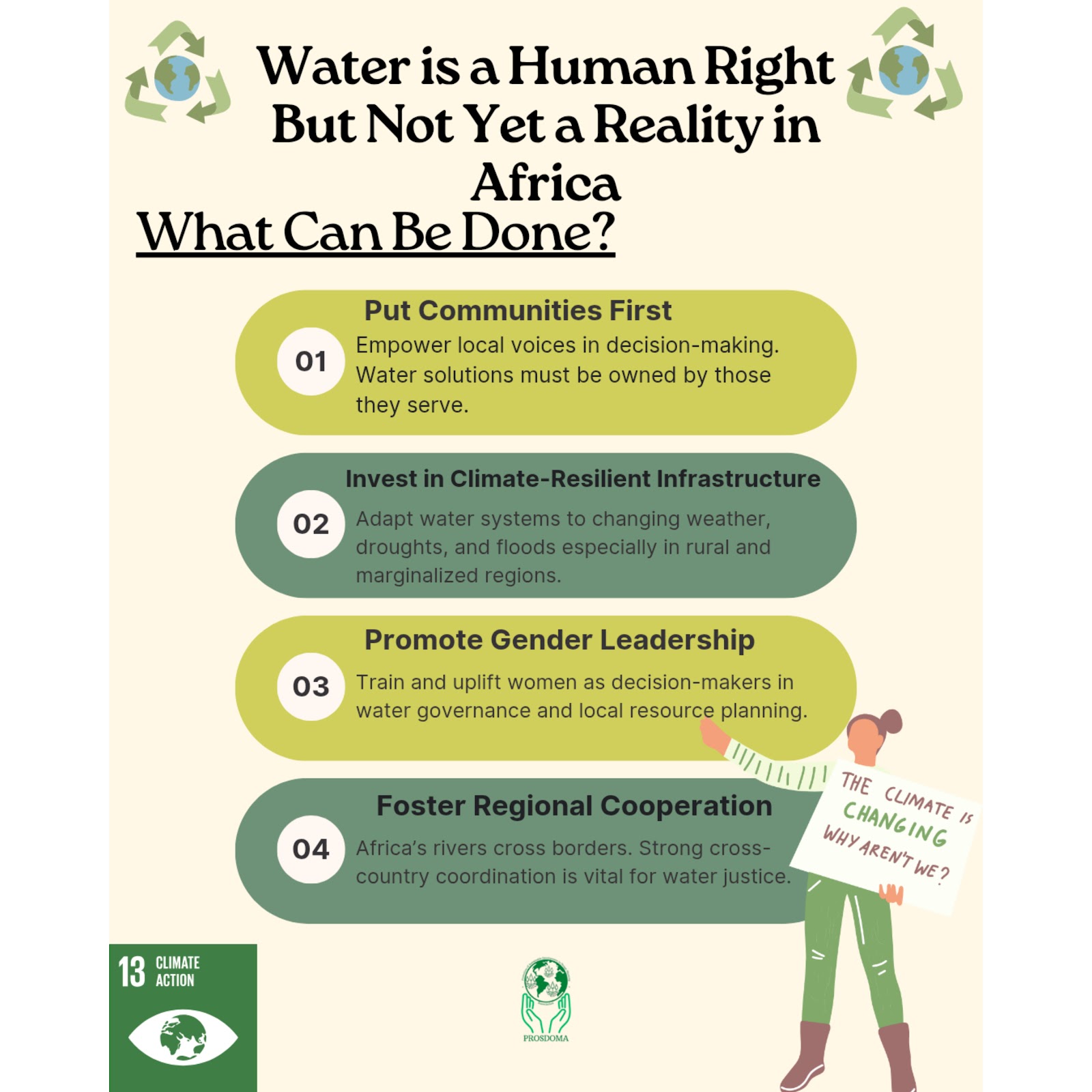
✅ What Can Be Done?
1️⃣ Put Communities First
Empower local voices in decision-making. Water solutions must be owned by those they serve.
2️⃣ Invest in Climate-Resilient Infrastructure
Adapt water systems to changing weather, droughts, and floods especially in rural and marginalized regions.
3️⃣ Promote Gender Leadership
Train and uplift women as decision-makers in water governance and local resource planning.
4️⃣ Foster Regional Cooperation
Africa’s rivers cross borders. Strong cross-country coordination is vital for water justice.
Let’s turn the Vision into Action. The time is now.
Learn more: www.prosdoma.org
#WaterForAll #AfricanWaterVision2025 #ClimateJustice #SDG6 #Prosdoma #WomenAndWater #CleanWaterAfrica #WaterRights
by E.D.
Source:
African Development Bank & UN-Water Africa (2003). African Water Vision 2025: Equitable and Sustainable Use of Water for Socioeconomic Development.
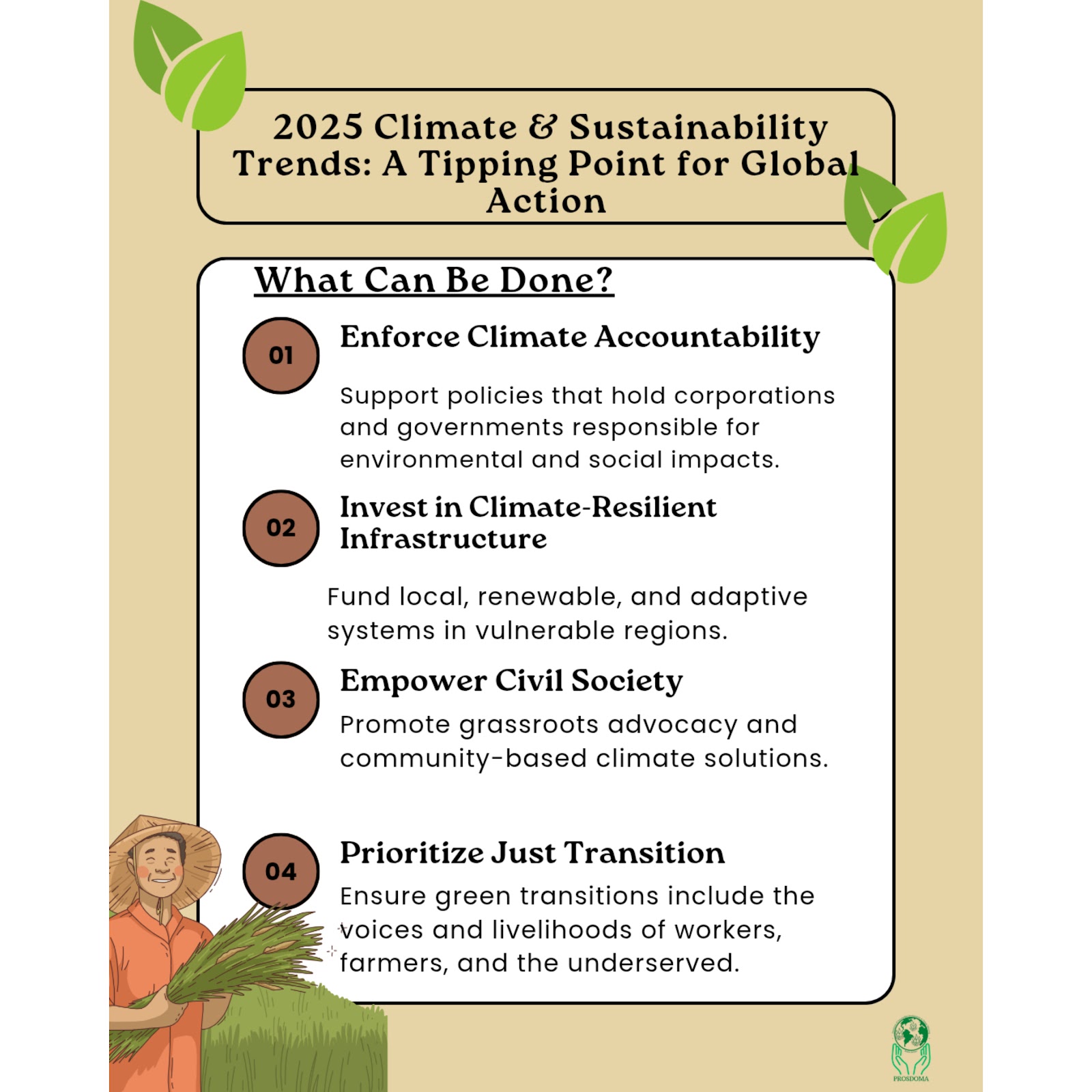
2025 Climate & Sustainability Trends: A Tipping Point for Global Action
The year 2025 is shaping up to be a turning point in sustainability. According to the 2025 Sustainability and Climate Trends report, we are witnessing a simultaneous rise in climate awareness, regulatory pressure, and market demand for sustainable practices but also increasing climate risks and social inequality.
From climate-induced migration to food system disruption, the Global South faces intensified vulnerabilities. Meanwhile, businesses and governments are under mounting pressure to transition toward green economies, ethical supply chains, and inclusive innovation.
The report emphasizes that climate resilience is no longer optional. It’s a necessity — and must include marginalized communities in the solutions.
At PROSDOMA, we believe 2025 must be the year when climate ambition meets social justice. Sustainability isn’t only about emissions, it’s about equity, access, and survival.
✅ What Can Be Done?
1️⃣ Enforce Climate Accountability
Support policies that hold corporations and governments responsible for environmental and social impacts.
2️⃣ Invest in Climate-Resilient Infrastructure
Fund local, renewable, and adaptive systems in vulnerable regions.
3️⃣ Empower Civil Society
Promote grassroots advocacy and community-based climate solutions.
4️⃣ Prioritize Just Transition
Ensure green transitions include the voices and livelihoods of workers, farmers, and the underserved.
Join us in shaping a future that’s not only sustainable — but just.
www.prosdoma.org
#ClimateJustice #Sustainability2025 #EquityInAction #JustTransition #GlobalSouthVoices #Prosdoma
by E.D.
Source:
United Nations Global Compact Network (2025). Sustainability and Climate Trends Paper.
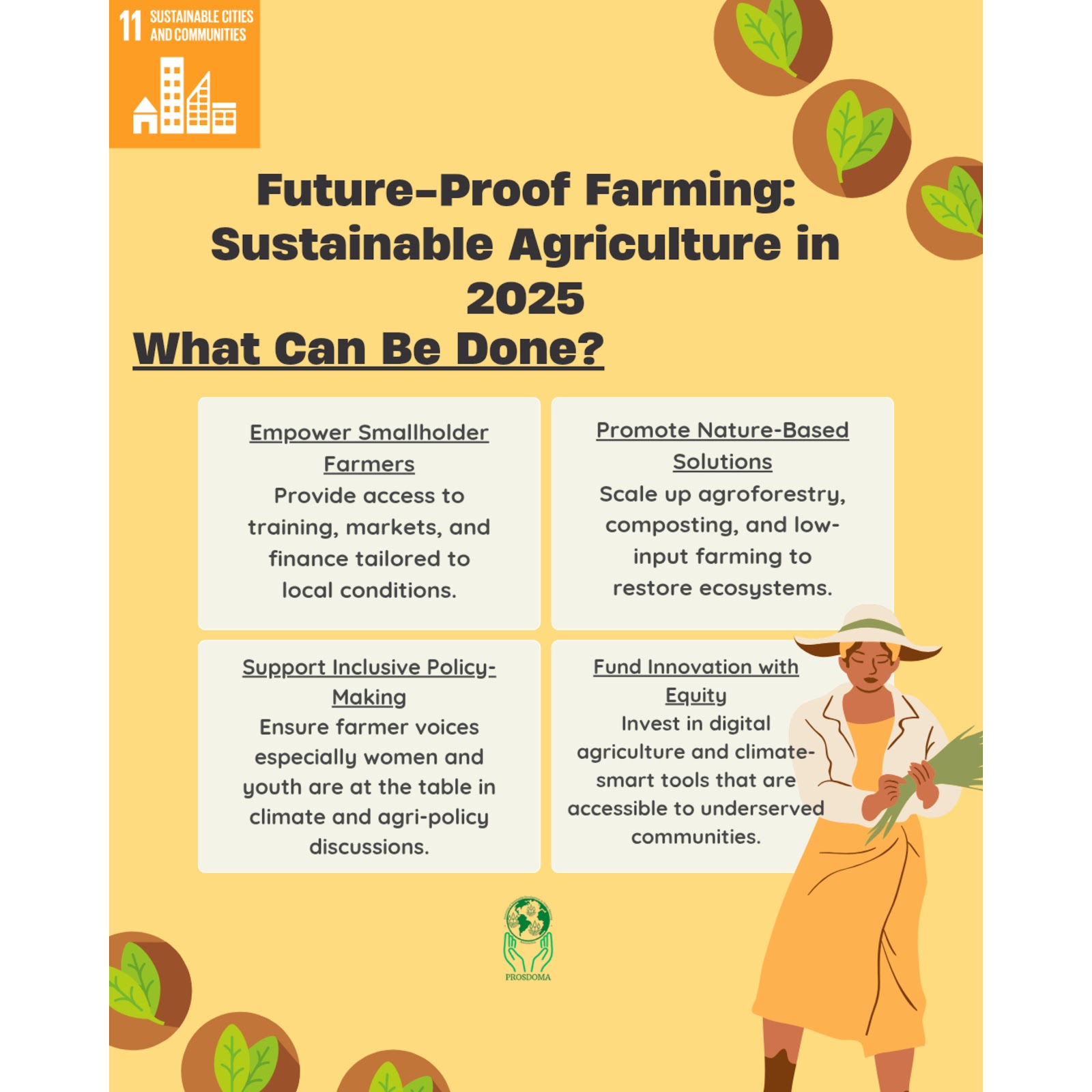
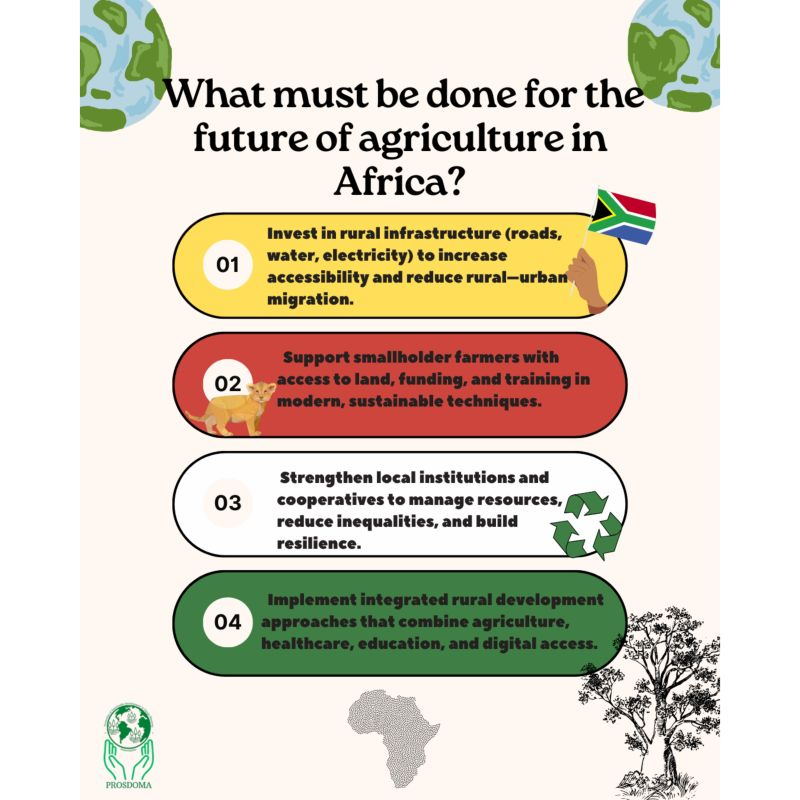
Future-Proof Farming: Sustainable Agriculture in 2025
As the climate crisis deepens and global populations rise, 2025 marks a critical moment for transforming agriculture. The latest Sustainable Agriculture 2025 report emphasizes that conventional farming is no longer viable in the face of land degradation, water scarcity, and rising emissions.
But there is hope. The report showcases how sustainable practices such as regenerative farming, agroecology, and circular nutrient use are gaining ground globally, especially in regions vulnerable to climate stress.
Key to this transformation is local adaptation, technology transfer, and inclusive governance. Yet millions of smallholder farmers remain excluded from the shift, lacking access to finance, tools, and training.
At PROSDOMA, we believe food justice and climate justice go hand-in-hand. A sustainable future starts in the soil — but it grows with equity and inclusion.
✅ What Can Be Done?
1️⃣ Empower Smallholder Farmers
Provide access to training, markets, and finance tailored to local conditions.
2️⃣ Promote Nature-Based Solutions
Scale up agroforestry, composting, and low-input farming to restore ecosystems.
3️⃣ Support Inclusive Policy-Making
Ensure farmer voices especially women and youth — are at the table in climate and agri-policy discussions.
4️⃣ Fund Innovation with Equity
Invest in digital agriculture and climate-smart tools that are accessible to underserved communities.
Join us in growing a resilient, just, and sustainable future.
www.prosdoma.org
#SustainableFarming #Agroecology #ClimateJustice #FoodSystems #GlobalSouth #Prosdoma
By E.D.
Source:
MIR (2025). Sustainable Agriculture in 2025: Opportunities for Climate Resilience and Equity.
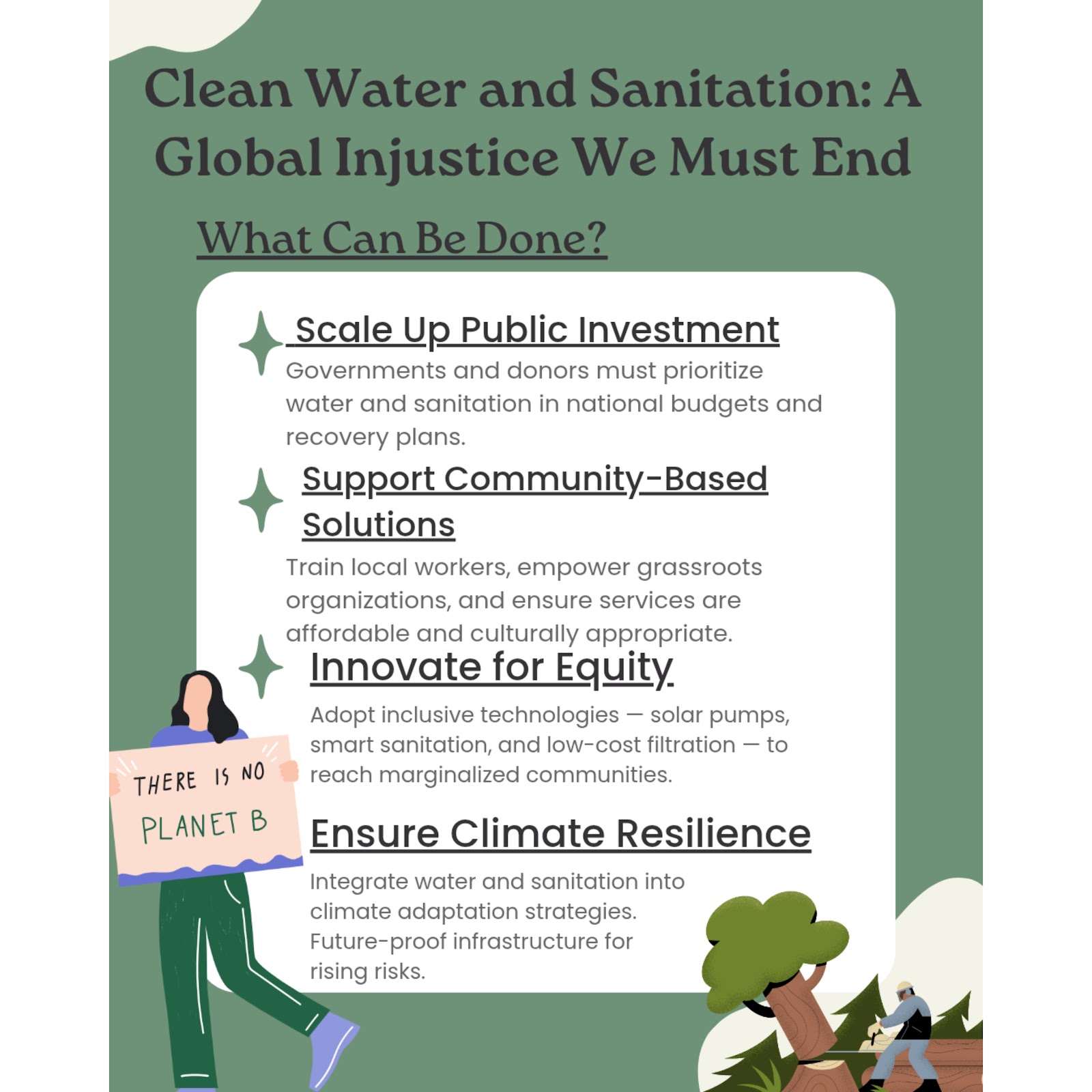
Clean Water and Sanitation: A Global Injustice We Must End
2.2 billion people worldwide lack access to safely managed drinking water, and 4.2 billion are without safe sanitation. This isn’t just a development issue, it’s a human rights crisis.
The UN’s “Still One Earth” report highlights that despite global progress, water and sanitation inequalities persist, especially in low-income regions and conflict-affected areas.
Lack of clean water and sanitation increases disease, threatens education (especially for girls), and perpetuates poverty. Climate change only worsens this reality, leading to more floods, droughts, and displaced communities.
At PROSDOMA, we believe water is a right not a privilege. It’s time for action.
✅ What Can Be Done?
1️⃣ Scale Up Public Investment
Governments and donors must prioritize water and sanitation in national budgets and recovery plans.
2️⃣ Support Community-Based Solutions
Train local workers, empower grassroots organizations, and ensure services are affordable and culturally appropriate.
3️⃣ Innovate for Equity
Adopt inclusive technologies; solar pumps, smart sanitation, and low-cost filtration to reach marginalized communities.
4️⃣ Ensure Climate Resilience
Integrate water and sanitation into climate adaptation strategies. Future-proof infrastructure for rising risks.
Every drop counts but only if it’s safe and accessible to all.
Join us at: www.prosdoma.org
#WaterIsAHumanRight #SDG6 #CleanWaterForAll #SanitationJustice #Prosdoma #StillOneEarth #ClimateResilience #EquityInWater
by E.D.
Source:
UNEP & GRID-Arendal (2022). Still One Earth: Water and Sanitation.
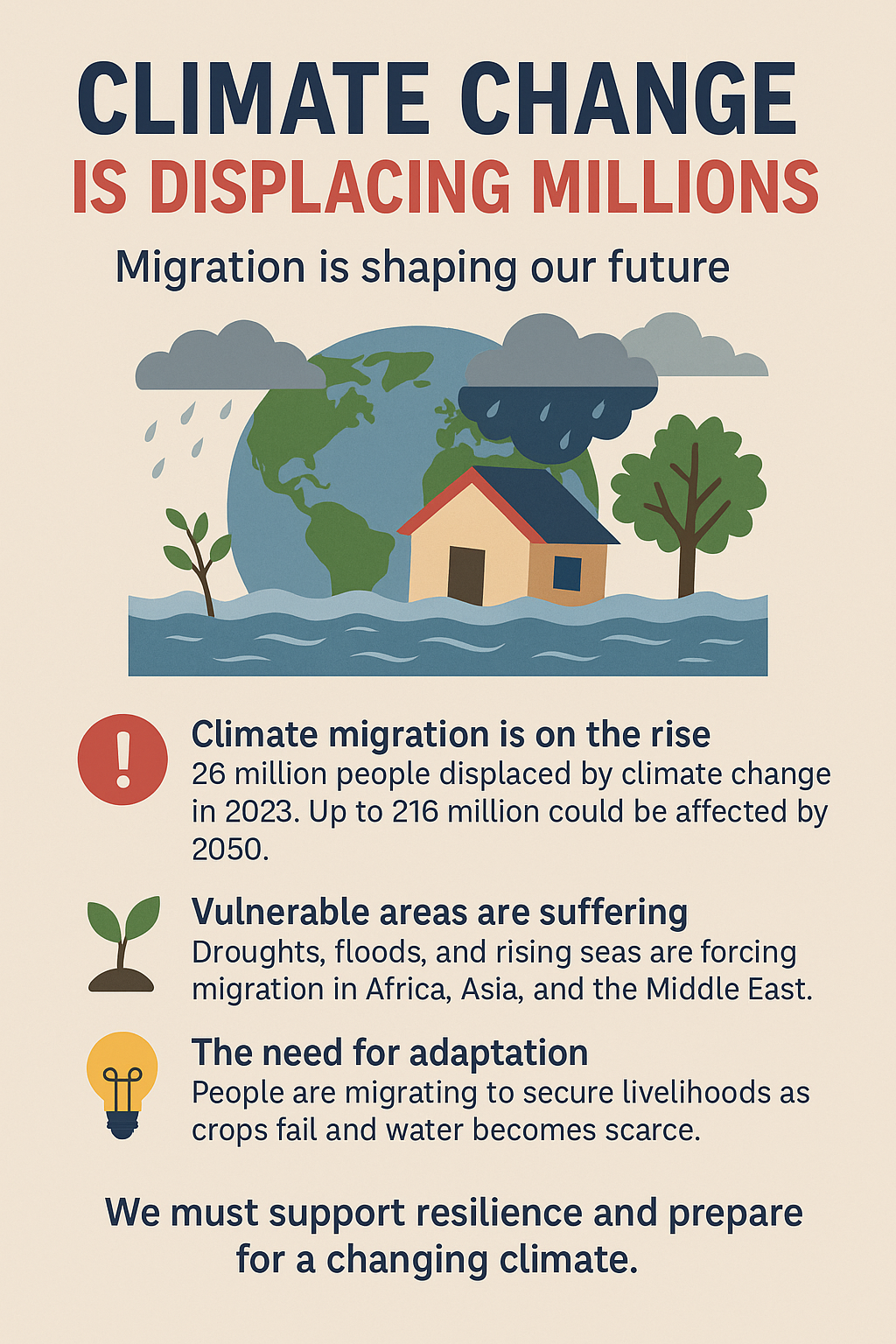
 From droughts to floods, people are being forced to leave their homes in search of safety and stability.
 Climate Migration is on the Rise: Extreme weather events are causing massive displacement. In 2023 alone, 26 million people were displaced by climate change. And by 2050, 216 million people could be affected globally.
 Vulnerable Areas Are Suffering: Countries in Africa, Asia, and the Middle East are facing severe climate challenges. From water stress in sub-Saharan Africa to the rising sea levels in low-lying regions, these areas are increasingly uninhabitable, forcing people to migrate.
 The Need for Adaptation: Migration is not just a response to disasters; it’s also about securing livelihoods. People are leaving agricultural areas where crops no longer grow or livestock cannot survive. We need to support planned relocation and ensure there are resources available to help these migrants integrate and adapt.
 Prosdoma’s Commitment: At Prosdoma, we believe in fostering resilience. Through our programs, we assist newcomers by providing access to job search assistance, legal aid, and community support to help them successfully integrate. We also advocate for sustainable agricultural practices to address food security in communities affected by climate change.
 The climate migration crisis requires urgent action. We must advocate for climate resilience, support sustainable development, and ensure that vulnerable communities have the resources to adapt. Let’s stand together and build a more sustainable future for all.