Category: Updates

  •  SDG Targets Are Slipping — But Hope Isn’t Lost

     SDG Targets Are Slipping — But Hope Isn’t Lost

    The 2025 UN SDG Report reveals a sobering truth: only 15% of SDG targets are on track, while nearly half are moderately or severely off course. Global crises — from COVID-19 and conflict to climate shocks, have pushed progress into reverse, widening inequality, stalling climate action, and deepening poverty.

    Yet amidst the setbacks, the report also highlights pockets of resilience and opportunity. Countries that have prioritized social protection, digital inclusion, and climate finance are showing measurable improvements — proving that progress is still possible with the right investments and partnerships.

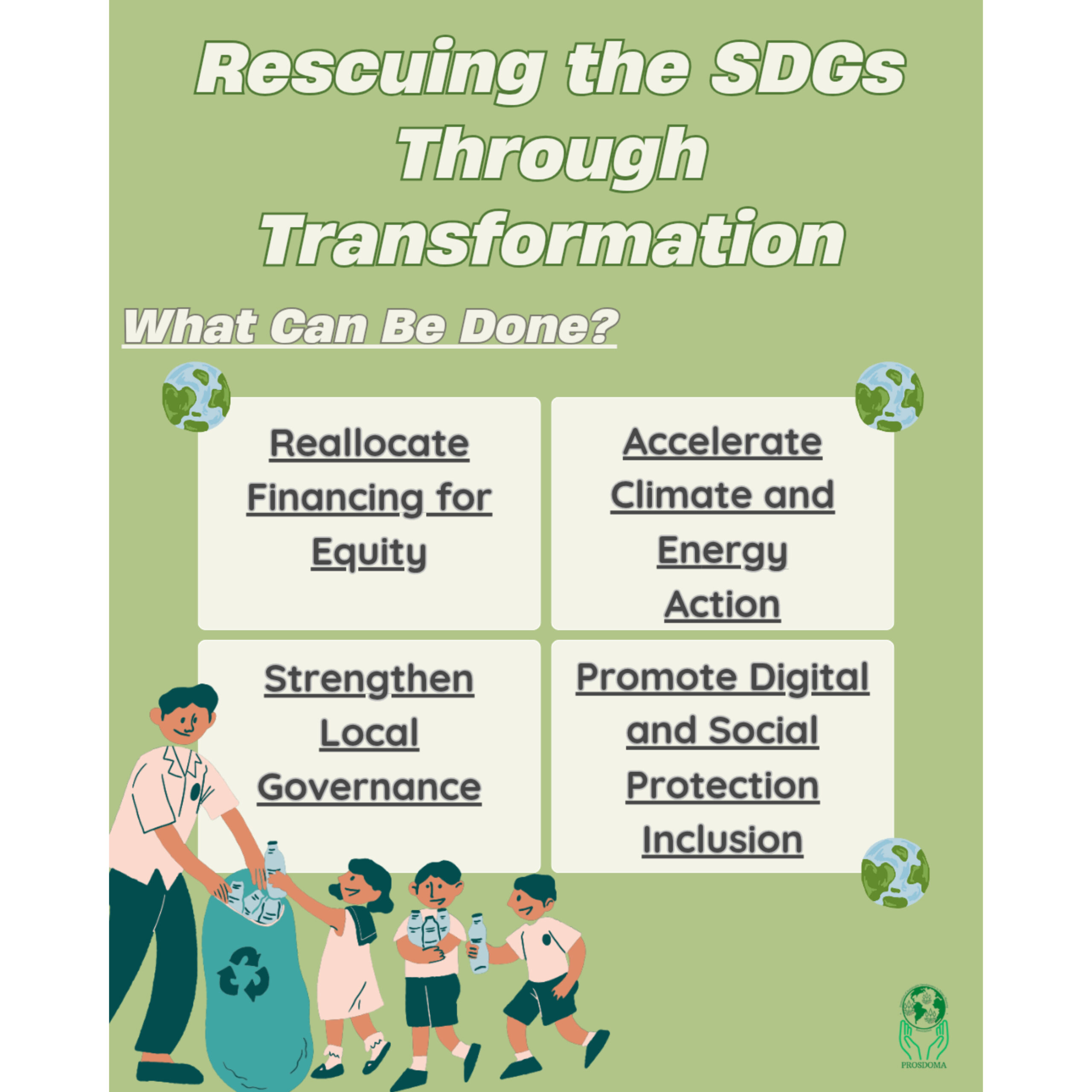
    At PROSDOMA, we echo the report’s call: “rescue the SDGs through transformation.” That means going beyond business-as-usual. We need bold reforms, equity-driven policies, and grassroots innovation to shift the current trajectory.

    ✅ What Can Be Done?

    1️⃣ Reallocate Financing for Equity

    Redirect global funding toward the most vulnerable regions and social sectors.

    2️⃣ Accelerate Climate and Energy Action

    Prioritize clean energy access and resilient infrastructure in the Global South.

    3️⃣ Strengthen Local Governance

    Empower communities to lead solutions tailored to their realities.

    4️⃣ Promote Digital and Social Protection Inclusion

    Expand access to e-services, education, and safety nets for all.

    The goals are still within reach but only if we act together, and now.

    www.prosdoma.org

    #SDGs2025 #GlobalGoals #SocialJustice #ClimateAction #Prosdoma #EquityNow #ActFor2030

    by E.D.

    Source:

    United Nations (2025). The Sustainable Development Goals Report 2025. https://unstats.un.org/sdgs/report/2025 

  • AI Meets Soil: Can Algorithms Save Our Land

    AI Meets Soil: Can Algorithms Save Our Land

    As climate change accelerates and land degradation spreads, soil health has become one of the most urgent but overlooked environmental issues. According to a 2025 article in the European Journal of Soil Science, artificial intelligence is emerging as a transformative force in the field.

    From machine learning models that map soil nutrients with satellite imagery to AI algorithms predicting erosion risk, digital tools are helping scientists and farmers better understand and manage soil ecosystems. Yet, challenges remain: data gaps, model bias, and lack of field validation limit the practical impact of these technologies, especially in the Global South.

    At PROSDOMA, we believe the future of food security and environmental resilience lies beneath our feet — in healthy, living soil. And to protect it, AI must be inclusive, transparent, and locally grounded.

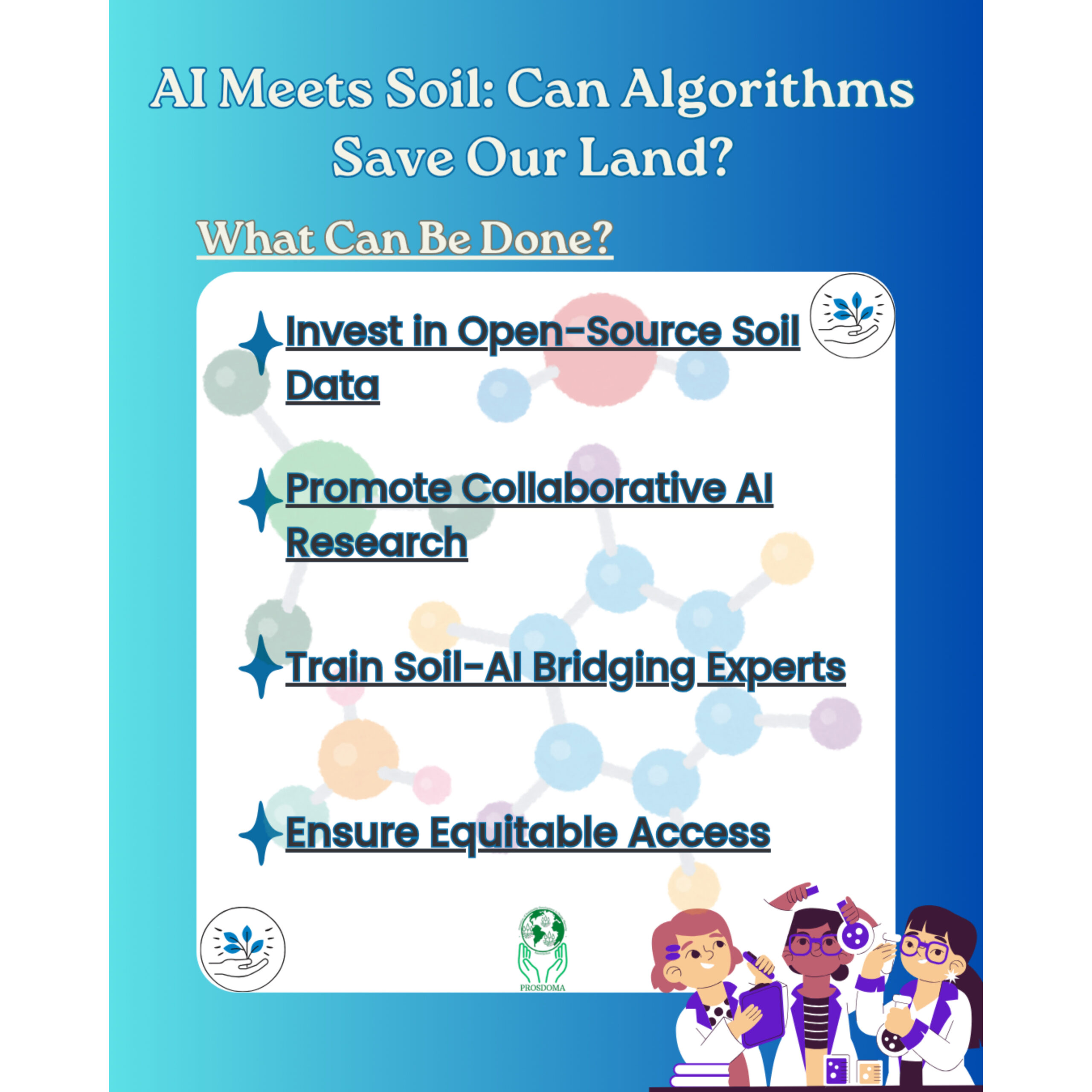
    ✅ What Can Be Done?

    1️⃣ Invest in Open-Source Soil Data

    Support the creation and sharing of soil datasets across countries and regions.

    2️⃣ Promote Collaborative AI Research

    Bridge the gap between scientists, local farmers, and tech developers to co-design solutions.

    3️⃣ Train Soil-AI Bridging Experts

    Support interdisciplinary training programs that connect data scientists with soil ecologists and agronomists.

    4️⃣ Ensure Equitable Access

    Fund digital infrastructure and capacity building in low-income countries to prevent an AI divide in agricultural innovation.

    Healthy soil is the foundation of climate resilience, food security, and sustainable livelihoods. Let’s make sure AI works with nature and with people.

    www.prosdoma.org

    #SoilHealth #AIForGood #ClimateResilience #SustainableFarming #DigitalAgriculture #Prosdoma

    by E.D.

    Source:

    Wadoux, A. M. J. C. et al. (2025). Artificial Intelligence in Soil Science. European Journal of Soil Science, 76(3). https://doi.org/10.1111/ejss.13442

  • Africa’s Wild Spaces Deserve a Plastic-Free Future

    Africa’s Wild Spaces Deserve a Plastic-Free Future

    This World Environment Day, we’re turning the spotlight on one of the most overlooked threats to Africa’s biodiversity: plastic pollution.

    From the coasts of Kenya to the rivers of the Congo Basin, plastic waste is choking ecosystems, threatening wildlife, and undermining livelihoods. According to the African Wildlife Foundation, plastics not only pollute landscapes — they infiltrate food chains, disrupt animal behavior, and cost African economies millions in environmental damage.

    Protected areas like national parks and heritage landscapes are not immune. Touristic and urban plastic waste often finds its way into these fragile ecosystems, affecting endangered species such as elephants, rhinos, and aquatic birds.

    At PROSDOMA, we believe Africa’s wild spaces are not just natural treasures — they are pillars of cultural identity, biodiversity, and economic resilience. A plastic-free future is not only possible — it is essential.

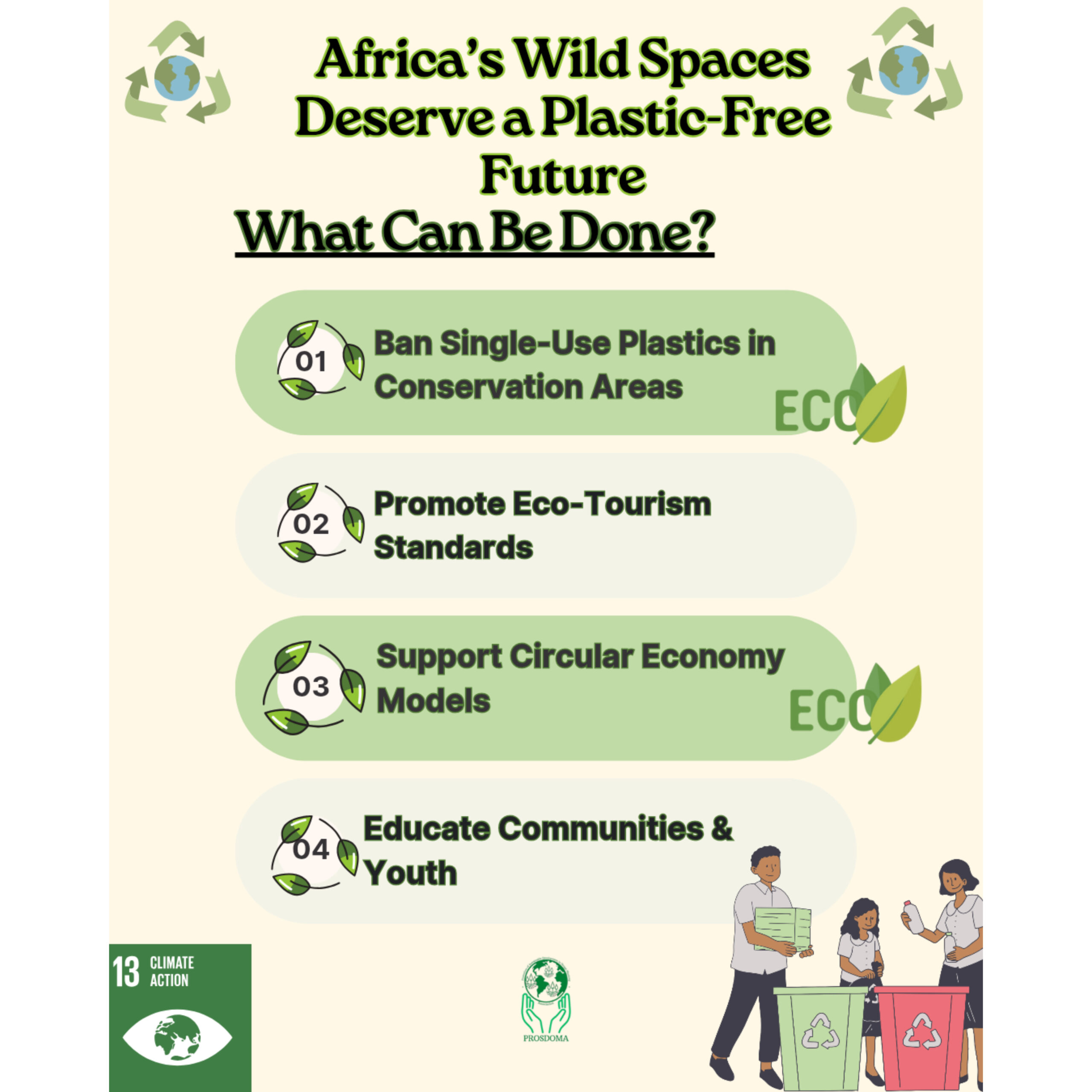
    ✅ What Can Be Done?

    1️⃣ Ban Single-Use Plastics in Conservation Areas

    Governments must enforce strict plastic bans around protected reserves.

    2️⃣ Promote Eco-Tourism Standards

    Encourage plastic-free travel experiences and regulate waste disposal practices in tourism.

    3️⃣ Support Circular Economy Models

    Invest in local businesses turning plastic waste into reusable materials.

    4️⃣ Educate Communities & Youth

    Launch awareness campaigns linking clean environments to health, income, and pride.

    Protecting nature starts with what we throw away. Let’s keep Africa wild — and plastic-free.

    www.prosdoma.org

    #WorldEnvironmentDay #PlasticFreeAfrica #WildlifeProtection #CircularEconomy #Prosdoma #ZeroWaste

    by E.D.

    Source:

    African Wildlife Foundation (2025). World Environment Day 2025: Africa’s Wild Spaces Deserve a Plastic-Free Future.

  • Sanitation Is Health: A Global Wake-Up Call

    Sanitation Is Health: A Global Wake-Up Call

    Poor sanitation is a silent killer. Every year, unsafe sanitation contributes to over 432,000 deaths from diarrhoeal diseases, with the vast majority occurring in low- and middle-income countries. Yet, sanitation remains one of the most underfunded and neglected public health issues globally.

    The WHO’s Guidelines on Sanitation and Health provide a stark reminder: access to a safe toilet isn’t just about dignity, it’s about life, equality, and development. Sanitation is crucial for preventing disease outbreaks, reducing healthcare costs, and enabling children—especially girls—to stay in school.

    What’s more, the guidelines stress that simply building latrines is not enough. Systems must be safe, context-appropriate, and sustainably managed. This means integrating sanitation into health policies, investing in long-term operations, and addressing inequalities in access — especially for women, children, and people with disabilities.

    At PROSDOMA, we advocate for a world where no one is left behind when it comes to basic human needs. Because sanitation is not a privilege — it’s a human right.

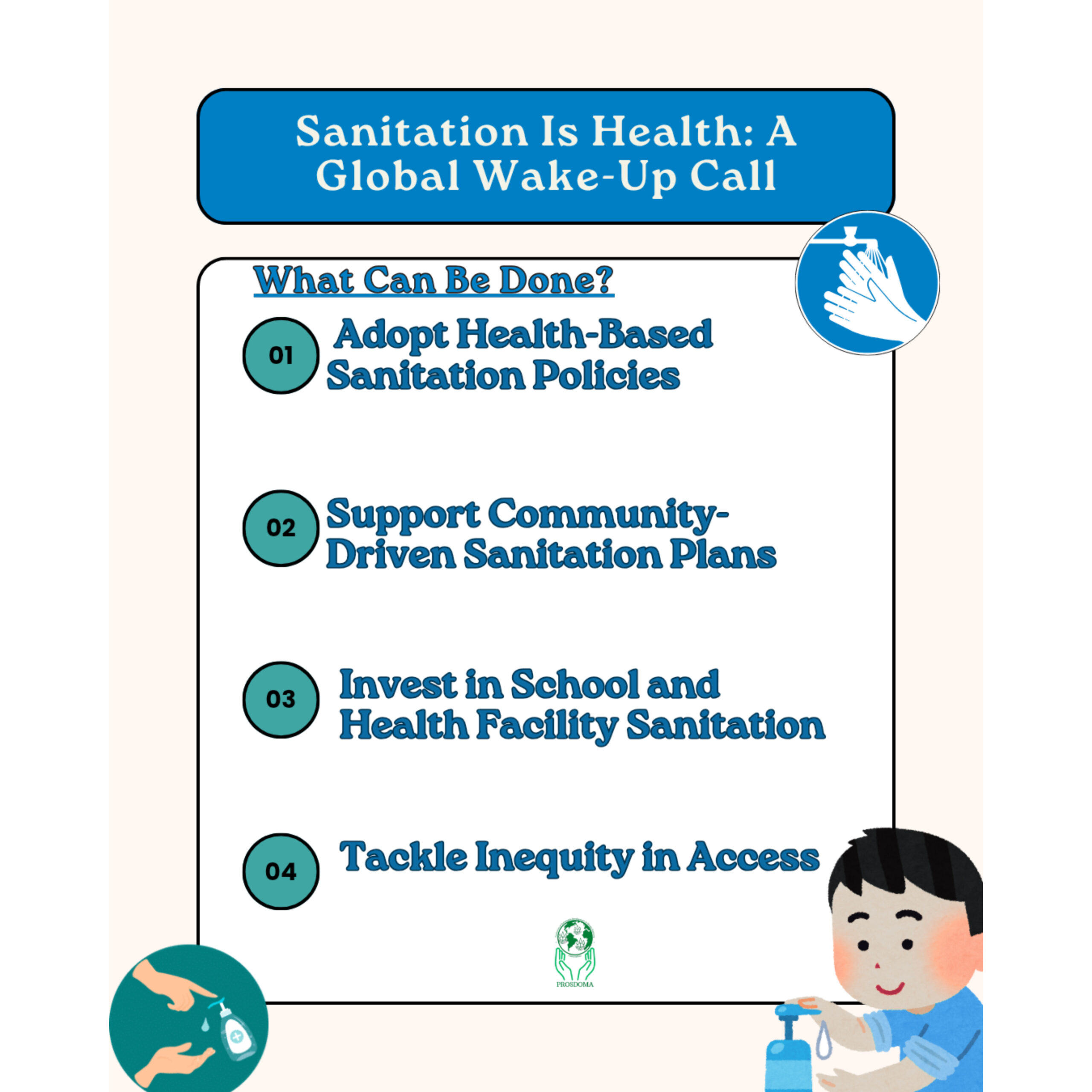
    ✅ What Can Be Done?

    1️⃣ Adopt Health-Based Sanitation Policies

    Governments should align sanitation investments with public health goals.

    2️⃣ Support Community-Driven Sanitation Plans

    Include local voices in design, maintenance, and education efforts.

    3️⃣ Invest in School and Health Facility Sanitation

    Ensure every school and clinic has safe, gender-sensitive toilets.

    4️⃣ Tackle Inequity in Access

    Prioritize sanitation services for marginalized and remote populations.

    Healthy people, healthy systems — it starts with sanitation.

    www.prosdoma.org

    #SanitationMatters #HealthForAll #WHO #CleanToiletsSaveLives #Prosdoma #WASH

    by E.D.

    Source:

    World Health Organization (2018). Guidelines on Sanitation and Health. Geneva: WHO. ISBN: 9789241512893.

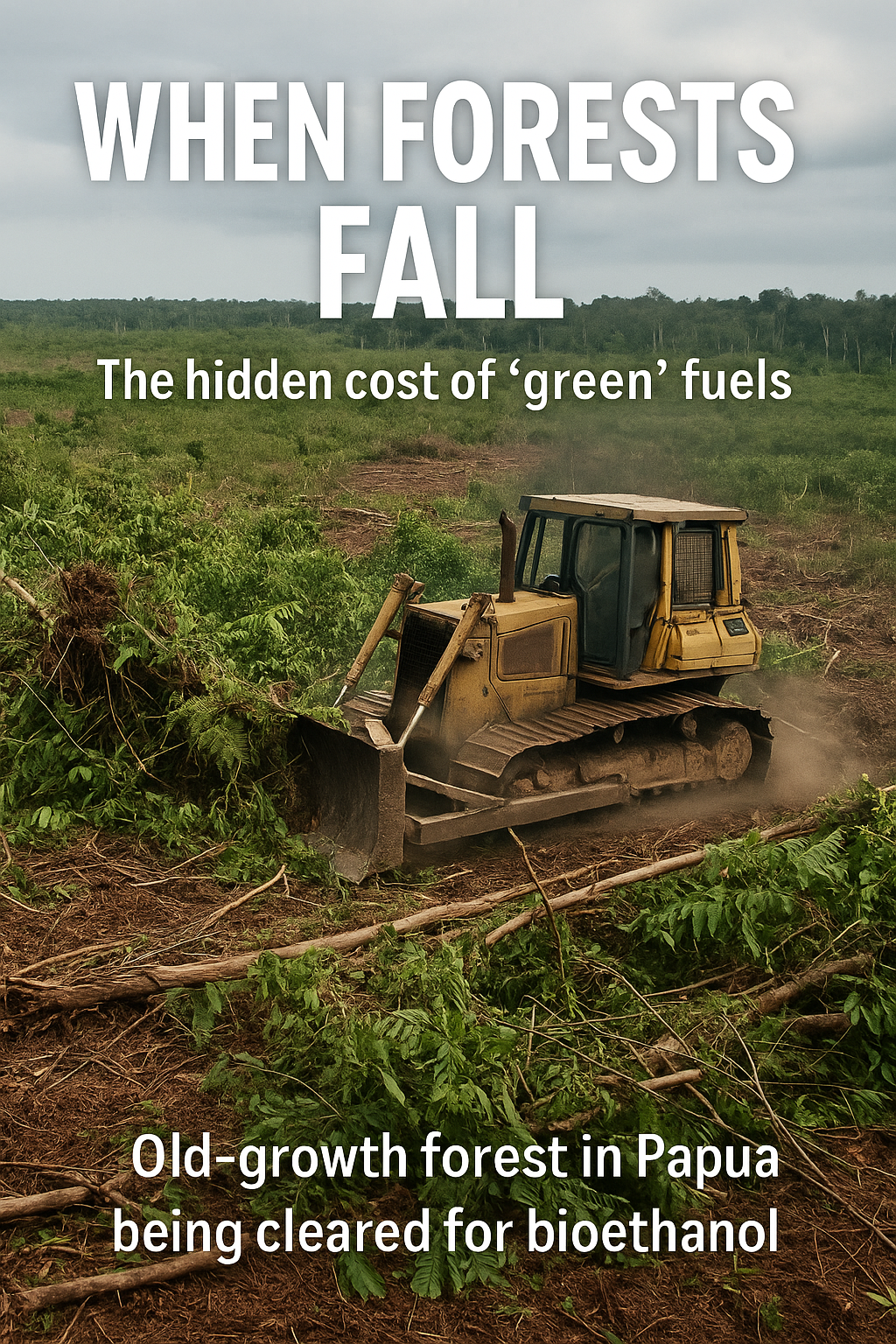
  • When Forests Fall: The Hidden Cost of “Green” Fuels

    When Forests Fall: The Hidden Cost of “Green” Fuels

    In the heart of Indonesia’s Papua province, a vast green paradise is under threat. A government-backed project—the world’s largest planned deforestation initiative—is set to clear forests the size of Belgium to produce bioethanol, rice, and other food crops.

    While intended to promote food security and renewable energy, this project has devastating consequences for Indigenous communities and the environment. 

      Centuries-old tribal forests are being bulldozed. Indigenous Papuan families like the Kwipalos are losing access to ancestral land where they hunt, fish, and gather food. Their culture and survival are at risk.

      These forests are also home to endangered species found nowhere else on Earth—orangutans, forest elephants, rare birds, and plants—whose habitats are being erased for monoculture plantations.

      Experts warn that this “green energy” comes with a high carbon price. Clearing these forests could release over 300 million tons of CO₂, accelerating the very climate crisis biofuels aim to fix.

      Reforestation can’t fully restore what’s lost. Old-growth forests regulate water, store carbon, and support biodiversity in ways no plantation ever can.

    At PROSDOMA, we advocate for truly sustainable practices—ones that empower people and protect the planet. From supporting eco-friendly agriculture in Africa to raising awareness in Canada, we believe development should never come at the cost of people or nature.

      Let’s rethink what sustainability really means. Share this story. Speak out. Support climate justice.

      Join PROSDOMA in promoting environmental and social sustainability across continents.

    Source:https://apnews.com/article/bioethanol-deforestation-papua-indonesia-climate-fafbc84bba685d05acd75f78db68da63
    #SustainableFuture #ClimateJustice #DeforestationCrisis #BiofuelDilemma #ForestVoices #IndigenousRights #PapuaRainforest #GreenEnergyDebate #ClimateActionNow #ProsdomaCares

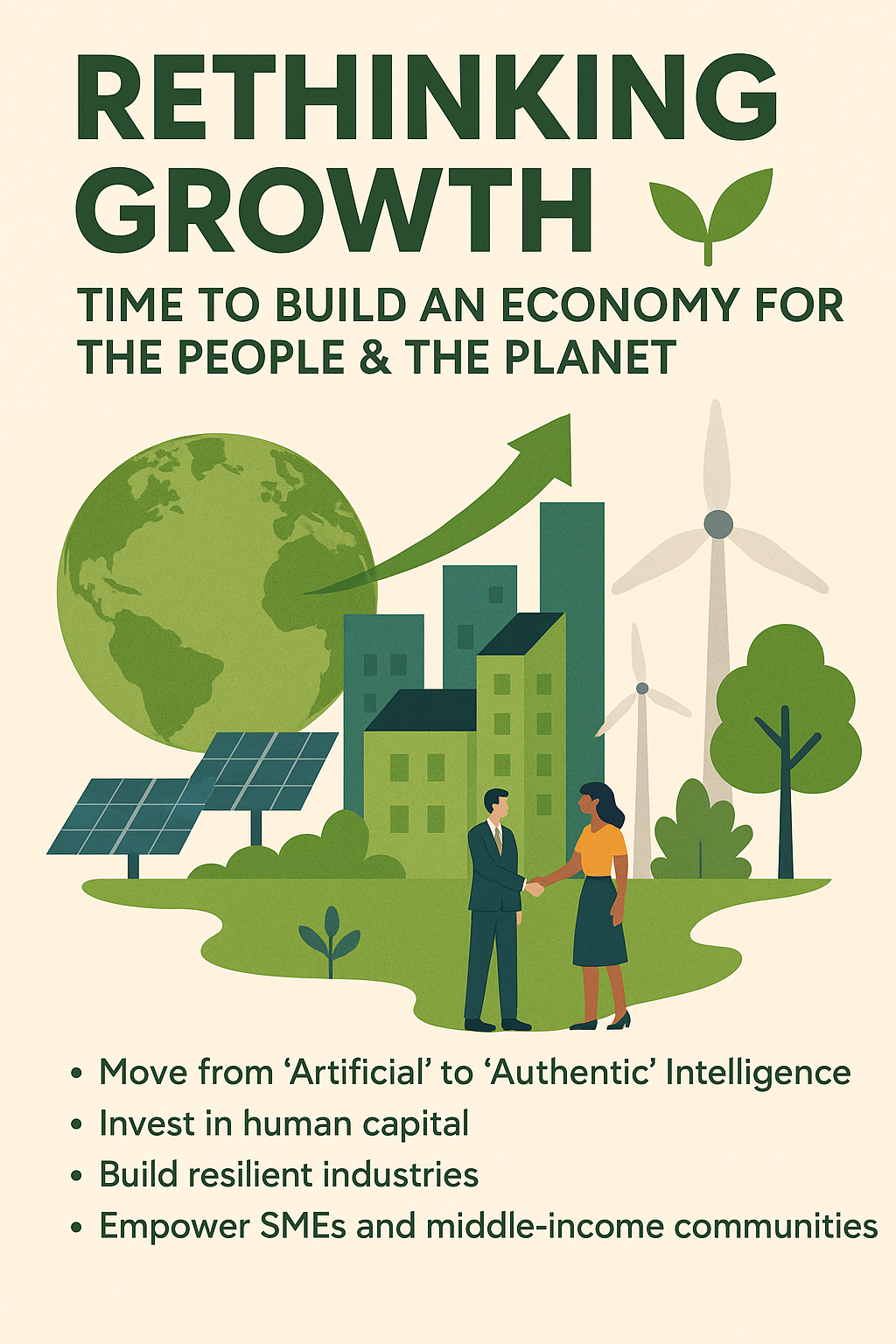
  •  Rethinking Growth: Time to Build an Economy for the People & the Planet

     Rethinking Growth: Time to Build an Economy for the People & the Planet

    What if economic growth didn’t harm the planet—or leave people behind?

    Despite massive investments in sustainable efforts since 2015, we still face alarming inequality and environmental damage. Two-thirds of global wealth created since 2020 went to the richest 1%, while most people still earn less than $10 a day.

    It’s clear: our 20th-century economy isn’t fit for the 21st-century world.

    A new vision, Sustainomy, offers hope. It’s an economy built on the three Ps: Prosperity, People, and Planet. Instead of choosing between growth and sustainability, it balances both.

      Here’s how we can get there:
    – Move from “Artificial” to “Authentic” Intelligence—using AI to enhance, not replace, human skills like creativity and ethics.

    – Invest in human capital by meeting basic needs and improving education and job security.

    – Build resilient industries that mix essentials like infrastructure with clean energy and innovative solutions.

    – Empower SMEs and middle-income communities, which already drive most jobs and consumer demand globally.

    At PROSDOMA, we believe this vision is more than theory—it’s action. Whether supporting newcomers in Alberta or promoting sustainable agriculture in Africa, we strive to connect people with opportunities that benefit society and the environment.

      Let’s build an economy that works for everyone—together.
      Join us in promoting sustainable growth and inclusive development. Follow PROSDOMA to learn more and take part in the change.

    Source: https://time.com/7275422/sustainable-economic-growth-sustainomy/
    #SustainableDevelopment #Sustainomy #ClimateAction #InclusionMatters #AIandHumans #SocialImpact #EconomicJustice #FutureEconomy #PROSDOMA #PeoplePlanetProsperity
    AC

  • Climate Change = National Security? Let’s Talk Realism!

    Climate Change = National Security? Let’s Talk Realism!

    What if climate change isn’t just an environmental concern, but a global security threat? That’s the warning from the new Climate Realism Initiative — and it’s a wake-up call we can’t ignore.

    Launched by policy expert Varun Sivaram, the initiative challenges traditional thinking. Instead of focusing solely on cutting emissions in one country, it urges a smarter global approach:
    ⚠️ Accept that global temperatures may rise by 3°C this century
     ️ Prepare for the impacts: forced migration, food insecurity, extreme weather
      Invest in tech with real global potential: next-gen geothermal, advanced nuclear, solid-state batteries
      Make climate a top security priority
      Use trade to hold high-emission countries accountable

    This bold new approach acknowledges that piecemeal solutions aren’t enough. We need to build resilience — now.

    At PROSDOMA, we support vulnerable communities in both Canada and Africa to do just that. From training newcomers on essential skills in Alberta   to boosting sustainable farming in rural Africa  , we help people adapt, thrive, and grow stronger in the face of climate and social change.

    Let’s move beyond talk. Let’s act with realism, compassion, and impact. Join PROSDOMA in creating a future that’s not only sustainable, but secure.

    Source: https://www.axios.com/2025/04/07/climate-change-realism-security
    #ClimateRealism #EnvironmentalSecurity #ResilientCommunities #MigrationMatters #ClimateJustice #CleanTechFuture #FoodSecurityNow #SustainableLiving #ProsdomaImpact #ClimateAdaptation
    AC

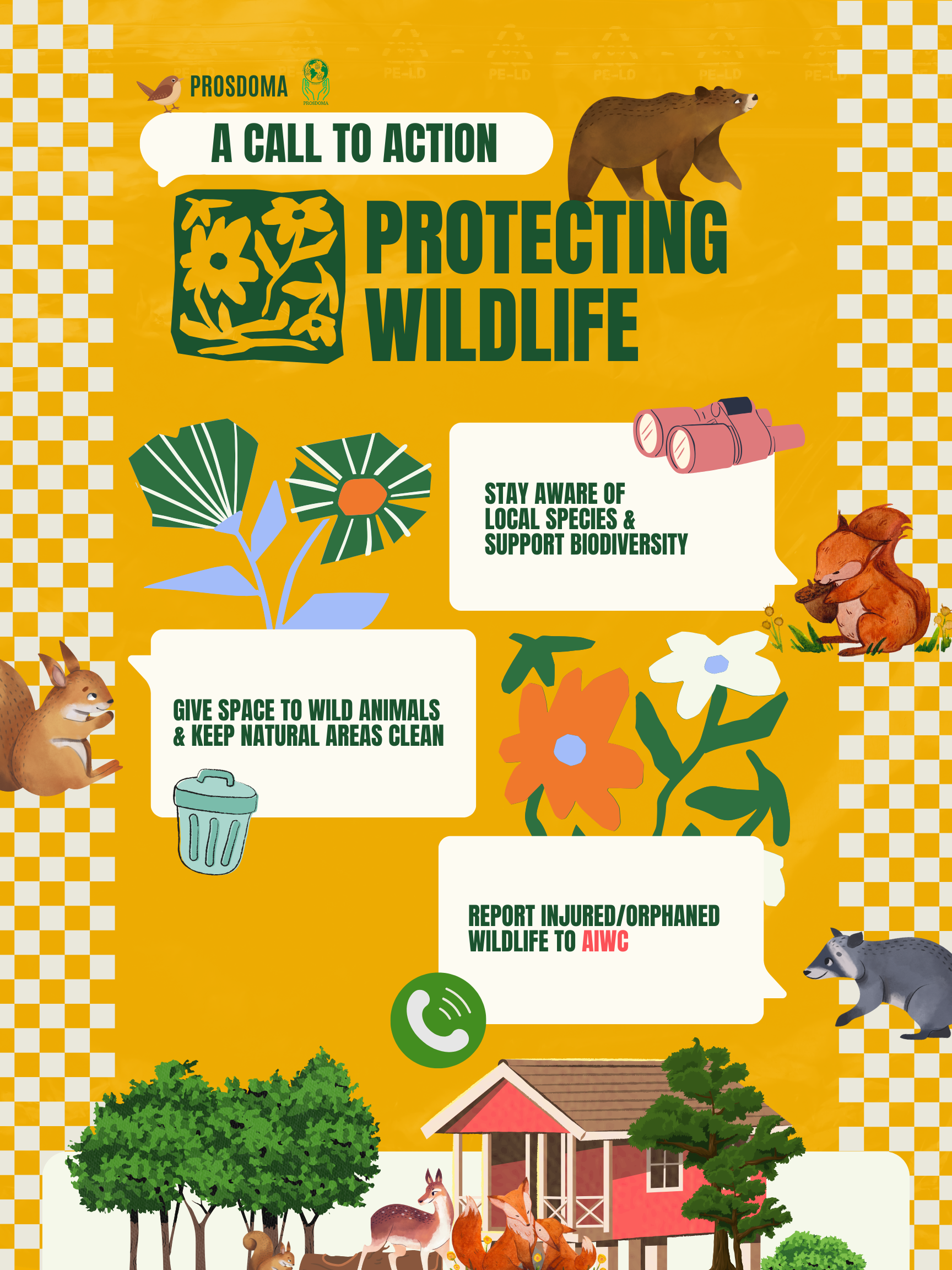
  • Protecting Alberta’s Wildlife = Protecting Our Future

    Protecting Alberta’s Wildlife = Protecting Our Future

    With over 60,000 species, Alberta is a biodiversity hotspot. From boreal forests to grasslands, each ecosystem plays a crucial role in maintaining the balance of life.

    But this balance is fragile. Climate change, habitat loss, and pollution are threatening native species—some of which are now at risk.

    At PROSDOMA, we believe environmental justice includes protecting wildlife and ecosystems that sustain us all. Through our sustainability initiatives, community education, and reforestation projects, we’re doing our part to help biodiversity thrive.

    ✅ How you can help:
    – Stay aware of local species & support biodiversity in your area
    – Give space to wild animals & keep natural areas clean
    – Report injured/orphaned wildlife to AIWC
    – Get involved with local conservation & sustainability efforts

      Learn more & support our mission: prosdoma.org
      Source: alberta.ca | aiwc.ca

    #WildlifeConservation #AlbertaWildlife #Sustainability #PROSDOMA
    SH

  • PROSDOMA Provides Healing Across Borders

    PROSDOMA Provides Healing Across Borders

    When people think about migration, they often imagine paperwork, borders, and legal
    processes. But for many migrants and asylum seekers, the real challenge begins long after the
    flights have landed and forms have been filed.
    Behind every asylum case, job search, and permanent residence application is a person
    navigating the invisible weight of trauma, uncertainty, and isolation. For migrants and refugees,
    especially those forced to flee due to conflict, poverty, or persecution, migration is not just a
    physical transition—it is an emotional upheaval.
    Globally, up to 30% of refugees and migrants are estimated to suffer from post-traumatic stress
    disorder (PTSD), 40% from depression, and many more from anxiety and prolonged grief,
    according to the World Health Organization (WHO).
    Many assume that once migrants secure legal status, the hardest part is over. But in reality, the
    trauma of what was left behind doesn’t disappear and the demands of starting over in an
    unfamiliar system can be overwhelming.
    There is pressure to find work immediately. To understand complicated government forms. To
    navigate racism or isolation and to do all of this while grieving home
    In Alberta, where an increasing number of migrants are resettling in smaller towns and remote
    communities, the gap in culturally relevant mental health care is stark. Many migrants come
    from cultures where mental health is stigmatised or misunderstood, making it even harder to
    reach out for help.
    While PROSDOMA is widely known for its work in agricultural development—providing
    training, infrastructure, and services to empower small-scale farmers—it has quietly become a
    lifeline for vulnerable migrant communities, particularly in Alberta.
    Between 2024 and March 2025, PROSDOMA filed 16 asylum cases, with 5 individuals
    successfully granted Protected Person Status, and submitted 7 permanent residence
    applications, 2 of which have already been approved.Understanding the link between mental
    health and socioeconomic stability, PROSDOMA combines legal aid with holistic community
    support.
    In the past year alone, 14 newcomers were trained in basic computer skills, easing the stress of
    job searching, 3 individuals secured full-time employment, and 2 found part-time work—
    restoring a sense of agency and purpose. 5 migrants were given security and first aid training,
    offering short-term employment opportunities and stability 13 migrants were connected to legal
    aid, food banks, and shelters, easing daily stressors that often worsen anxiety or depression, 9
    individuals received help filing their income taxes, a small but critical act that fosters inclusion
    and reduces bureaucratic overwhelm.
    Each of these achievements are more than a number; they are mental health interventions in
    disguise. Reducing uncertainty, building trust, and restoring dignity are foundational to mental
    well-being.
    As Canada continues to welcome migrants fleeing war, persecution and instability,
    PROSDOMA is showing that healing does not happen through paperwork alone. It happens
    when newcomers are seen, heard, and supported—emotionally and practically.

    One Million Sticks and a Harvest in Bloom

    One Million Sticks and a Harvest in Bloom
    For generations, farming in the remote hills of Ako, a town in the Donga Mantung Division of
    the North-West Region of Cameroon has been a quiet struggle. Tucked between thick forests
    and winding dirt paths, the communities here depend on the land but the land has not always
    been kind.
    Yields were unpredictable. A bad harvest meant going hungry. There was no training, no
    support and no access to improved varieties that could survive pests or poor weather.
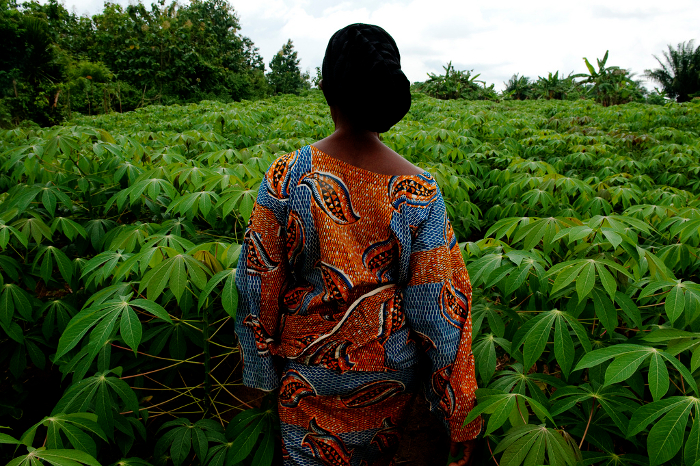
    Cassava is not glamorous and rarely makes headlines, but for families in Ako, Nkambe and
    Ndu, it is life. It is pounded, grated, dried, boiled and turned into everyday meals like fufu and
    garri. But growing it was always difficult. Farmers used what they had; old, weak sticks just
    hoping something would grow.
    With support from government ministries and development partners, Promotion of Sustainable
    development in Donga-Mantung Association (PROSDOMA), launched a program to help
    farmers not only grow more but grow smarter. PROSDOMA has distributed over one million
    improved cassava cuttings to local farmers, completely free of charge. These cuttings are from
    stronger varieties that could withstand climate changes, resist pests and produce more food.
    PROSDOMA worked hand-in-hand with farmers, offering training on how to prepare the land,
    plant in neat rows, manage pests using safe method and store cassava after harvest to reduce
    loss. Field schools and demonstration plots were set up and farming has became a shared
    learning experience, not just a lonely chore.
    Today, the fields in Ako, Nkambe, and Ndu are getting greener, fuller and more hopeful than
    they have been in years. What was once dry, cracked land now stretches with rows of healthy
    cassava plants.
    For farmers who once barely had enough to eat, this is more than just a good harvest, it is the
    beginning of something new. More cassava meant more food on the table, money for school
    fees and savings for emergencies. It meant farmers did not have to rely on others to survive.
    They had something of their own, something they built from the ground up.
    A stronger harvest brings more than food. It brings dignity, confidence, and independence. It
    allows parents to dream of a better future for their children. It gives farmers the power to plan
    ahead, not just worry about surviving day to day.
    PROSDOMA’s one million sticks has turned into thousands of stories of resilience and
    renewal.

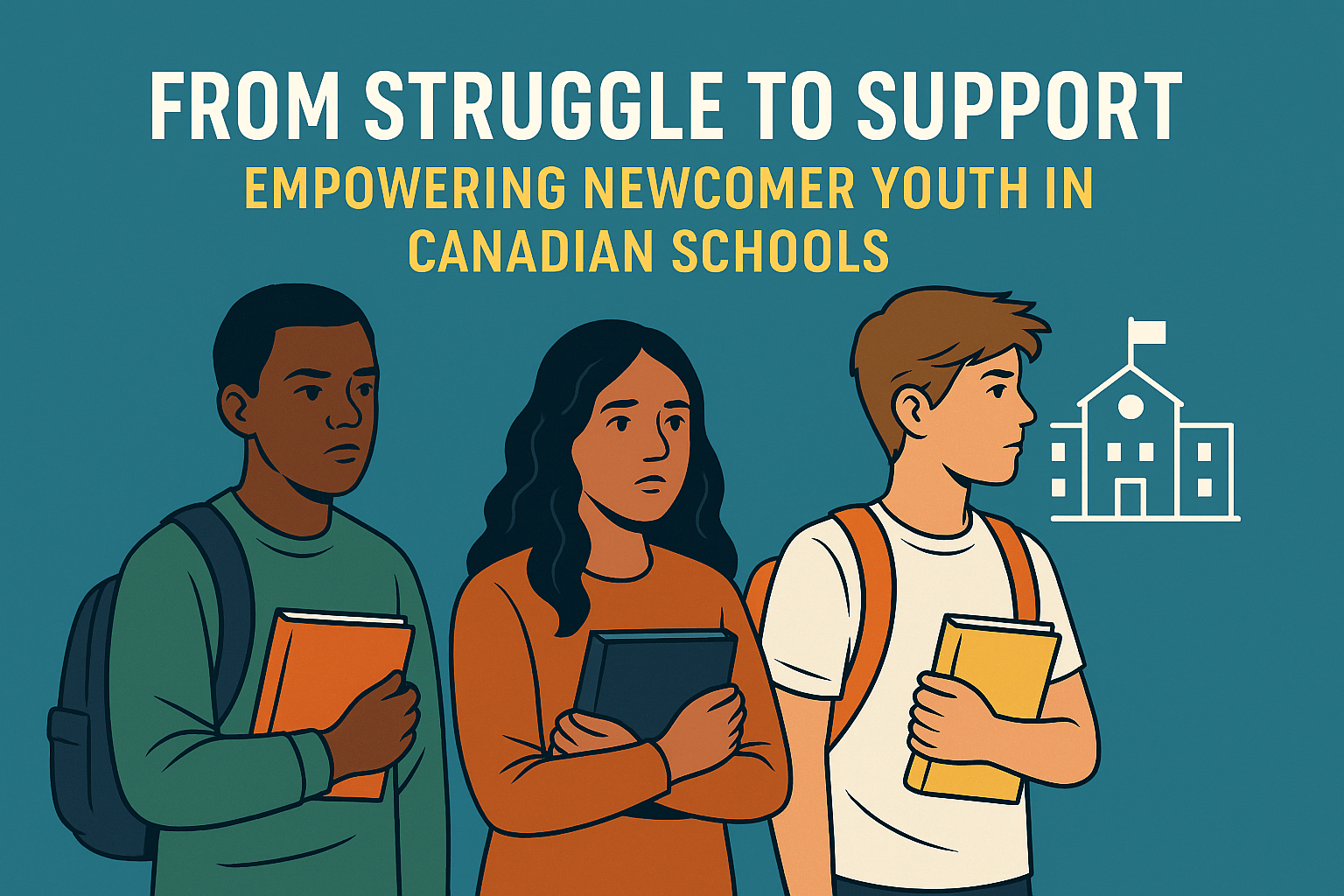
  • From Struggle to Support: Empowering Newcomer Youth in Canadian Schools

    From Struggle to Support: Empowering Newcomer Youth in Canadian Schools

    Starting a new life in a new country is already tough—imagine doing it as a teenager in a brand-new school system 

    A recent review highlights that newcomer youth often face barriers when trying to access school-based psychosocial support services (S-BPSS), which are crucial for their mental health, integration, and academic success.

      What’s standing in their way?
    Underutilization and discrimination in accessing services
    Culture shock and adjusting to a new environment
    Lack of transition planning for school integration
    Absence of policies based on the real lived experiences of these youth

    Despite their growing numbers, newcomer students remain marginalized within many school systems. The review calls for culturally responsive and socially just research that places youth voices at the center of developing support services  ️

    At PROSDOMA, we recognize that youth are the future   That’s why we advocate for:
    School integration support
    Access to psychosocial services for newcomers
    Training that respects cultural identity and lived experience
    Programs that empower young newcomers to succeed

      Schools should be a place of growth and inclusion, not confusion and isolation. Let’s make sure every newcomer youth in Alberta has the support they need to thrive.

    Reach out to PROSDOMA if you or someone you know is struggling with integration in their new country Canada. We’re here to help 
      Source: https://pmc.ncbi.nlm.nih.gov/articles/PMC9597144/#section15-08295735221130442
    #YouthSupport #NewcomerVoices #SchoolIntegration #MentalHealthMatters #InclusiveEducation #SupportForNewcomers #PROSDOMA #CultureAndCare #CanadaNewcomers #SocialJusticeInSchools