Category: Articles

  •  Africa and the Climate Crisis: A Disproportionate Burden

     Africa and the Climate Crisis: A Disproportionate Burden

    Africa contributes the least to global greenhouse gas emissions — yet faces some of the harshest consequences of climate change. From rising sea levels and prolonged droughts to food insecurity and political instability, the continent is on the frontlines of a crisis it didn’t cause.

    Recent research shows that climate change is already undermining Africa’s development prospects, increasing poverty, and placing enormous strain on agriculture, water systems, and human security (Tadesse, 2010).
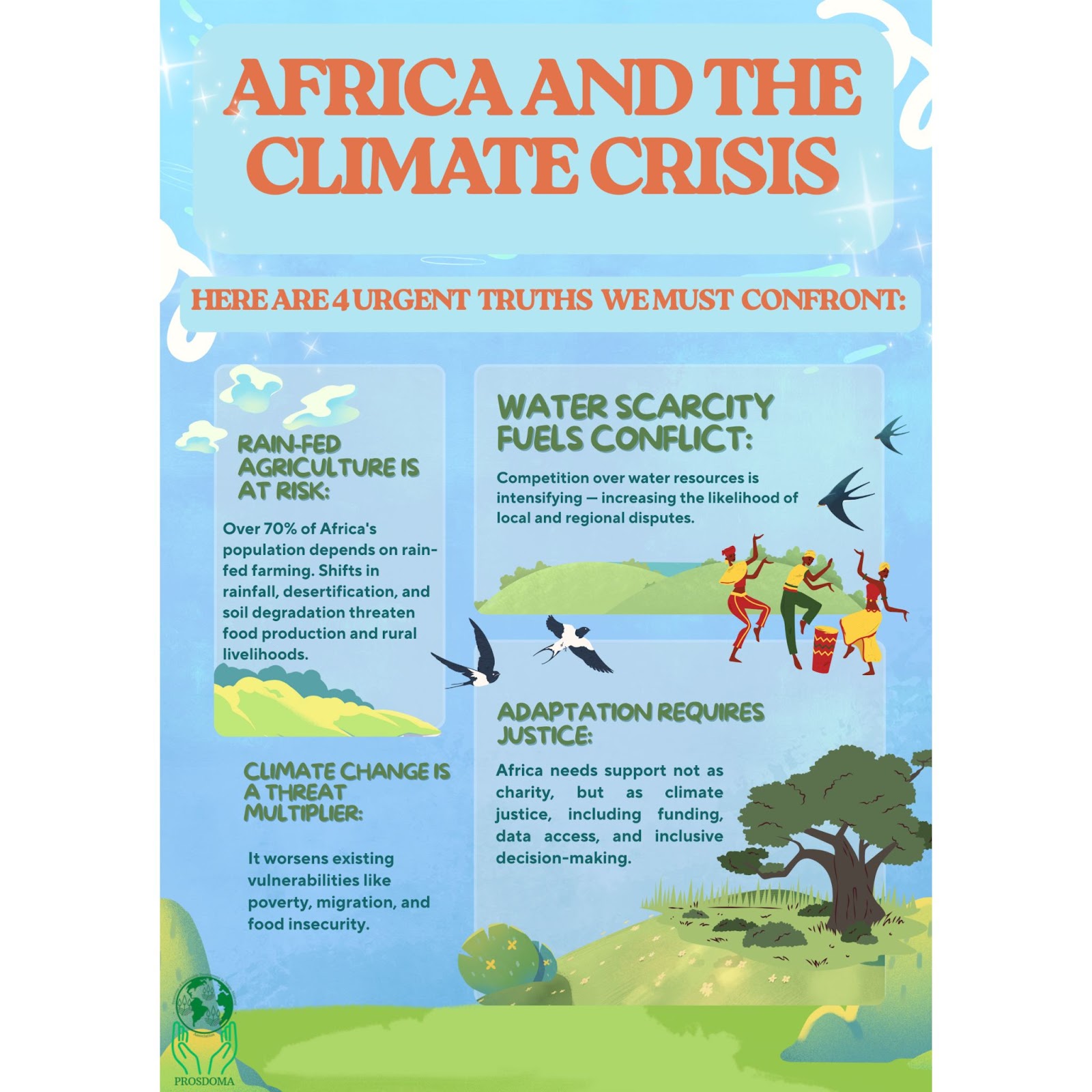
    Here are 4 urgent truths we must confront:

    1️⃣ Rain-fed agriculture is at risk.
    Over 70% of Africa’s population depends on rain-fed farming. Shifts in rainfall, desertification, and soil degradation threaten food production and rural livelihoods.

    2️⃣ Water scarcity fuels conflict.
    Competition over water resources is intensifying — increasing the likelihood of local and regional disputes.

    3️⃣ Climate change is a threat multiplier.
    It worsens existing vulnerabilities like poverty, migration, and food insecurity.

    4️⃣ Adaptation requires justice.
    Africa needs support not as charity, but as climate justice — including funding, data access, and inclusive decision-making.

    So, what can be done?

    ✅ Increase international climate finance directed to African-led solutions
    ✅ Strengthen early warning systems and local adaptation capacity
    ✅ Invest in sustainable agriculture, water access, and youth-led innovation
    ✅ Center African voices in global climate negotiations

    At PROSDOMA, we put these solutions into practice — from supporting agroecology and water education in West Africa to climate literacy and integration support for migrants in Canada.

    Join the mission: prosdoma.org/

    By E.D.

    Source: Tadesse, D. (2010). The Impact of Climate Change in Africa. ISS Paper 220. Institute for Security Studies.
    https://www.issafrica.org

    #ClimateJustice #AfricaClimateCrisis #Prosdoma #SustainableDevelopment #WaterSecurity #AdaptationNow #ClimateAction #FoodSecurity #EnvironmentalEquity #YouthForClimate

    Food Security in Africa: A Call for Long-Term, Community-Led Action
    Climate change, HIV/AIDS, population pressures, and recurring disasters are placing millions of African lives at risk from chronic food insecurity. But short-term fixes won’t solve long-term hunger.

    Recent program data from the International Federation (2008) shows that holistic, integrated approaches are essential for building lasting food security. A five-year strategy engaging 15 African National Societies,  from Uganda to Swaziland emphasized community-based action, multi-sector coordination, and sustained investment.

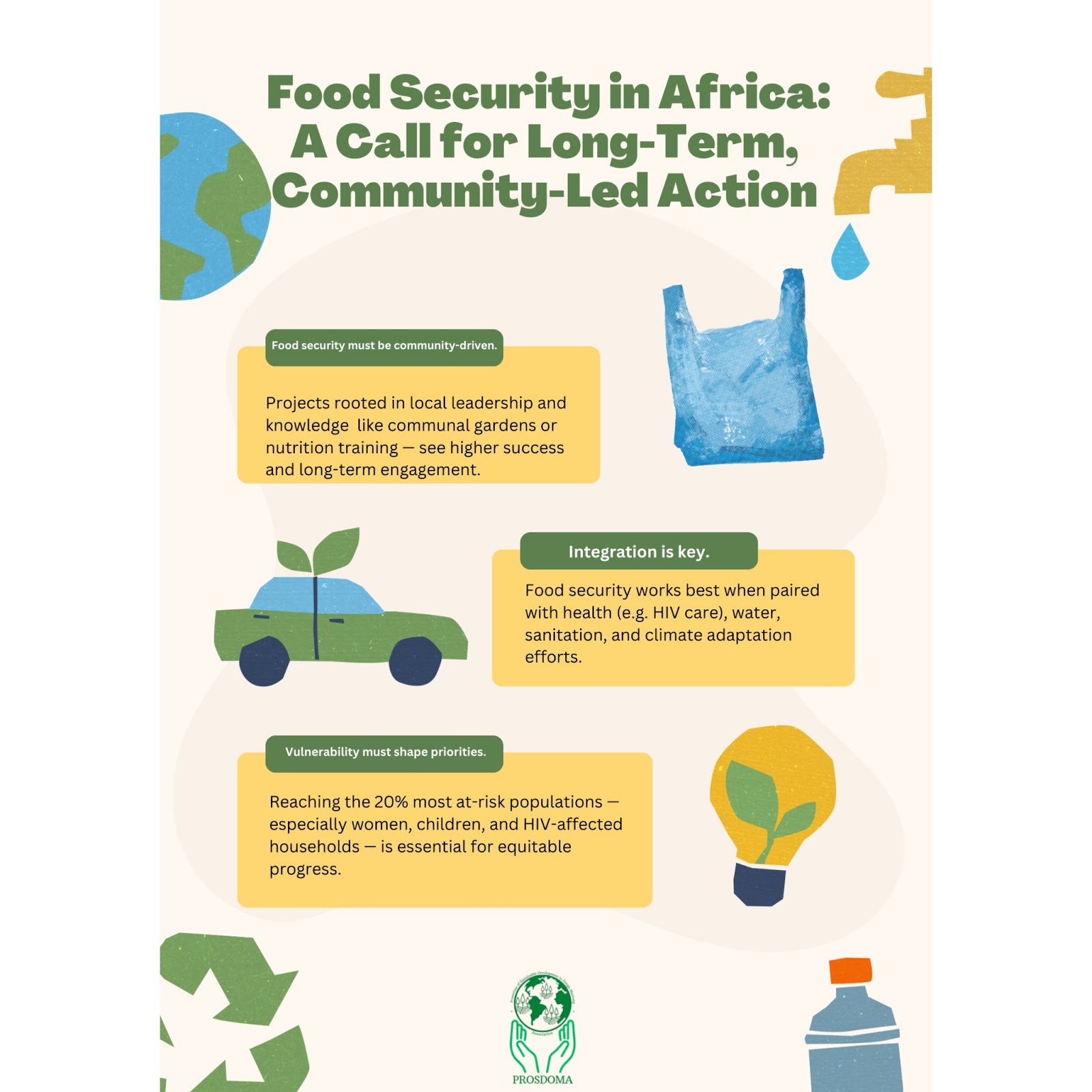
    4 key takeaways:

    1️⃣ Food security must be community-driven.
    Projects rooted in local leadership and knowledge — like communal gardens or nutrition training — see higher success and long-term engagement.

    2️⃣ Integration is key.
    Food security works best when paired with health (e.g. HIV care), water, sanitation, and climate adaptation efforts.

    3️⃣ Vulnerability must shape priorities.
    Reaching the 20% most at-risk populations, especially women, children, and HIV-affected households, is essential for equitable progress.

    What can be done?
    ✅ Fund long-term national food security plans
    ✅ Support African-led frameworks with local ownership
    ✅ Link food, health, and disaster preparedness strategies
    ✅ Empower grassroots institutions to lead

    At PROSDOMA, we apply these principles every day from regenerative farming in Cameroon to food justice education for newcomers in Canada. We know that resilience grows from the roots up.

    Learn more or partner with us: prosdoma.org/

    By E.D.

    Source: International Federation of Red Cross and Red Crescent Societies. (2008). Food Security in Africa. Appeal No. MAA00023. https://www.ifrc.org/docs/appeals/annual08/MAA0002308pu1f.pdf

    #FoodSecurity #AfricaDevelopment #ClimateJustice #HIVandHunger #IntegratedApproach #Prosdoma #CommunityResilience #Agroecology #WaterSanitationHealth #LongTermImpact #DisasterPreparedness

    Sustainability in Africa: Beyond Land, Beyond Yields

    Africa is rich in natural resources, cultural diversity, and ecological potential. Yet environmental degradation, social inequalities, and the impacts of climate change continue to limit the continent’s capacity to develop equitably and sustainably.

    Recent research highlights that while agricultural modernization is increasing production, it also exacerbates land degradation, water stress, and social exclusion, particularly among the landless poor (Whitfield, 2016).
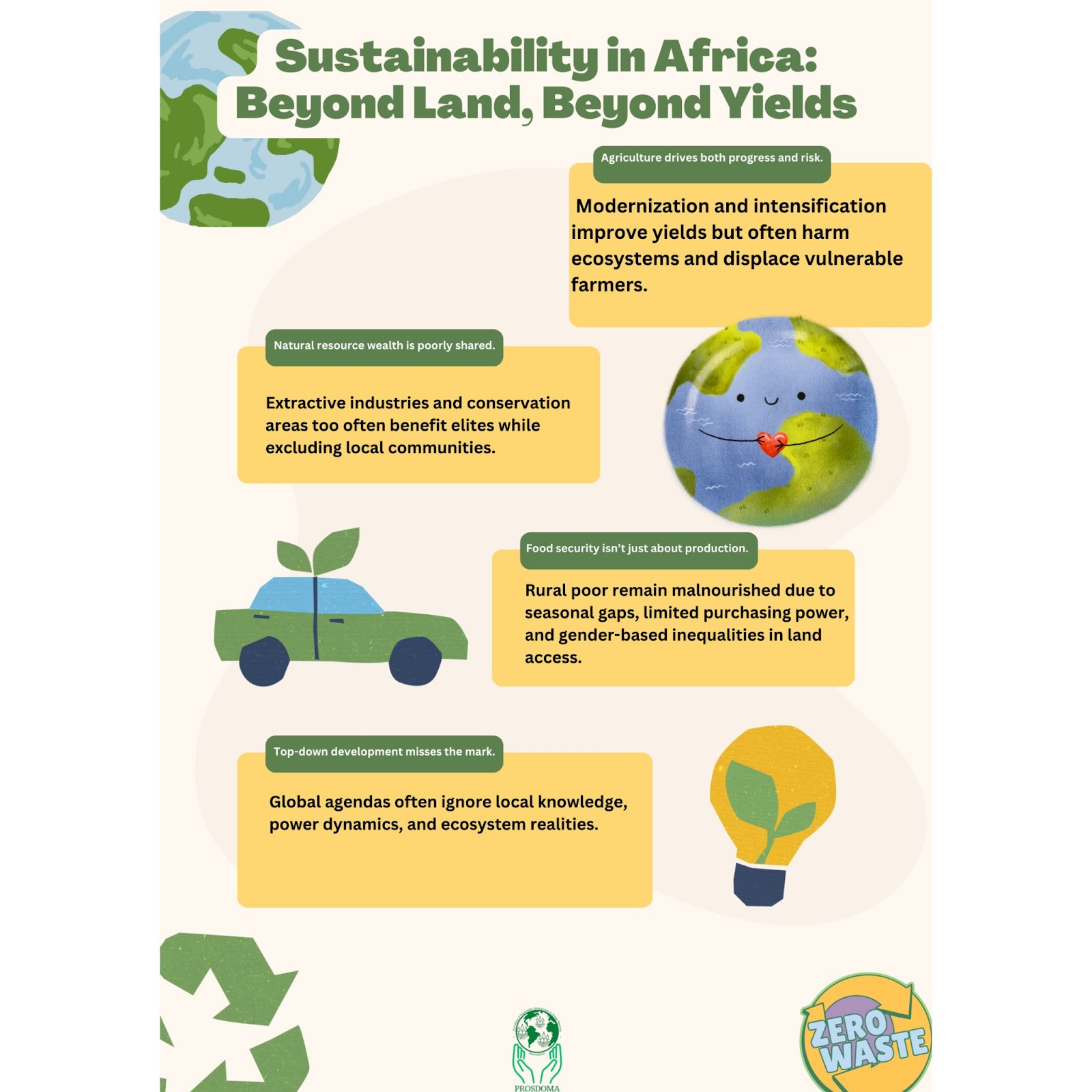
    4 key takeaways:

    1️⃣ Agriculture drives both progress and risk.
    Modernization and intensification improve yields but often harm ecosystems and displace vulnerable farmers.

    2️⃣ Natural resource wealth is poorly shared.
    Extractive industries and conservation areas too often benefit elites while excluding local communities.

    3️⃣ Food security isn’t just about production.
    Rural poor remain malnourished due to seasonal gaps, limited purchasing power, and gender-based inequalities in land access.

    4️⃣ Top-down development misses the mark.
    Global agendas often ignore local knowledge, power dynamics, and ecosystem realities.

    What can be done?

    ✅ Support agroecology and land rights for smallholders
    ✅ Integrate food, energy, and water planning
    ✅ Fund community-led conservation, not just carbon credits
    ✅ Ensure women and youth lead sustainability transitions

    At PROSDOMA, we turn these insights into action. Whether restoring land in West Africa or promoting equitable access to food and resources in Canada, we root sustainability in justice, not just in metrics.

    Learn more: prosdoma.org/

    By E.D.

    Source: Whitfield, S. (2016). Environmental and Social Sustainability in Africa. ISPI Background Paper No. 2.https://www.ispionline.it

    #SustainabilityInAfrica #Agroecology #ClimateJustice #FoodSecurity #NaturalResourceEquity #Prosdoma #EnvironmentalGovernance #AfricaDevelopment #LandRights #CommunityLedDevelopment

    Smart Water, Smarter Futures: How AI Is Reshaping Water Management

    Water utilities worldwide face a dual crisis: aging infrastructure and rising climate uncertainty. But artificial intelligence (AI) offers a powerful path forward  if used strategically.

    Recent research from the Asian Development Bank shows that AI can significantly improve leak detection, demand forecasting, and energy efficiency, saving utilities up to 11% in annual costs while advancing climate resilience and SDG 6 (ADB, 2020).
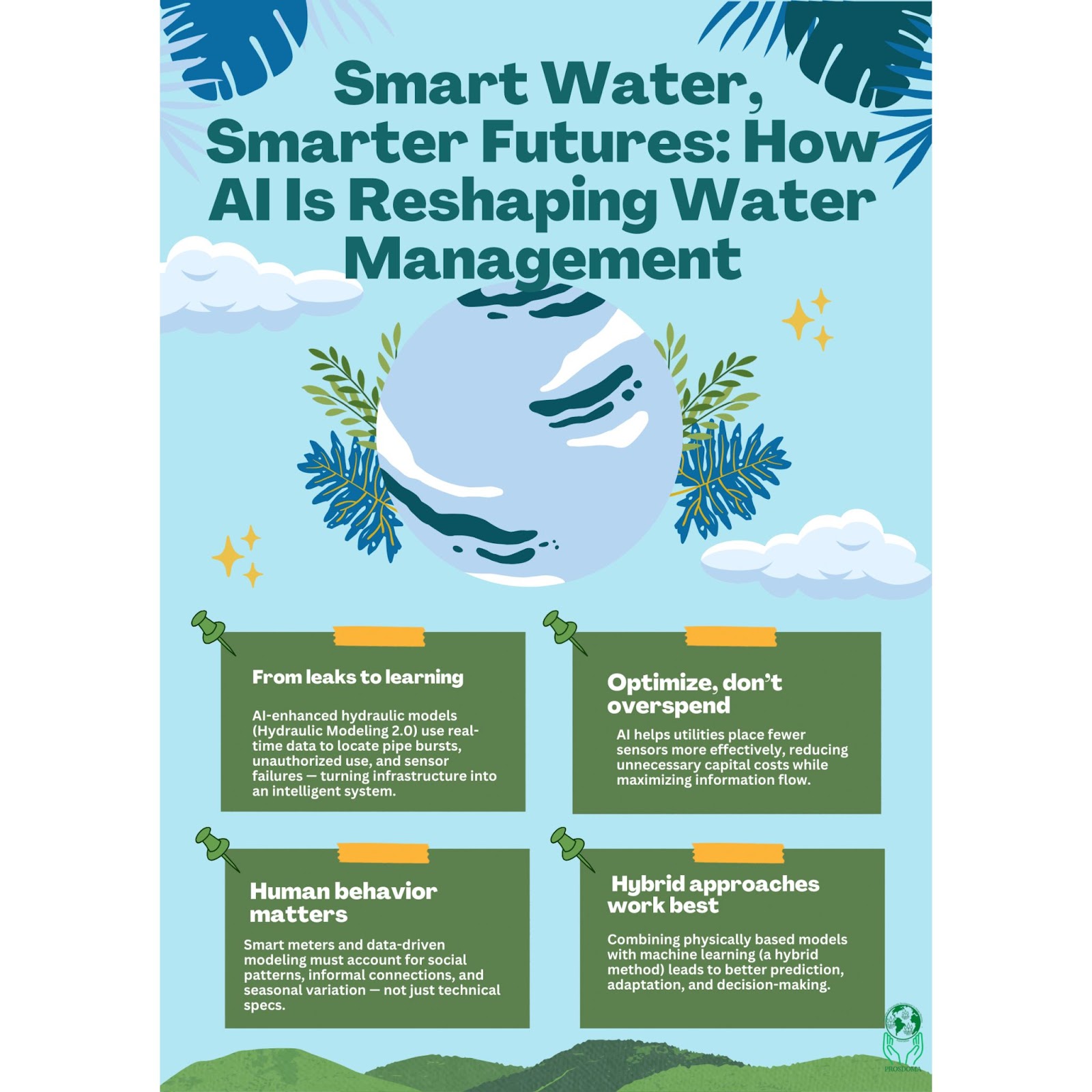
    Here are 4 key insights:

    1️⃣ From leaks to learning.
    AI-enhanced hydraulic models (Hydraulic Modeling 2.0) use real-time data to locate pipe bursts, unauthorized use, and sensor failures, turning infrastructure into an intelligent system.

    2️⃣ Optimize, don’t overspend.
    AI helps utilities place fewer sensors more effectively, reducing unnecessary capital costs while maximizing information flow.

    3️⃣ Human behavior matters.
    Smart meters and data-driven modeling must account for social patterns, informal connections, and seasonal variation, not just technical specs.

    4️⃣ Hybrid approaches work best.
    Combining physically based models with machine learning (a hybrid method) leads to better prediction, adaptation, and decision-making.

    What can be done?
    ✅ Invest in AI pilot programs for water utilities
    ✅ Promote affordable ICT systems for Global South cities
    ✅ Link digital water tools with public trust and ethics
    ✅ Support training and inclusive governance in smart infrastructure

    At PROSDOMA, we champion climate-tech solutions that prioritize both innovation and justice. Whether it’s smart irrigation in Africa or water literacy for newcomers in Canada — we believe tech must serve people first.

    Join us: prosdoma.org/

    By E.D.

    Source: Asian Development Bank (2020). Using Artificial Intelligence for Smart Water Management Systems (ADB Brief No. 143). https://doi.org/10.22617/BRF200191-2

    #SmartWater #AIforGood #WaterManagement #ClimateAdaptation #Prosdoma #SustainableInfrastructure #HydraulicModeling #SDG6 #DigitalTransformation #WaterEquity

    When a Tree Grows in School, a Future Takes Root

    Planting trees in schools does more than green the landscape,  it cultivates climate awareness, food security, and community resilience.

    Recent educational guides from Regreening Africa emphasize the transformative role of tree planting in African schools. These programs not only teach environmental stewardship, but also provide shade, nutrition, livelihoods, and learning opportunities (Koech et al., 2022).
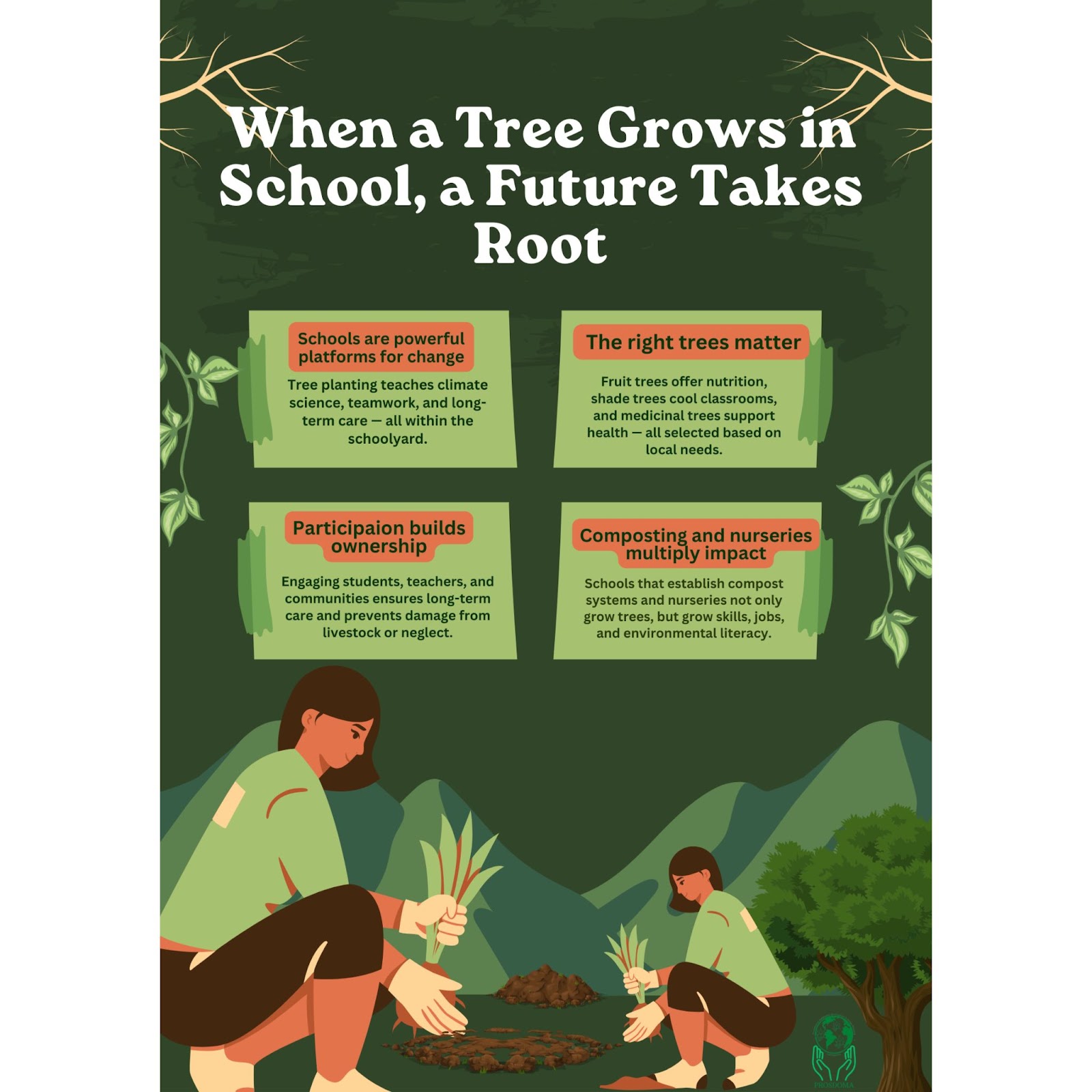
    4 key takeaways:

    1️⃣ Schools are powerful platforms for change.
    Tree planting teaches climate science, teamwork, and long-term care — all within the schoolyard.

    2️⃣ The right trees matter.
    Fruit trees offer nutrition, shade trees cool classrooms, and medicinal trees support health, all selected based on local needs.

    3️⃣ Participation builds ownership.
    Engaging students, teachers, and communities ensures long-term care and prevents damage from livestock or neglect.

    4️⃣ Composting and nurseries multiply impact.
    Schools that establish compost systems and nurseries not only grow trees, but grow skills, jobs, and environmental literacy.

    What can be done?

    ✅ Support school-based agroforestry education
    ✅ Fund school nurseries and climate clubs
    ✅ Promote girls’ leadership in environmental action
    ✅ Integrate tree planting into national education strategies

    At PROSDOMA, we believe that classrooms can be climate labs. From planting trees in African villages to teaching climate justice in Canadian schools, we root learning in the land.

    Join our mission: prosdoma.org/contact

    By E.D.

    Source: Koech, G., Tengetile, Z. M., & Bourne, M. (2022). Guide on Planting Trees in Schools. World Agroforestry (ICRAF), Nairobi, Kenya.

    #TreePlanting #SchoolForestry #ClimateEducation #GreenSchools #Agroforestry #Prosdoma #EnvironmentalLiteracy #YouthForClimate #FoodSecurity #NatureInEducation #RegreeningAfrica

    #prosdoma 

  • Migration: A Path to Sustainable Development for All

    Migration: A Path to Sustainable Development for All

    Migration is often viewed through a lens of crisis, but did you know it can be a model for sustainable development?   With the world facing climate change, conflict, and economic disparities, migration offers a solution that benefits everyone – if managed well. 

    Here’s why migration can drive positive outcomes:

    1. A major driver of development  – Migration fuels economic growth, prosperity, and job creation. In 2020, international remittances totaled $670 billion, which is more than foreign investments in many low- and middle-income countries.
    2. Global labor markets  – With labor shortages costing economies $1.3 trillion annually, migration is key to addressing these gaps. By matching available talent with job opportunities, we can drive growth and fill crucial roles across sectors.
    3. Demographic shifts   – Aging populations in developed nations, combined with the young and growing workforce in regions like Africa, create a demand for migration to fill labor shortages and harness global talent.
    4. A sustainable model for all  – Expanding safe, regular migration pathways can reduce pressure on asylum systems, provide better skills alignment, and create economic opportunities that benefit migrants and destination countries alike.

    At Prosdoma, we work with newcomers in Alberta, Canada, helping them build their new lives through integration support, skills development, and creating connections to resources. By supporting migration pathways and embracing the strengths of migrants, we contribute to a sustainable future for everyone. 

    Let’s unlock the potential of migration and turn it into an opportunity for growth, unity, and a better tomorrow. Ready to get involved? Reach out to Prosdoma today! 

    #MigrationMatters #SustainableDevelopment #MigrationForAll #EconomicGrowth #SkillsDevelopment #Prosdoma #CommunityBuilding #ClimateChange #GlobalTalent #NewOpportunities #InclusiveFuture

    Source:https://www.weforum.org/stories/2024/01/migration-model-sustainable-development/

    AC

  • The Power of Volunteering

    The Power of Volunteering

    Volunteering is more than just giving your time – it’s about creating connections, building stronger communities, and improving your own well-being.   Whether you’re new to an area or looking to make a positive impact, volunteering offers a unique chance to contribute to causes that matter.

    Here’s why you should consider volunteering:

    1. Build Connections – Volunteering helps you meet new people, expand your network, and strengthen your social bonds. It’s a great way to create meaningful relationships within your community.
    2. Boost Your Mental & Physical Health – Did you know volunteering can lower stress and combat depression? Plus, it’s linked to better physical health and a longer life.
    3. Advance Your Career – Volunteering helps you develop essential workplace skills like communication, problem-solving, and project management. It can even open doors to new career opportunities!
    4. Fulfillment & Happiness – Giving back boosts your self-confidence and can make you feel incredibly fulfilled. Studies show that volunteers are happier and more satisfied with their lives.

    At Prosdoma, we believe in the power of community. Volunteering is not only about helping others, but it’s also about building a stronger, more sustainable future for all. Whether you’re supporting newcomers to Alberta  , helping in Africa  , or working toward a more sustainable environment  , your time makes a difference.

    Ready to make an impact? Start volunteering today and join us in creating a better tomorrow! 

    #CommunityBuilding #Volunteer #Prosdoma #SocialImpact #MentalHealth #CareerDevelopment #Sustainability #GiveBack #VolunteerPower #EcoFriendly #PositiveChange

    Source:https://www.wcsu.edu/community-engagement/benefits-of-volunteering/

    AC

  • Think you know migration?

    Think you know migration?

    Here are 3 common myths—and the real facts behind them.

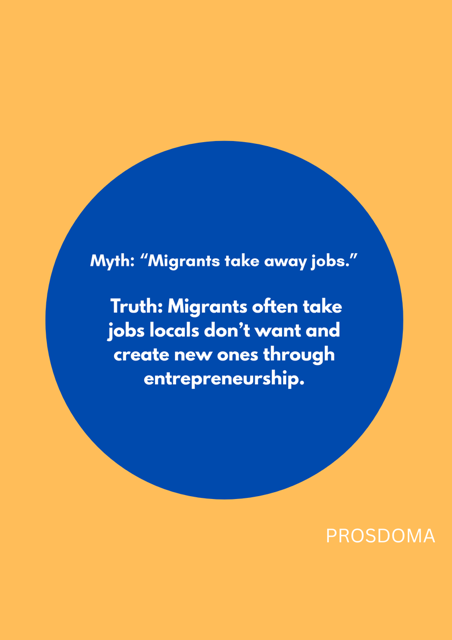
     .png “Migrants take away jobs.”

    ✅.png Truth: Migrants often take jobs locals don’t want and create new ones through entrepreneurship.

     .pngMost migrants are unskilled.”

    ✅.png Truth: Many bring diverse skills and education, filling gaps in healthcare, tech, and more.

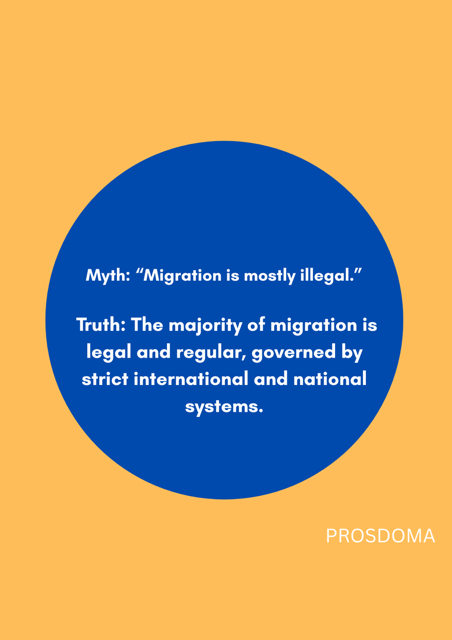
     .png “Migration is mostly illegal.”

    ✅.png Truth: The majority of migration is legal and regular, governed by strict international and national systems.

    #migrationfacts

    NN

  • Climate Change: A Crisis We ALL Face

    Climate Change: A Crisis We ALL Face

    Climate change is NOT a distant problem – it’s happening NOW, and it affects everyone. From wildfires   to floods   and hurricanes  , we’re all feeling the heat. Did you know? Between 2010 and 2020, vulnerable regions experienced 15x higher mortality rates due to climate disasters. 

    If we don’t act, global temperatures could rise by over 3°C, causing major disruptions to ecosystems and economies. But here’s the good news – we can still make a change  ! It’s time to raise our ambitions and fight back! We need to cut emissions, switch to renewable energy ⚡, and transform industries from agriculture to transportation. The Paris Agreement was a start, but there’s more to do! ✊

    Prosdoma is committed to building a sustainable future   – supporting newcomers, raising awareness about climate action, and empowering communities with sustainable practices  . Together, we can create a resilient and eco-friendly future for all!

      What can YOU do? Start small – reduce waste, support green businesses  , spread the word, and make a difference! Every action counts. Let’s ACT NOW before it’s too late! ⏳

    #ClimateAction #SustainableFuture #Prosdoma #GoGreen #ClimateChange #ActNow #NetZero #EcoFriendly #RenewableEnergy #SaveThePlanet

    Source: https://www.un.org/sustainabledevelopment/climate-change/
    AC

  • Empowering Cameroon’s Farmers Through Sustainable Agriculture with PROSDOMA

    Empowering Cameroon’s Farmers Through Sustainable Agriculture with PROSDOMA

    For generations, farming was primarily a means of survival, but as the climate crisis
    accelerates, agriculture is emerging as one of our most powerful tools for environmental
    restoration, food security, and economic transformation.
    Around the world, farmers are shifting practices to reduce emissions and restore the planet. In

    India, rice growers are adopting direct seeding to cut water use and methane. In Kenya, youth-
    led agroforestry initiatives are revitalizing degraded land. In Brazil, regenerative ranching is

    helping to capture carbon in the soil.
    Yet access to climate-smart technologies, sustainable techniques, training, and market
    opportunities remains uneven—especially in rural African communities. In Cameroon,
    however, Promotion of Sustainable development in Donga-Mantung Association
    (PROSDOMA), with a mission to promote sustainable farming, improve food and crop
    production, and strengthen rural resilience, is helping farmers become front-line defenders
    against climate change.
    In Cameroon’s Far North Region, where drought and desertification threaten food production,
    fields once barren are now growing millet, moringa, and legumes. Through climate-smart
    agricultural practices supported by PROSDOMA such as zai pits for water retention, organic
    composting, and crop diversification, farmers are restoring degraded lands and improving
    yields.
    In the West Region, PROSDOMA promotes terraced farming to reduce soil erosion on hilly
    terrain, while in the Central Region, youth cooperatives supported by the organization are
    converting farm waste into organic fertilizer, improving soil health and cutting farming costs.
    By integrating rural development, economic empowerment, and environmental stewardship,
    PROSDOMA is tackling the root causes of poverty and food insecurity. The focus is not only
    on growing food but also on building systems that can withstand climate shocks, generate local
    jobs, and ensure long-term sustainability.
    PROSDOMA envisions a future where rural communities thrive, natural ecosystems recover,
    and sustainable agriculture becomes the foundation for Africa’s development
    As the climate crisis intensifies, Cameroon’s rural farmers are proving that local solutions can
    drive global change. With continued support, training, and investment, their work can scale not
    only across Cameroon, but across the continent.
    Africa’s fight against the climate crisis will not be won in boardrooms but in fields where
    every seed planted is a stand for sustainability.

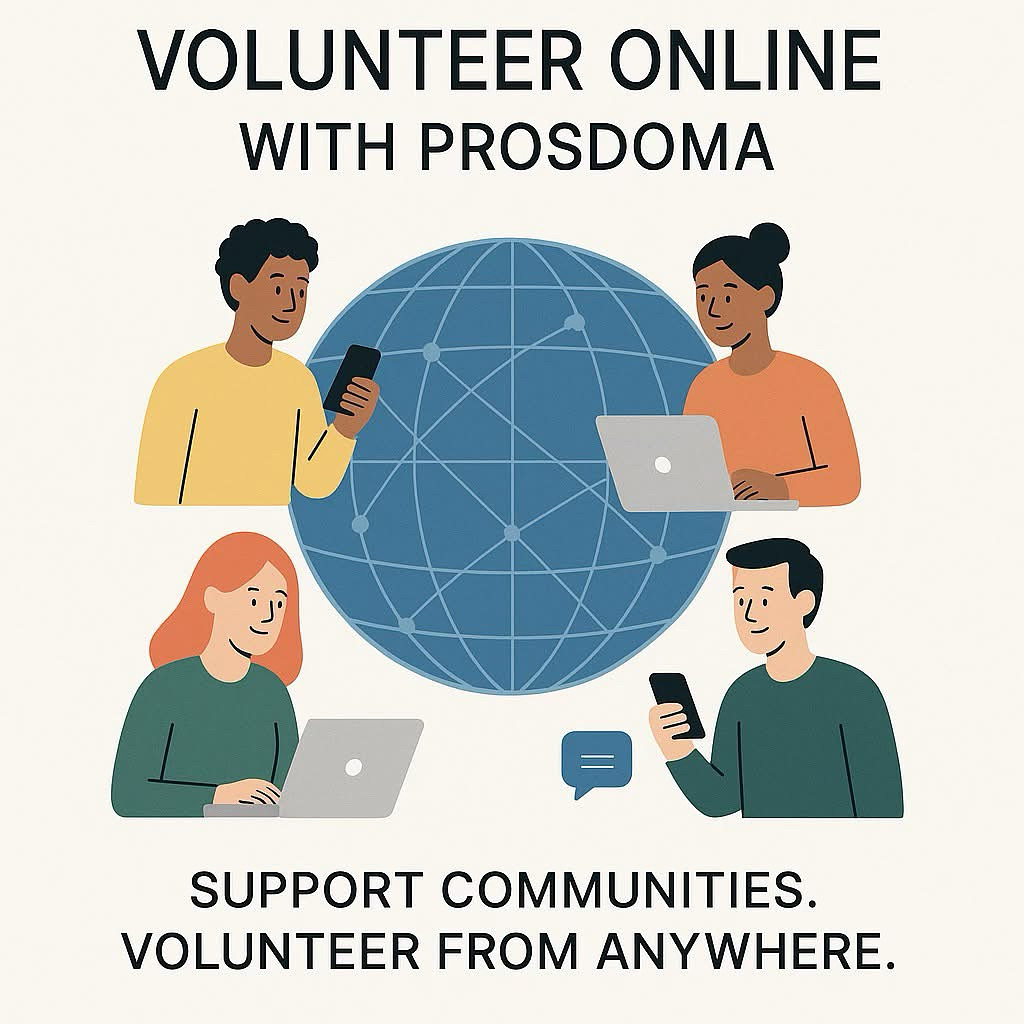
  • Why Online Volunteering Matters – and Why YOU Matter

    Why Online Volunteering Matters – and Why YOU Matter

    In today’s connected world, making a difference doesn’t require boarding a plane or being in a meeting room.

    At PROSDOMA, our online volunteers are proof that impact has no borders.

    With just a device and dedication, you can help newcomers feel at home in Alberta, support sustainable development in Africa, and amplify important causes like climate action – all from your own space.

    Whether you’re a professional or someone simply passionate about change, your skills are powerful.

      Let’s use them to build something that matters.

  • Can Digital Tools Empower Rural Africa? A Call for Inclusive ICT Development

    Can Digital Tools Empower Rural Africa? A Call for Inclusive ICT Development

    As the digital revolution transforms lives across the globe, millions in rural Africa remain disconnected, not just from the internet, but from opportunity. What if the solution to closing this gap lies not only in fiber optic cables and devices, but in inclusive, context-driven ICT policy and practice?

    In their groundbreaking study, Joseph & Andrew (2006) argue that ICT has the power to catalyze rural development, if designed with empowerment in mind. Their review of case studies across Sub-Saharan Africa reveals how access to digital tools contributes to improvements in agriculture, health, governance, and gender equality.

    ✨ Success stories include:

    Busy Internet in Ghana: A hub for digital access and skills development.

    NEPAD e-schools: Offering free internet, health points, and e-learning to underserved communities.

    WOFAN (Nigeria): Leveraging radio to educate rural women on health, farming, and rights.

    Women’s Voices (Kenya): Teaching women to create video narratives about their own lives, reclaiming power through storytelling.

    Yet, the challenges are deep-rooted:

    High costs of devices and connectivity

    Scattered rural populations and low literacy

    Gendered barriers in ICT access and leadership

    Lack of localized software and user-centered design

    Outdated ICT policies that fail to include the most marginalized

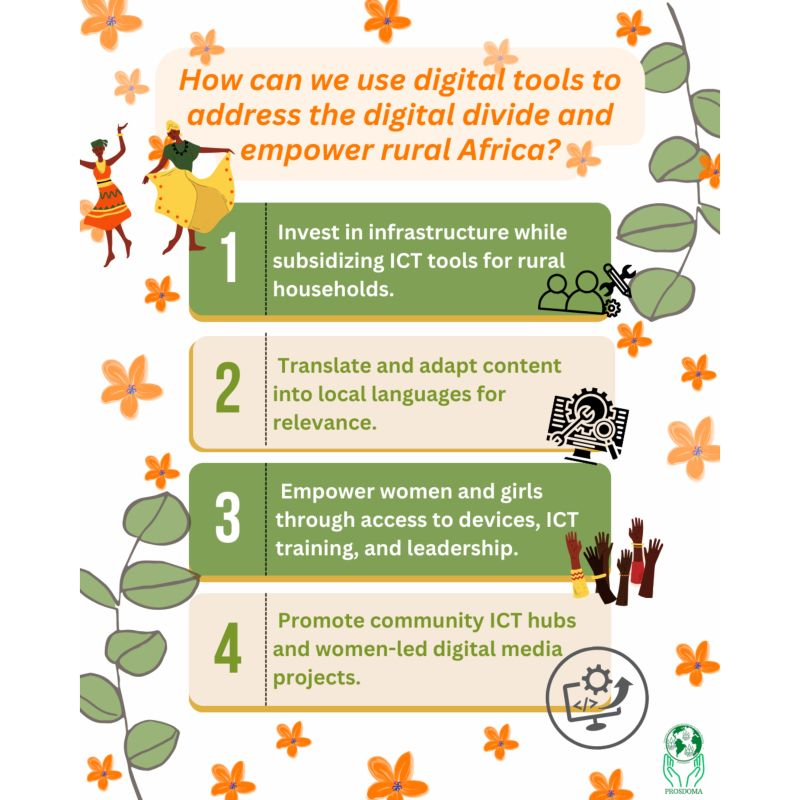
    So what can we do to close the digital divide?

    Invest in infrastructure while subsidizing ICT tools for rural households.

    Translate and adapt content into local languages for relevance.

    Empower women and girls through access to devices, ICT training, and leadership.

    Promote community ICT hubs and women-led digital media projects.

    At PROSDOMA, we know that digital access isn’t just a tech issue—it’s a justice issue. That’s why our work bridges continents: empowering newcomers in Canada and uplifting communities in Africa. We envision a future where no voice is excluded from the digital conversation.

    Join Us: https://old.prosdoma.org/

    by E.D.

    Source: Joseph, M. & Andrew, T. (2006). Rural African Dreams: ICT for Development. IST-Africa Conference Proceedings.

       How Can Technology Drive Sustainable Behavior? Insights from Psychology & Design

    Did you know that technology doesn’t just consume resources—it can also shape how we conserve them?

    According to Midden et al. (2007), technology plays four powerful roles in environmental behavior:

    Intermediary – sits between behavior and impact (e.g., using a lightbulb vs. sunlight).

    Amplifier – boosts our performance and our resource use (e.g., better cars = more driving).

    Determinant – silently shapes behavior by making some actions easier or harder (e.g., presence of bike lanes).

    Promoter – encourages sustainability through interactive feedback, smart systems, and immersive media.

    These insights show that behavioral design and engineering must go hand in hand to build greener futures.

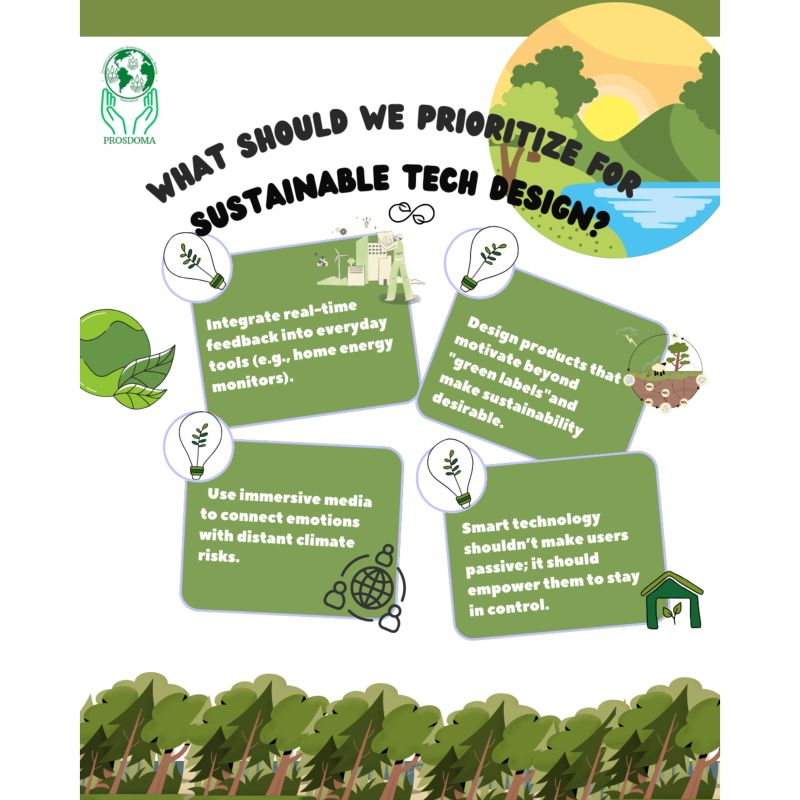
    What should we prioritize for sustainable tech design?

    Integrate real-time feedback into everyday tools (e.g., home energy monitors).

    Design products that motivate beyond “green labels”—make sustainability desirable.

    Use immersive media to connect emotions with distant climate risks.

    Smart technology shouldn’t make users passive; it should empower them to stay in control.

    At PROSDOMA, we believe sustainability begins with awareness and evolves through action. Whether supporting rural farming in Africa or digital literacy in Canada, we embrace technology’s transformative role in resource conservation.

    Join Us: https://old.prosdoma.org/

    by E.D.

    Source: Midden, C. J. H., Kaiser, F. G., & McCalley, L. T. (2007). Technology’s Four Roles in Understanding Individuals’ Conservation of Natural Resources, Journal of Social Issues.

    ⚖️ Can Legal Advocacy Deliver Climate Justice? Exploring the Power of Law in the Face of Inequality

    As climate change accelerates, so do its injustices. Despite contributing the least to global emissions, marginalized communities, from low-income neighborhoods in the U.S. to coastal villages in Bangladesh, bear the brunt of environmental disasters, toxic pollution, and forced migration.

    According to Ahmed & Uddin (2025), legal advocacy has emerged as a critical tool in the fight for environmental justice. By examining landmark cases like Juliana v. U.S., Urgenda v. Netherlands, and Waorani v. Ecuador, the authors show how courts can hold governments and corporations accountable, enforce emission targets, and empower local communities to protect their land and health.

    However, major gaps remain:

    The 1951 Refugee Convention doesn’t recognize climate-induced displacement.

    Many environmental laws lack enforcement power.

    Access to legal aid remains limited for vulnerable populations.

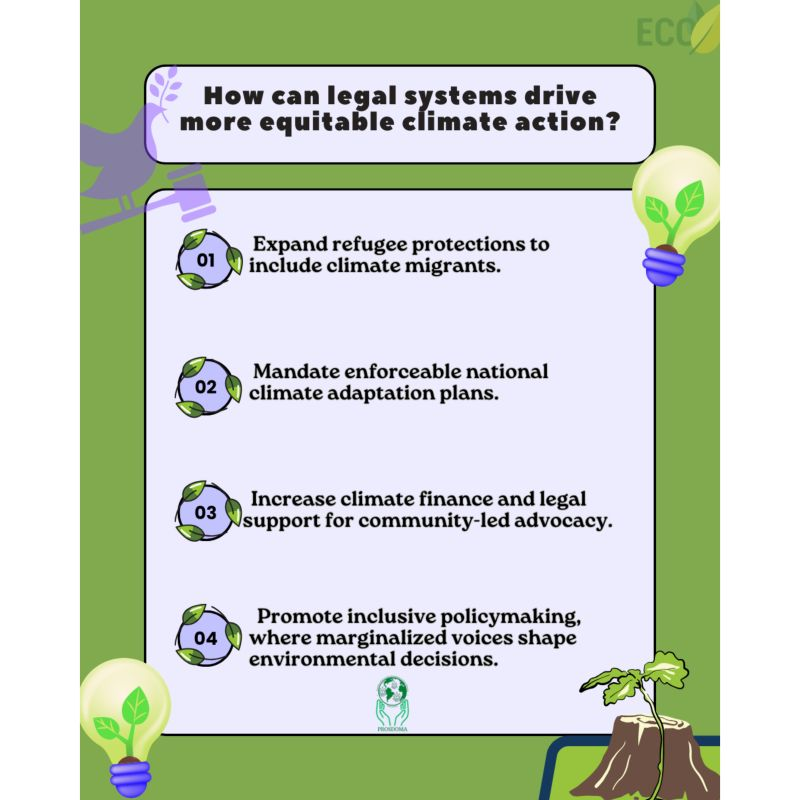
    So, how can legal systems drive more equitable climate action?

    Expand refugee protections to include climate migrants.

    Mandate enforceable national climate adaptation plans.

    Increase climate finance and legal support for community-led advocacy.

    Promote inclusive policymaking, where marginalized voices shape environmental decisions.

    At PROSDOMA, we believe justice and sustainability go hand in hand. Whether it’s defending rural livelihoods in Africa or supporting migrants in Canada, we advocate for a world where law serves the planet and its people equitably.

    Join Us: https://old.prosdoma.org/

    by E.D.

    Source:

    Ahmed, M. & Uddin, M.J. (2025). Environmental Justice and the Role of Legal Advocacy in Addressing Climate Change. Journal of Humanities and Social Sciences Studies, 7(4), 45–64. https://lnkd.in/dBv3kzge

    Can Education Save the Environment? A New Look at What Works in Conservation

    According to a powerful systematic review by Ardoin et al. (2020), environmental education (EE) when designed intentionally can do much more than raise awareness. It can lead to measurable conservation outcomes.

    In a review of 105 studies, researchers found that while most EE programs increase knowledge and attitudes, a growing number also lead to:

    Observed behavior change (e.g. reduced water/pesticide use)

    Environmental actions (e.g. reforestation, cleanup efforts)

    Community capacity-building (e.g. local conservation groups)

    Ecological improvements (e.g. water quality, biodiversity gains)

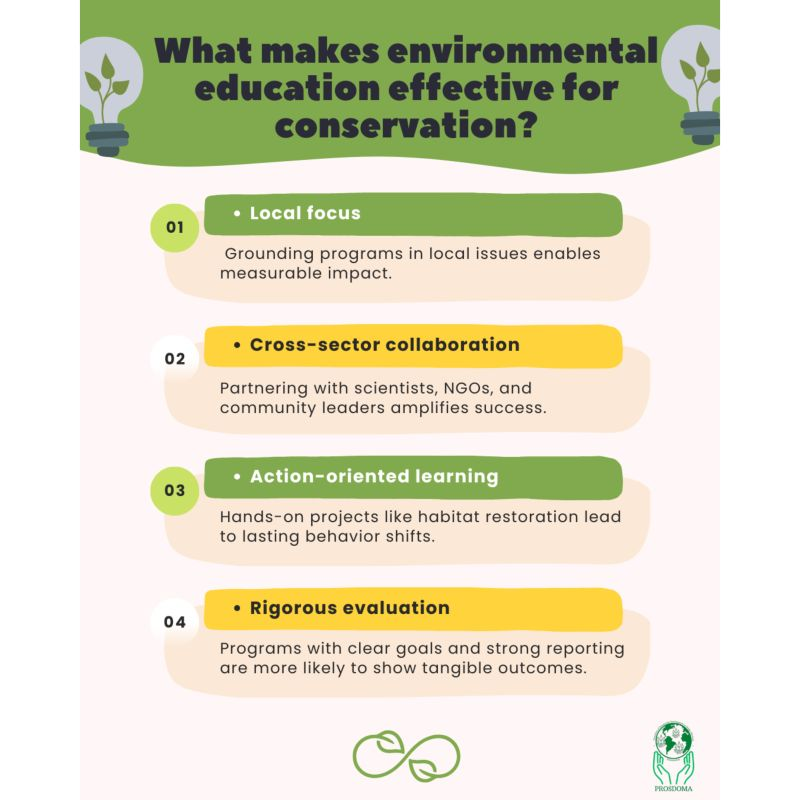
    So, what makes environmental education effective for conservation?

    Local focus :

    Grounding programs in local issues enables measurable impact.

    Cross-sector collaboration:

    Partnering with scientists, NGOs, and community leaders amplifies success.

    Action-oriented learning:

    Hands-on projects like habitat restoration lead to lasting behavior shifts.

    Rigorous evaluation:

    Programs with clear goals and strong reporting are more likely to show tangible outcomes.

    At PROSDOMA, we believe environmental education is a catalyst for both social and ecological transformation. Whether it’s empowering rural communities in Africa or newcomers in Canada, our work connects knowledge with action, ensuring education doesn’t stop at awareness, but becomes a tool for real change.

    Join Us: https://old.prosdoma.org/

    by E.D.

    Source:

    Ardoin, N.M. et al. (2020). Environmental education outcomes for conservation: A systematic review. Biological Conservation, 241, 108224

    Why Rural Development Is the Backbone of Africa’s Agricultural Future

    In Africa, 70% of the labor force is engaged in agriculture, yet many rural communities remain underdeveloped and underserved.

    Agriculture is the main source of income for 90% of the rural population — and yet these regions often lack infrastructure, funding, and modern tools.

    The neglect of agriculture has led to a mass exodus from rural to urban areas, leaving villages depopulated and unattractive for investment.

    Sustainable rural development isn’t just about farming — it’s about health, education, roads, energy access, women’s empowerment, and community leadership.

    An integrated rural development model — linking agriculture with infrastructure, education, and health — is key to long-term resilience.

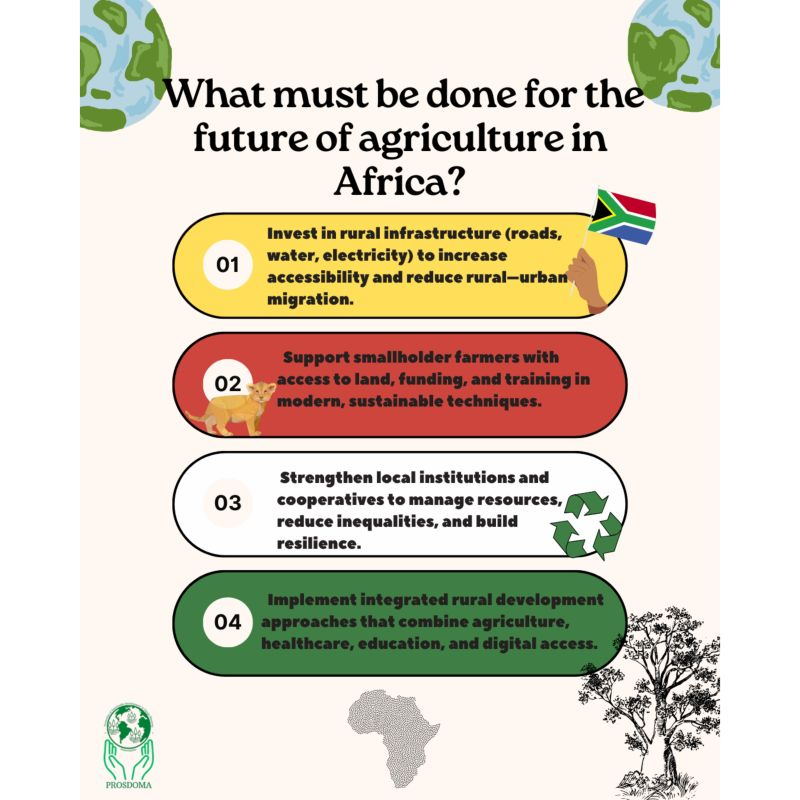
    So, what must be done for the future of agriculture in Africa?

    Invest in rural infrastructure (roads, water, electricity) to increase accessibility and reduce rural–urban migration.

    Support smallholder farmers with access to land, funding, and training in modern, sustainable techniques.

    Strengthen local institutions and cooperatives to manage resources, reduce inequalities, and build resilience.

    Implement integrated rural development approaches that combine agriculture, healthcare, education, and digital access.

    That’s why organizations like PROSDOMA matter. Their commitment to both newcomer integration in Canada and sustainable agriculture in Africa makes them a bridge between global communities and local resilience.

    Join Us: https://old.prosdoma.org/

    by E.D.

    Source:

    Nchuchuwe, F.F. & Adejuwon, K.D. (2012). The Challenges of Agriculture and Rural Development in Africa: The Case of Nigeria. International Journal of Academic Research in Progressive Education and Development.

  • Climate Change & Sustainable Development: The Future We Can Build Together

    Climate Change & Sustainable Development: The Future We Can Build Together

    Did you know that climate change and sustainable development are more connected than we think?   Both need to be tackled together to ensure a resilient future for all. Here’s why:

    ⚖️ Interconnected Challenges

    Climate change is not just an environmental issue—it’s linked to socio-economic development. The choices we make today about technology, policy, and development paths impact our ability to manage climate change.   Addressing both issues together can create new opportunities for a sustainable world.

      Adaptation: A Key Strategy

    We can reduce climate change risks and improve equity by integrating climate concerns into national and international development plans. By doing so, we protect vulnerable communities and ensure long-term development goals are met. 

      The Role of Sustainable Practices

    At PROSDOMA, we believe in combining efforts for environmental sustainability and community development. Whether it’s supporting sustainable farming in Africa or promoting green initiatives for newcomers in Canada, we are committed to building a better, more sustainable future for everyone. 

    Let’s take action today for a thriving tomorrow! Together, we can reduce climate risks, promote sustainable practices, and build resilient communities. 

    #ClimateAction #SustainableDevelopment #EnvironmentalSustainability #GreenFuture #ClimateChange #SocialImpact #GlobalGoals #PROSDOMA #EcoFriendly #CommunityBuilding

    Source: https://www.sciencedirect.com/science/article/pii/S1469306203001013

    AC

  • Why Volunteering Matters: Empower Your Community, Society, and Yourself!

    Why Volunteering Matters: Empower Your Community, Society, and Yourself!

      Why Volunteering Matters: Empower Your Community, Society, and Yourself! 

    Volunteering is a powerful way to give back and make a difference! Here’s why it matters: 

    ✨ For the Community

    Volunteering helps build strong, connected communities. It supports vital services like delivering meals  , organizing events  , and helping those in need. Without volunteers, many organizations couldn’t function!

      For Society

    Volunteers are the backbone of charities and nonprofits. They raise awareness, fundraise  , and support critical initiatives like disaster response  ️ or environmental protection  . Volunteers are the true changemakers!

      For You

    Volunteering isn’t just about giving—it’s about growing too! It boosts mental & physical health   , builds new skills  ️, and creates lasting friendships  . Plus, it’s a great way to expand your horizons and gain experience for your career  !

    At PROSDOMA, we’re all about making an impact, whether by helping newcomers settle in Alberta or promoting sustainable farming in Africa  . Join us to contribute to positive change!

    Ready to make a difference? Together, we can create a more resilient and sustainable future  ✨

    #VolunteerPower #CommunityFirst #SocialImpact #GiveBack #MakeADifference #SustainableFuture #PROSDOMA #Nonprofits #VolunteerToday #BetterTogether

    Source: https://www.rosterfy.com/blog/why-is-volunteering-important

    AC