Category: Uncategorized

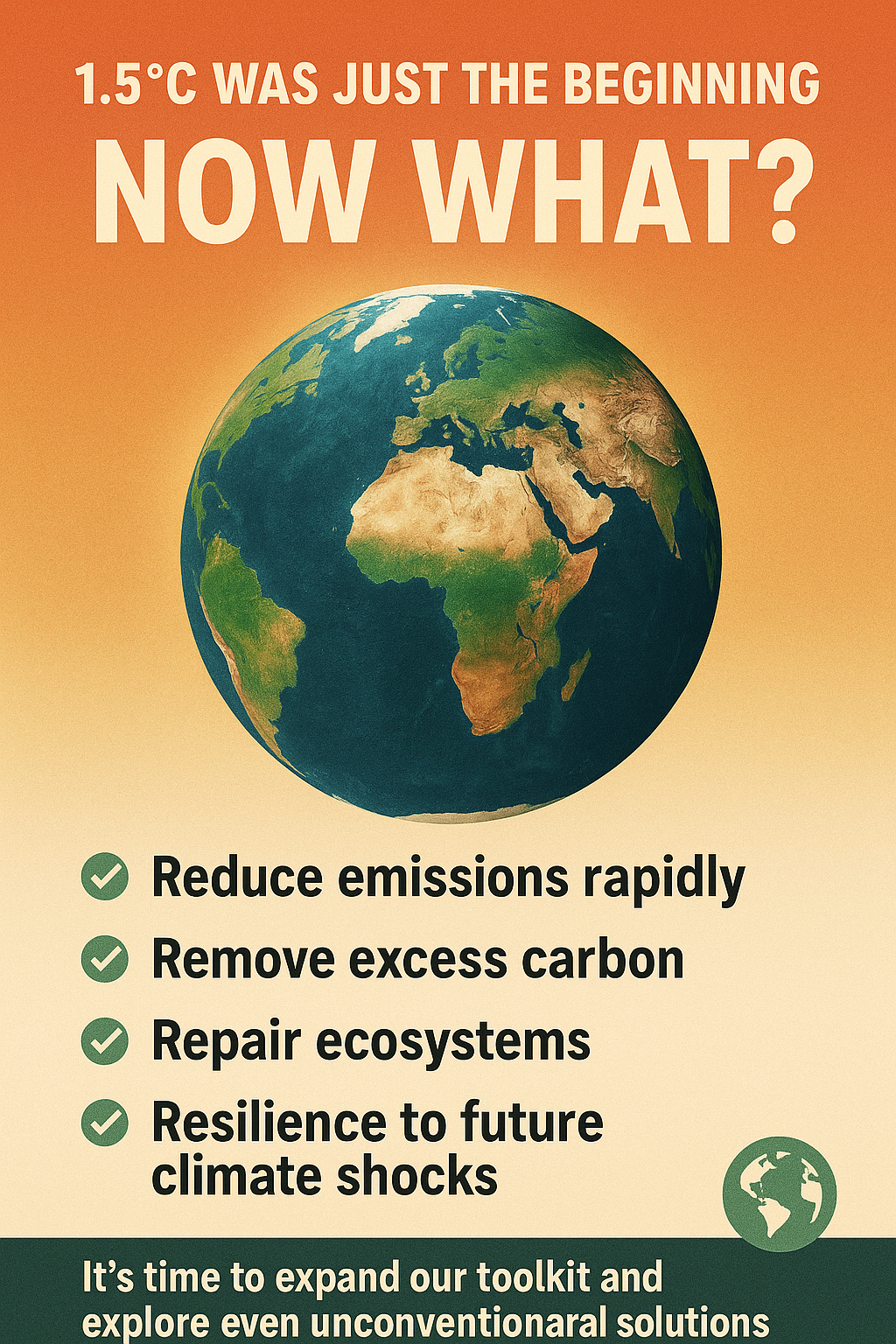
  • 1.5°C Was Just the Beginning: Now What? 

    1.5°C Was Just the Beginning: Now What? 

    The world has crossed a critical climate threshold — global temperatures have risen above 1.5°C for the first time in history. This isn’t a future scenario — it’s our present. Extreme weather, rising sea levels, and biodiversity loss are no longer distant possibilities; they are real, escalating threats affecting millions across the globe.  ️

    Professor Sir David King urges us to embrace a 4R strategy:

    ✔️ Reduce emissions rapidly
    ✔️ Remove excess carbon
    ✔️ Repair ecosystems
    ✔️ Resilience to future climate shocks

    It’s time to expand our toolkit and responsibly explore even the most unconventional climate solutions — like sea ice thickening or cloud brightening — not as replacements for emissions cuts, but as necessary complements. Scientific exploration must be transparent, ethical, and include Indigenous and local voices. 

    At PROSDOMA, we are dedicated to climate justice, empowering communities both in Alberta and Africa. Whether it’s through supporting sustainable farming or raising climate awareness, we stand with those advocating for bold, informed, and inclusive climate action. 

    The climate crisis demands courage, collaboration, and open dialogue — and the time is now. Join us at PROSDOMA as we push for a just and sustainable future for all. Let’s act before the choices are no longer ours to make. 

      Source: https://www.theguardian.com/commentisfree/2025/apr/07/climate-solutions-extreme-options
    #ClimateActionNow #SustainableDevelopment #1point5C #ClimateRepair #EcoJustice #GlobalWarming #EnvironmentalResponsibility #CommunityEmpowerment #PROSDOMA #ActForChange

  • What Makes People Leave Their Homes? Understanding the Root Causes of Migration

    What Makes People Leave Their Homes? Understanding the Root Causes of Migration

    Migration is more than movement — it’s a story of survival, dreams, and the pursuit of a better future. ✨

    Across the globe, millions of people migrate every year. But why do they leave everything behind? The answer lies in four major root causes — push and pull factors that shape lives and destinies:

      Safety Factors: Many flee their homes due to war, persecution, or organized violence. In regions like the Northern Triangle (Guatemala, Honduras, El Salvador), gang violence and lawlessness force families to seek safer ground.

      Economic Factors: Poverty, unemployment, and lack of opportunity drive people to migrate to areas with higher wages and job availability. As economies improve or decline, so do migration patterns — as seen in Mexican migration trends to the U.S.

     ️ Environmental Factors: Natural disasters, pollution, and climate change displace millions. From Haiti’s devastating earthquake to prolonged droughts in Syria, environmental crises fuel migration, often leaving communities vulnerable and unsupported.

      Social Factors: Education, healthcare, and better living standards motivate people to move. Migrants want to build a better life for their children, access life-saving treatment, or pursue career growth.

    At PROSDOMA, we see the people behind these statistics. We support newcomers in Alberta with essential services like legal aid, job assistance, and access to shelters. 
    Let’s continue building a world where no one is left behind — whether in Canada or across the globe.

      Want to support or learn more about how PROSDOMA is helping migrants and refugees? Reach out today!

    Source: chrome-extension://efaidnbmnnnibpcajpcglclefindmkaj/https://justiceforimmigrants.org/wp-content/uploads/2016/11/Root-Causes.pdf

    #migrationmatters #climatechange #socialimpact #economicjustice #refugeestories #newcomersupport #canadaimmigration #prosdoma #saferefuge #sustainabledevelopment.

    AC.

  • Wildfires in Alberta

    Wildfires in Alberta

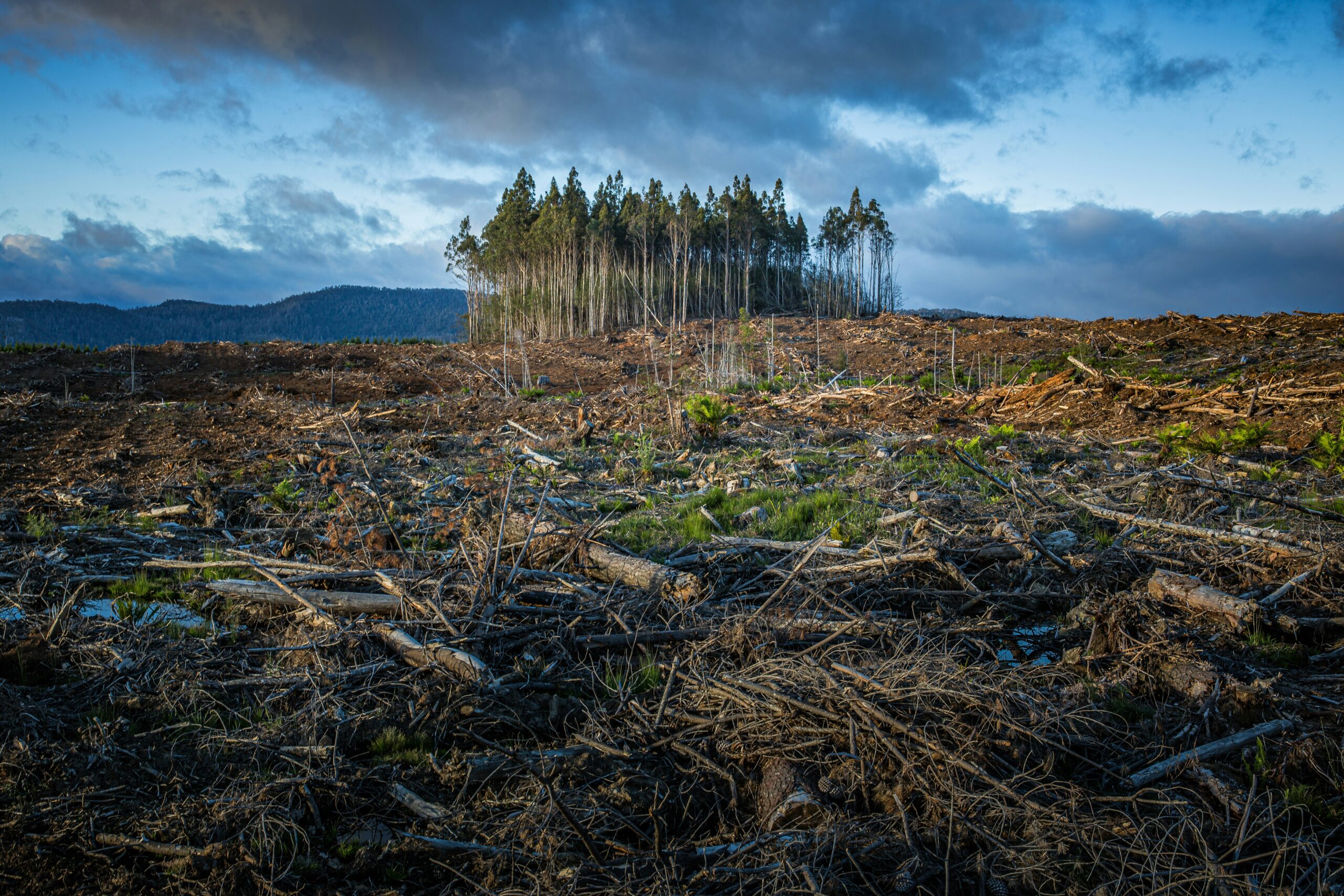
    Several Alberta communities were forced to evacuate as wildfires continue to rage across the province. These fires not only pose immediate danger to people and wildlife—they also threaten the long-term sustainability of Alberta’s forests. 

     Forests take decades to recover, and reforestation is essential—but it’s not quick or easy. That’s why PROSDOMA is committed to helping restore Alberta’s natural landscapes, one tree at a time. 

    ✅

     Through our tree planting efforts, we’re supporting reforestation and long-term forest health in wildfire-affected regions. 

     You can help too. Support our work and join the movement toward a more resilient, greener Alberta. 

     Learn more & get involved: prosdoma.org

     Source: friaa.ab.ca | alberta.ca/alberta-wildfire #AlbertaWildfires #Reforestation #ClimateAction #Sustainability #ForestRecovery #PROSDOMA #Alberta SH   

  • Climate change is shaping where people can live

    Climate change is shaping where people can live

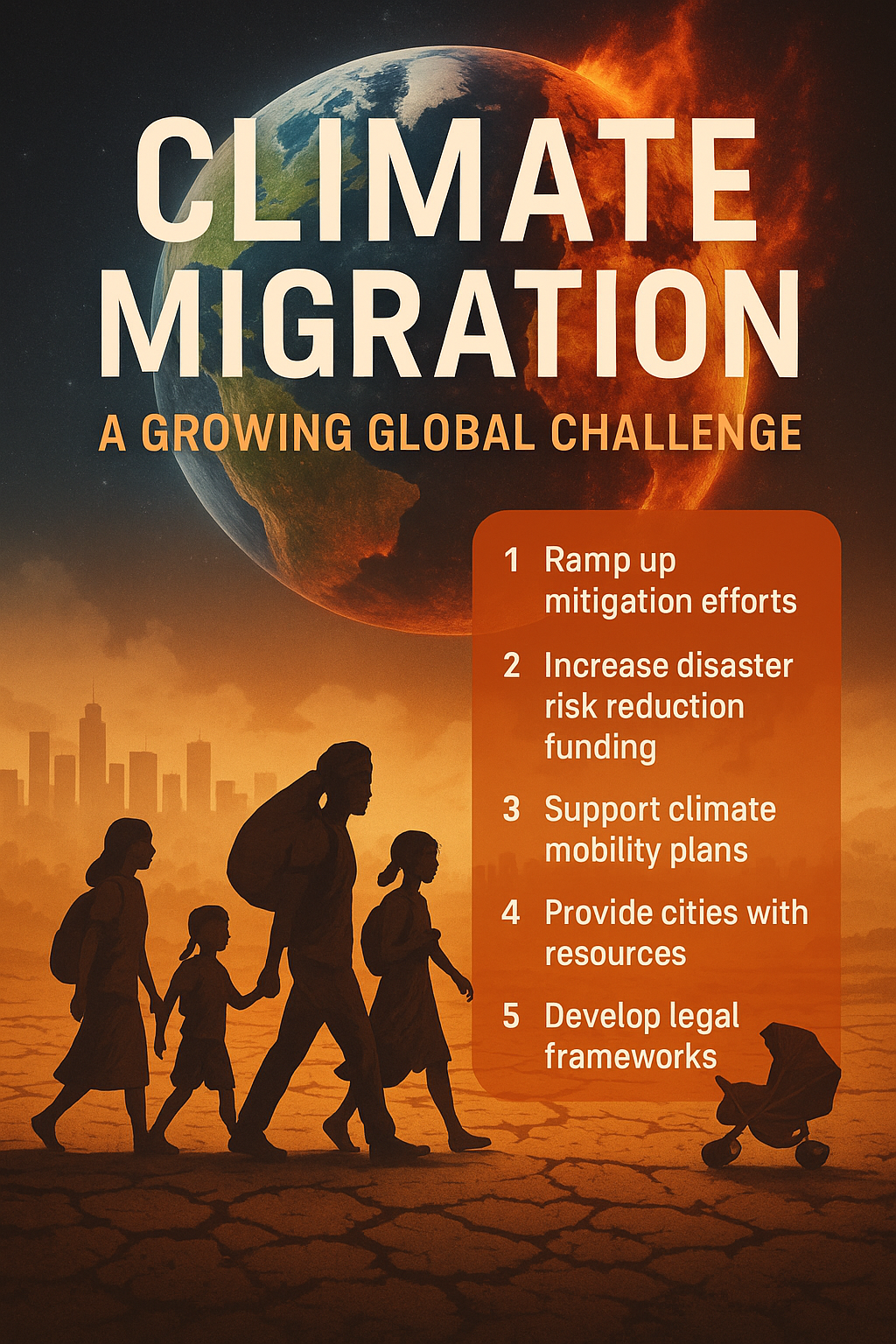
    Did you know that climate change is becoming one of the biggest drivers of migration around the world?

    < .png> Rising temperatures

    < .png> Sea-level rise

    < .png> Extreme weather events like hurricanes, droughts, and floods

    < .png> Crop failures and water shortages

    These climate-related pressures are forcing millions to leave their homes, not by choice, but out of necessity. From small island nations sinking under rising seas to farmers in drought-stricken regions losing their livelihoods, people are on the move looking for safety and stability.

    This isn’t just a future problem. It’s happening now.

    Climate justice = human rights.

    Migration should be a choice, not a survival strategy.

    #ClimateChange#ClimateMigration#EnvironmentalJustice#HumanRights

  • Is AI the Future of Farming in Sub-Saharan Africa?

    Is AI the Future of Farming in Sub-Saharan Africa?

    Across Sub-Saharan Africa, a quiet revolution is growing. From Kenya to Ghana, smallholder farmers are embracing Artificial Intelligence (AI) to tackle food insecurity, climate shocks, and resource inefficiencies. Once a futuristic vision, AI is now transforming how crops are grown, monitored, and harvested.

    AI adoption in agriculture is booming, global investments are expected to rise from $1.7B in 2023 to $4.7B by 2028. In Africa, agri-tech funding skyrocketed from under $10M in 2014 to $600M by 2022. This shift is enabling farmers to use drones, sensors, predictive analytics, and computer vision to optimize irrigation, detect pests, and reduce crop loss.

    Projects like Hello Tractor connect farmers with smart equipment via mobile apps, while platforms like the Kenya Agricultural Observatory provide real-time weather and planting data. Yet challenges persist: digital divides, lack of training, high costs, and concerns about data ethics.

    ✅ What Can Be Done?

    1️⃣ Close the Digital Gap

    Expand rural internet access and promote affordable AI tools for small farmers.

    2️⃣ Invest in Farmer Training

    Launch digital literacy programs focused on AI, data use, and precision farming.

    3️⃣ Create Inclusive Policies

    Build governance systems that protect data rights and promote ethical AI use.

    4️⃣ Support Local Innovation

    Fund youth-led agri-tech startups and ensure inclusive access for women and marginalized communities.

    AI can unlock a food-secure, tech-driven future but only if we ensure equitable access and strong policy backing.

    by E.D.

    Join us to learn more: www.prosdoma.org

    Source: World Bank Blogs, “Is Artificial Intelligence the Future of Farming?, 2025.#FoodSecurity #AIforFarming #SmartAgriculture #DigitalInclusion #Prosdoma #AfricaInnovation #ClimateAction #AgriTech

     AI and the Future of Water Management: Smarter, Safer, More Resilient.

    Water management is now at the center of the global sustainability conversation. With climate change, urban expansion, and poor planning degrading over 50% of the world’s freshwater, innovative solutions are urgently needed.

    According to the World Economic Forum and the European Commission, investing in water resilience is not only a climate imperative, it’s a strategic opportunity.

    This is where Artificial Intelligence (AI) steps in.

    AI is rapidly transforming water utilities by enhancing demand forecasting, reducing energy waste, predicting system failures, and improving wastewater treatment. With tools like Xylem Vue, AI is powering real-time monitoring, dynamic optimization, and data-driven decision-making,  helping utilities respond faster, cheaper, and more sustainably.

    At PROSDOMA, we believe access to clean water is a human right  and that equitable digital innovation must be part of the solution.

    ✅ What Can Be Done?

    1️⃣ Invest in AI for Water Justice

    Support digital tools that make water access smarter, especially in underserved regions.

    2️⃣ Bridge the Tech Divide

    Ensure marginalized communities have equal access to digital infrastructure and AI-driven utilities.

    3️⃣ Foster Public-Private Collaboration

    Scale AI solutions through inclusive partnerships between governments, innovators, and civil society.

    4️⃣ Prioritize Environmental Standards

    Use AI to meet strict ecological regulations and anticipate risks before they escalate.

    Let’s build climate resilience through smart water systems. Learn more: www.prosdoma.org

    by. E.D.

    Source: World Economic Forum (2024), Xylem & Idrica – Water Technology Trends 2025

    #WaterResilience #AIForGood #SmartWater #DigitalInnovation #Prosdoma #WaterJustice #ClimateAction #SDG6


    Glacier Preservation: A Hidden Key to Climate and Financial Stability

    As climate change accelerates, glaciers, nature’s ancient water towers  are disappearing at alarming rates. But what many overlook is that glacier loss is not just an environmental issue; it’s a financial risk.

    According to the United Nations Environment Programme, the melting of glaciers threatens global water security, disrupts agriculture, and impacts over 1.9 billion people dependent on glacier-fed rivers. These risks ripple across economies, financial markets, and food systems.

    In fact, climate-exposed sectors like insurance, agriculture, and energy face rising costs due to unreliable water flows and ecosystem collapse.

    At PROSDOMA, we recognize that protecting glaciers isn’t just about conserving beauty, it’s about preserving livelihoods, food systems, and economic stability.

    ✅ What Can Be Done?

    1️⃣ Finance Glacier Resilience

    Redirect green finance to glacier-adjacent communities and climate adaptation projects.

    2️⃣ Value Water in Investment

    Integrate water risk into ESG frameworks and investment portfolios.

    3️⃣ Protect Glacier Ecosystems

    Support policies and international treaties that safeguard glacier regions from industrial exploitation.

    4️⃣ Educate and Mobilize

    Raise public awareness and engage the financial sector in glacier preservation efforts.

    Water is wealth, let’s protect its source. 

    Learn more: www.prosdoma.org

    by E.D.

    Source: UNEP Finance Initiative (2025), “World Water Day 2025: Why Glacier Preservation Matters for Finance”

    #WorldWaterDay #GlacierPreservation #ClimateFinance #WaterSecurity #Prosdoma #ESG #NatureBasedSolutions #ClimateActionNow


    ️ Resilience Starts with Food: Tackling Hunger in the Sahel & Horn of Africa

    Climate shocks, conflict, and economic fragility have made the Sahel and Horn of Africa some of the most food-insecure regions in the world. Today, over 60 million people face hunger, malnutrition, and water stress, many of them women and children.

    According to the FAO (2023), the key to long-term food and nutrition security lies in climate-resilient agriculture, community ownership, and integrated humanitarian-development approaches.

    4 urgent realities:

    1⃣ Rural communities are the most vulnerable.

    Livelihoods are largely dependent on rain-fed agriculture, which is now unpredictable due to drought and desertification.

    2⃣ Malnutrition is rising.

    Over 14 million children under five are acutely malnourished across both regions.

    3⃣ Women play a critical role.

    Women are key to food production and nutrition, yet they lack access to land, credit, and training.

    4⃣ Traditional aid is not enough.

    Emergency responses must be paired with long-term investments in water access, climate-smart farming, and local capacity.

    What can we do?

    ✅ Support agroecological and nutrition-sensitive agriculture

    ✅ Empower women and youth with resources and training

    ✅ Invest in early warning systems and local food systems

    ✅ Foster community-led adaptation strategies

    At PROSDOMA, we stand with local changemakers building food resilience from the ground up. Food justice is climate justice.

    Learn more:  www.prosdoma.org

    by E.D.

    Source:

    FAO. (2023). Enhancing Food and Nutrition Security in the Sahel and Horn of Africa. https://www.fao.org

    #FoodSecurity #NutritionJustice #Sahel #HornOfAfrica #ClimateResilience #Agroecology #CommunityPower #Prosdoma


    From Soil to Silicon: How AI is Reshaping Agriculture in 2025

    At the 2025 World Economic Forum in Basel, Syngenta Group’s CEO Jeff Rowe declared it loud and clear: 2025 is the year AI will transform agriculture from the lab to the field.

    Five key AI trends are defining this transformation:

    1️⃣ AI in R&D :

     Research projects  use machine learning to identify new active ingredients.

    2️⃣ AI in the Field:

    Smart monitoring systems now generate real-time soil nutrient, carbon, and texture maps.

    3️⃣ AI in Farmers’ Hands:

     GenAI tools serve as personalized digital crop advisors.

    4️⃣ AI in Pest Management:

     Targeted protection reduces waste and overuse of chemicals.

    The AgriTech market is expected to reach $54.17 billion by 2029, and AI in agriculture alone is projected to grow from $1.7B to $4.7B by 2028. According to the WEF, digital agriculture could boost the GDP of low- and middle-income countries by $450B annually.

    But here’s the catch: technology must be accessible. At PROSDOMA, we believe the digital farming revolution must include smallholders, women, and rural communities, not leave them behind.

    It’s not just about smart farms. It’s about fair farms.

    Join us to cultivate an inclusive, tech-driven food future:  www.prosdoma.org

    By E.D.

    Source:

    Syngenta Group (2025). From Soil to Silicon: How Advanced Technologies are Cultivating the Future of Sustainable Ag. [Press Release via WEF & Bloomberg]

    #AIinAgriculture #FoodSecurity #SmartFarming #TechForGood #AgriTech #SustainableAgriculture #DigitalInclusion #Prosdoma

  • Why Do People Migrate? Unpacking the Real Reasons Behind Migration

    Why Do People Migrate? Unpacking the Real Reasons Behind Migration

    Migration isn’t just about crossing borders — it’s about people seeking safety, dignity, and opportunity.

    Around the world, people leave their homes due to a mix of push and pull factors:

      Social and Political Causes
    War, persecution, and human rights violations force individuals to flee their countries. In 2022, over 384,000 asylum seekers were granted protection in the EU — many from Syria, Afghanistan, and Venezuela.

      Economic and Demographic Factors
    Lack of jobs, poor working conditions, and economic instability are major drivers of migration. In contrast, higher wages, better living standards, and education attract migrants to more stable nations.

      Environmental Pressures
    Climate change is now one of the fastest-growing causes of migration. Floods, droughts, and natural disasters displace millions — and estimates suggest that by 2050, up to 1 billion people could become environmental migrants.

      At PROSDOMA, we know that migration is not a choice for many — it’s a necessity. That’s why we work every day to support newcomers in Alberta by providing legal aid, job search assistance, computer training, and more.

    We also raise awareness about the deeper causes of migration and advocate for policies that are fair, sustainable, and compassionate.

      Let’s build a community where no one is left behind — whether they come from conflict zones, climate-affected regions, or economic hardship.

    ➡️ Join PROSDOMA in supporting migrants, raising awareness, and creating lasting change.

    Source: https://www.europarl.europa.eu/topics/en/article/20200624STO81906/exploring-migration-causes-why-people-migrate

    #MigrationMatters #WhyPeopleMigrate #ClimateMigration #HumanRights #RefugeeSupport #ProsdomaforChange #InclusiveCommunities #SustainableDevelopment #SocialJustice #NewcomerSupport

    AC

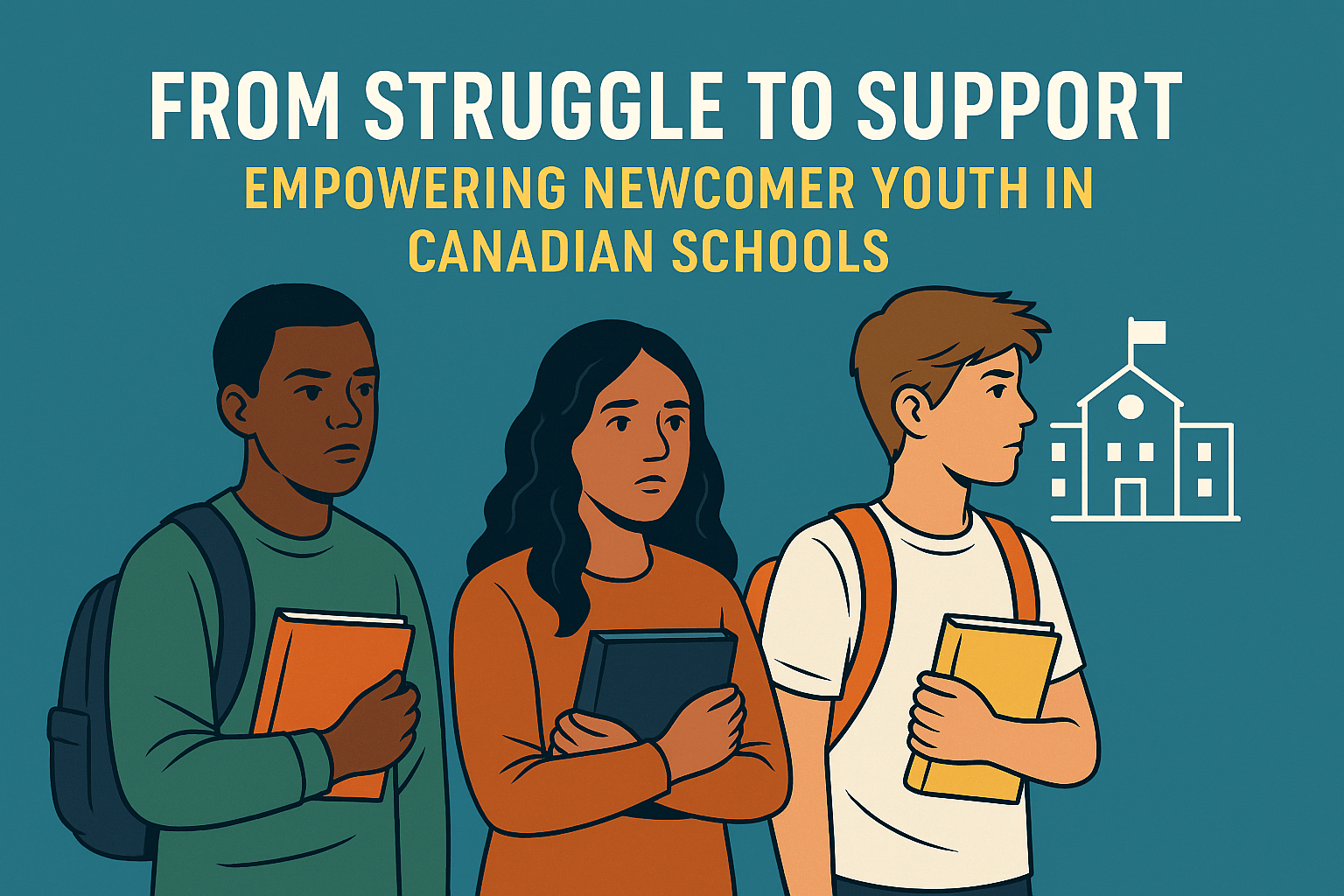
  • Moving to a new country is tough — but no one should do it alone.

    Moving to a new country is tough — but no one should do it alone.

    At PROSDOMA, we stand with newcomers in Alberta, offering personalized support through every step of their journey — from navigating asylum processes to learning basic computer skills.

    Here are 5 common struggles newcomers face — and how our team helps them overcome each one. 

    We believe in inclusion, empowerment, and sustainability. Whether it’s assisting with permanent residency or linking individuals to food banks, PROSDOMA is here to help every newcomer thrive. 

    5.png
    6.png
    7.png
  • PROSDOMA SOCIAL MEDIA

    PROSDOMA SOCIAL MEDIA

    Tree Planting Isn’t Always Climate Action — Unless We Do It Right

    Planting trees is often praised as a natural climate solution. But without strategy, science, and sustainability, it can fail — or even backfire.

    Recent research shows that while afforestation and reforestation can remove up to 3.6 gigatons of CO₂ per year, poorly managed projects risk reversing their impact through wildfires, droughts, and premature harvesting (Osman et al., 2023).

    4 key insights you need to know:

    1️⃣ Carbon storage is fragile:

    Unlike underground storage, forest carbon is vulnerable to both natural and human threats. Long-term permanence requires protection and monitoring.

    2️⃣ Location matters:

    Tree planting in high-latitude regions may increase local warming due to lower albedo. Tropical regions offer greater CO₂ removal potential — if land use is managed equitably.

    3️⃣ Biochar and  bioenergy with carbon capture and storage offer upgrades:

    By integrating forestation with biochar production or bioenergy with carbon capture and storage(BECCS), we can lock carbon away for centuries — far beyond a tree’s lifespan.

    4️⃣ Land must serve people too:

    Tree planting should never displace food systems or local communities. Sustainable land use must balance carbon goals with human needs.

    At PROSDOMA, we combine reforestation with community equity. Whether planting trees in Cameroon or educating migrants in Canada about climate resilience, we know real solutions root deeply in justice.

    Join us: prosdoma.org

    by E.D.

    Source: Osman, A. I., Fawzy, S., Lichtfouse, E., & Rooney, D. W. (2023). Planting trees to combat global warming. Environmental Chemistry Letters, 21, 3041–3044. https://lnkd.in/dY_uh3UQ

    What Makes Healthcare Truly Sustainable? 5 Evidence-Based Priorities

    In healthcare, sustainability isn’t just about keeping a project running — it’s about preserving impact where it matters most: patients, professionals, and systems.

    Yet according to Lennox et al. (2018), many improvement initiatives in healthcare settings collapse over time, wasting precious time, money, and trust.

    So, how do we build healthcare improvements that endure?

    Based on a systematic review of 62 healthcare-specific sustainability frameworks, here are 5 crucial priorities:

    1️⃣ Prove patient-centered outcomes:

    Interventions must consistently demonstrate improved health results, clinical relevance, and cost-effectiveness to justify continuation.

    2️⃣ Integrate into daily clinical routines:

    Sustainable healthcare initiatives are those that embed smoothly into existing systems, protocols, and professional practice — not remain siloed or optional.

    3️⃣ Track, evaluate, adapt:

    Healthcare systems must include mechanisms to monitor clinical effectiveness over time and adjust based on feedback, evidence, or shifting needs.

    4️⃣ Build capacity across roles:

    From frontline nurses to system administrators, sustainability depends on equipping staff with continuous training and decision-making power.

    5️⃣ Align with institutional priorities:

    Programs that reflect organisational goals (e.g., reducing readmissions, improving care coordination) are more likely to receive long-term support.

    Thus, sustainable healthcare means lasting impact — not short-term projects.

    At PROSDOMA, we support patient-centered, evidence-based systems that endure.

    Because care must continue, not collapse.

    Learn more: prosdoma.org

    by E.D.

    Source: Lennox, L., Maher, L., & Reed, J. (2018). “Navigating the sustainability landscape: a systematic review of sustainability approaches in healthcare.” Implementation Science, 13:27. 

    Sustainability in Conflict Zones: What Real Resilience Looks Like

    In crisis-affected regions, health isn’t just about hospitals — it’s about systems that protect dignity, promote equity, and grow from the ground up.

    According to Ugwu et al. (2025), aligning healthcare interventions with the Sustainable Development Goals (SDGs) is critical to building long-term resilience and peace.

    Key strategies that actually work:

    1️⃣ Engage communities at every step:

    Programs are more effective and sustainable when shaped with communities, not for them.

    2️⃣ Prioritize mental health:

    MHPSS (Mental Health and Psychosocial Support) must be integrated with basic healthcare to address trauma in crisis contexts.

    3️⃣ Partner across sectors:

    From governments to grassroots organizations, collaboration builds culturally relevant and scalable solutions.

    4️⃣ Innovate for inclusion:

    Mobile clinics, telemedicine, and digital tools must be tailored to real-world needs — not just imported as one-size-fits-all fixes.

    These lessons align with SDGs 3, 16, and 17 — and are crucial for creating systems that survive disaster and sustain justice.

    That’s exactly why we admire PROSDOMA.

    Their work — from reforestation in Cameroon to climate education in Canada — doesn’t just tick boxes. It brings global strategies to life by rooting them in equity, community voice, and long-term impact.

    Learn more or connect: prosdoma.org

    by E.D.

    Source: Ugwu, C. N. et al. (2025). “Sustainable Development Goals and Resilient Healthcare Systems.” Medicine, 104(7):e41535.

    Efficiency Is the New Sustainability: What We Can Learn from Canadian Farms:

    In a changing climate, sustainability in agriculture means more than going organic — it means being efficient. But efficiency isn’t just about yields; it’s about using land, water, labor, and energy in ways that serve both people and the planet.

    Recent research from Western Newfoundland reveals that while many farms are technically efficient, they still struggle with environmental, cost, and scale inefficiencies — especially due to overuse of fertilizers, under-optimized land use, and lack of climate-resilient infrastructure (Islam et al., 2024).

    4 key takeaways:

    1️⃣ Environmental efficiency matters:

    Producing more while polluting less is the heart of sustainable agriculture. Some farms achieved this through composting, no-dig methods, and integrated systems.

    2️⃣ Education drives sustainability:

    Farms managed by educated producers showed significantly higher environmental scores — proof that knowledge is power in ecological stewardship.

    3️⃣ Water and soil conservation boost resilience:

    Techniques like rainwater harvesting and permaculture increased farm efficiency and climate resilience in short growing seasons.

    4️⃣ Policy and innovation must go hand in hand:

    Government support — through Living Labs and training — plays a vital role in scaling sustainable practices.

    At PROSDOMA, we believe sustainability begins with the wise use of resources and grows with local empowerment. Whether it’s climate-resilient farming in Africa or digital education in Canada, we turn knowledge into impact.

    Learn more: prosdoma.org

    by E.D.

    Source: Islam, K., Sabau, G., Dawson, J., Cheema, M., & Daraio, J. (2024). Evaluating agricultural sustainability in Newfoundland, Canada: Insights from a Data Envelopment Analysis (DEA) approach. SSRN.

    Environmental Volunteering: Healing People While Restoring the Planet

    In the face of rising eco-anxiety, social isolation, and climate-related health threats, one powerful yet underutilized solution stands out: environmental volunteering.

    Recent research shows that volunteering in nature benefits not only the planet, but also the mind, body, and spirit. According to Patrick et al. (2022), environmental volunteers experience a wide range of co-benefits, including improved mental health, greater social inclusion, and a deeper connection to nature.

    Here are 4 key takeaways:

    1️⃣ Mental & emotional health improves:

    Volunteers report enhanced mood, reduced anxiety, and a sense of purpose — especially among those with prior mental health challenges.

    2️⃣ It builds social cohesion:

    Environmental activities foster friendships, civic pride, and cultural inclusion — creating shared spaces where all backgrounds feel welcome.

    3️⃣ It supports skills & opportunity:

    Many gain new knowledge, language abilities, and even employment skills — especially valuable for students and newcomers.

    4️⃣ Nature connection boosts resilience:

    Regular contact with nature cultivates environmental stewardship and well-being, reinforcing both planetary and personal health.

    At PROSDOMA, we believe in the power of nature-based solutions. Whether organizing community tree-planting in Africa or supporting eco-literacy for newcomers in Canada, we empower people and ecosystems together.

    Learn more or get involved: prosdoma.org/

    by E.D.

    Source: Patrick, R., Henderson-Wilson, C., & Ebden, M. (2022). Exploring the co-benefits of environmental volunteering for human and planetary health promotion. Health Promotion Journal of Australia, 33(1), 57–67.