Mientras la revolución digital transforma vidas en todo el mundo, millones de personas en zonas rurales de África permanecen desconectadas, no solo de internet, sino también de oportunidades. ¿Y si la solución para cerrar esta brecha no residiera solo en cables y dispositivos de fibra óptica, sino en políticas y prácticas de TIC inclusivas y adaptadas al contexto?
En su innovador estudio, Joseph y Andrew (2006) argumentan que las TIC tienen el poder de impulsar el desarrollo rural si se diseñan con el empoderamiento como prioridad. Su análisis de estudios de caso en África subsahariana revela cómo el acceso a las herramientas digitales contribuye a mejoras en la agricultura, la salud, la gobernanza y la igualdad de género.
✨ Las historias de éxito incluyen:
Internet en Ghana: un centro para el acceso digital y el desarrollo de habilidades.
Escuelas electrónicas NEPAD: Ofrecen Internet gratuito, puntos de salud y aprendizaje electrónico a comunidades marginadas.
WOFAN (Nigeria): Aprovechar la radio para educar a las mujeres rurales sobre salud, agricultura y derechos.
Voces de mujeres (Kenia): Enseñar a las mujeres a crear narraciones en vídeo sobre sus propias vidas, recuperando su poder a través de la narración de historias.
Sin embargo, los desafíos están profundamente arraigados:
Altos costos de dispositivos y conectividad
Poblaciones rurales dispersas y baja alfabetización
Barreras de género en el acceso y liderazgo de las TIC
Falta de software localizado y diseño centrado en el usuario
Políticas de TIC obsoletas que no incluyen a los más marginados
¿Qué podemos hacer entonces para cerrar la brecha digital?
Invertir en infraestructura y al mismo tiempo subsidiar herramientas TIC para los hogares rurales.
Traducir y adaptar el contenido a los idiomas locales para que sea relevante.
Empoderar a las mujeres y las niñas a través del acceso a dispositivos, capacitación en TIC y liderazgo.
Promover centros comunitarios de TIC y proyectos de medios digitales liderados por mujeres.
En PROSDOMA, sabemos que el acceso digital no es solo un problema tecnológico, sino también de justicia. Por eso, nuestro trabajo conecta continentes: empoderando a los recién llegados en Canadá y apoyando a las comunidades en África. Imaginamos un futuro donde ninguna voz quede excluida de la conversación digital.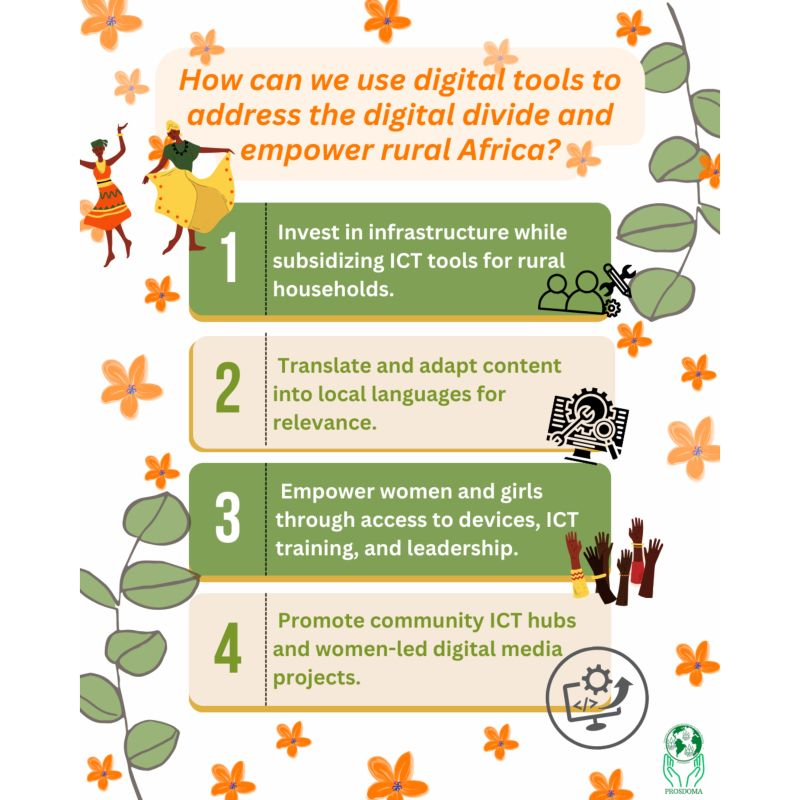
Únase a nosotros: https://old.prosdoma.org/
por ED
Fuente: Joseph, M. y Andrew, T. (2006). Sueños rurales africanos: TIC para el desarrollo. Actas de la Conferencia IST-África.
¿Cómo puede la tecnología impulsar un comportamiento sostenible? Perspectivas desde la psicología y el diseño
¿Sabías que la tecnología no sólo consume recursos, sino que también puede determinar cómo los conservamos?
Según Midden et al. (2007), la tecnología desempeña cuatro papeles importantes en el comportamiento ambiental:
Intermediario: se sitúa entre el comportamiento y el impacto (por ejemplo, utilizar una bombilla en lugar de utilizar la luz solar).
Amplificador: aumenta nuestro rendimiento y el uso de recursos (por ejemplo, mejores automóviles = más conducción).
Determinante: moldea silenciosamente el comportamiento al hacer que algunas acciones sean más fáciles o más difíciles (por ejemplo, la presencia de carriles para bicicletas).
Promotor: fomenta la sostenibilidad a través de comentarios interactivos, sistemas inteligentes y medios inmersivos.
Estos conocimientos muestran que el diseño y la ingeniería del comportamiento deben ir de la mano para construir futuros más ecológicos.
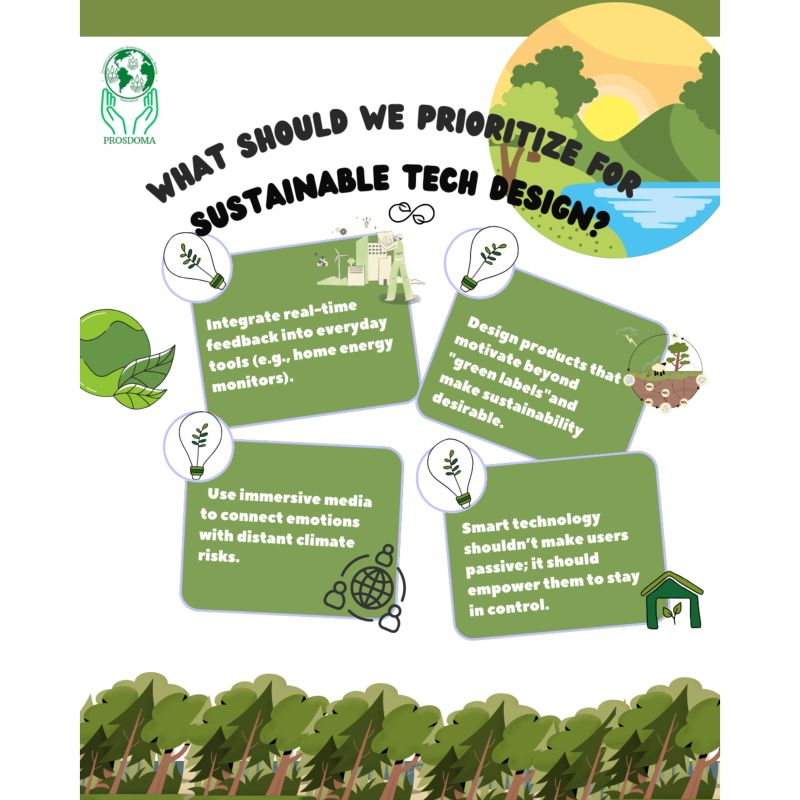
¿Qué debemos priorizar para el diseño de tecnología sostenible?
Integre retroalimentación en tiempo real en herramientas cotidianas (por ejemplo, monitores de energía del hogar).
Diseñe productos que motiven más allá de las “etiquetas verdes”: hagan que la sustentabilidad sea deseable.
Utilice medios inmersivos para conectar las emociones con riesgos climáticos distantes.
La tecnología inteligente no debería hacer que los usuarios sean pasivos; debería darles el poder de mantener el control.
En PROSDOMA, creemos que la sostenibilidad comienza con la concienciación y evoluciona con la acción. Ya sea apoyando la agricultura rural en África o la alfabetización digital en Canadá, valoramos el papel transformador de la tecnología en la conservación de recursos.
Únase a nosotros: https://old.prosdoma.org/
por ED
Fuente: Midden, CJH, Kaiser, FG y McCalley, LT (2007). Los cuatro roles de la tecnología en la comprensión de la conservación de los recursos naturales por parte de los individuos, Journal of Social Issues.
⚖️ ¿Puede la defensa legal generar justicia climática? Explorando el poder del derecho ante la desigualdad
A medida que el cambio climático se acelera, también lo hacen sus injusticias. A pesar de ser las que menos contribuyen a las emisiones globales, las comunidades marginadas, desde los barrios de bajos ingresos en Estados Unidos hasta las aldeas costeras de Bangladesh, sufren las consecuencias de los desastres ambientales, la contaminación tóxica y la migración forzada.
Según Ahmed y Uddin (2025), la defensa legal se ha convertido en una herramienta crucial en la lucha por la justicia ambiental. Al examinar casos emblemáticos como Juliana contra EE. UU., Urgenda contra Países Bajos y Waorani contra Ecuador, los autores demuestran cómo los tribunales pueden exigir responsabilidades a gobiernos y corporaciones, hacer cumplir los objetivos de emisiones y empoderar a las comunidades locales para proteger sus tierras y su salud.
Sin embargo, aún persisten importantes lagunas:
La Convención sobre Refugiados de 1951 no reconoce el desplazamiento inducido por el clima.
Muchas leyes ambientales carecen de poder de ejecución.
El acceso a la asistencia jurídica sigue siendo limitado para las poblaciones vulnerables.
Entonces, ¿cómo pueden los sistemas legales impulsar acciones climáticas más equitativas?
Ampliar las protecciones de los refugiados para incluir a los migrantes climáticos.
Establecer planes nacionales de adaptación climática exigibles.
Aumentar la financiación climática y el apoyo jurídico para la promoción comunitaria.
Promover la formulación de políticas inclusivas, donde las voces marginadas den forma a las decisiones ambientales.
En PROSDOMA, creemos que la justicia y la sostenibilidad van de la mano. Ya sea defendiendo los medios de vida rurales en África o apoyando a los migrantes en Canadá, abogamos por un mundo donde la ley sirva al planeta y a sus habitantes de manera equitativa.
Únase a nosotros: https://old.prosdoma.org/
por ED
Fuente:
Ahmed, M. y Uddin, MJ (2025). Justicia ambiental y el papel de la defensa jurídica en la lucha contra el cambio climático. Revista de Estudios de Humanidades y Ciencias Sociales, 7(4), 45–64. https://lnkd.in/dBv3kzge
¿Puede la educación salvar el medio ambiente? Una nueva mirada a lo que funciona en la conservación.
Según una exhaustiva revisión sistemática de Ardoin et al. (2020), la educación ambiental (EA), cuando se diseña intencionalmente, puede lograr mucho más que sensibilizar. Puede generar resultados de conservación mensurables.
En una revisión de 105 estudios, los investigadores descubrieron que si bien la mayoría de los programas de EE aumentan el conocimiento y las actitudes, un número creciente también conduce a:
Cambio de comportamiento observado (por ejemplo, reducción en el uso de agua o pesticidas)
Acciones ambientales (por ejemplo, reforestación, esfuerzos de limpieza)
Fortalecimiento de la capacidad comunitaria (por ejemplo, grupos de conservación locales)
Mejoras ecológicas (por ejemplo, calidad del agua, ganancias de biodiversidad)
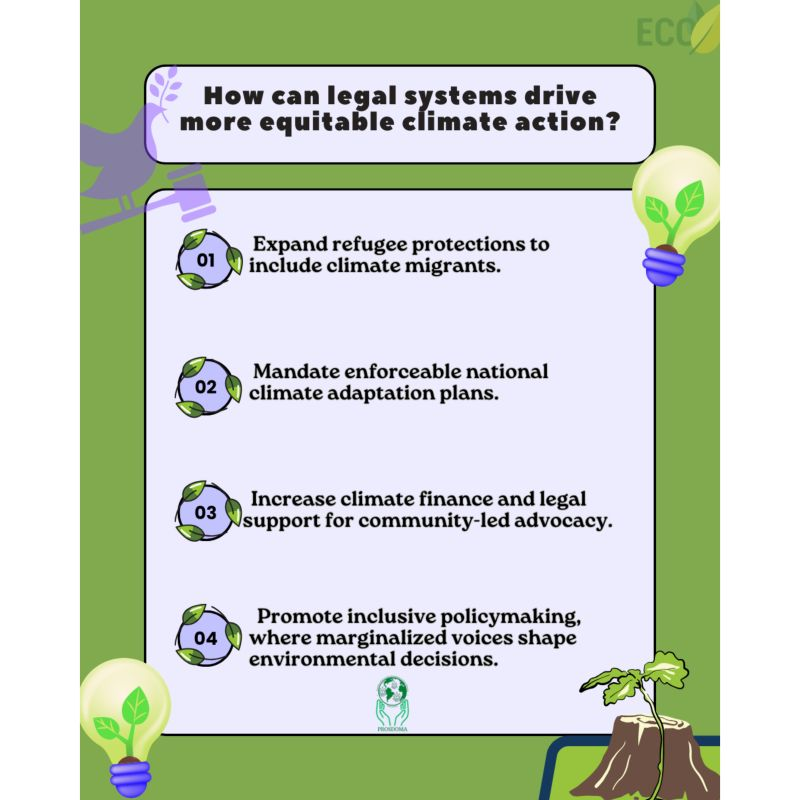
Entonces, ¿qué hace que la educación ambiental sea efectiva para la conservación?
Enfoque local:
Los programas basados en cuestiones locales permiten generar un impacto mensurable.
Colaboración intersectorial:
La asociación con científicos, ONG y líderes comunitarios amplifica el éxito.
Aprendizaje orientado a la acción:
Los proyectos prácticos, como la restauración del hábitat, conducen a cambios de comportamiento duraderos.
Evaluación rigurosa:
Los programas con objetivos claros e informes sólidos tienen más probabilidades de mostrar resultados tangibles.
En PROSDOMA, creemos que la educación ambiental es un catalizador para la transformación social y ecológica. Ya sea empoderando a comunidades rurales en África o a recién llegados a Canadá, nuestro trabajo conecta el conocimiento con la acción, garantizando que la educación no se limite a la concientización, sino que se convierta en una herramienta para un cambio real.
Únase a nosotros: https://old.prosdoma.org/
por ED
Fuente:
Ardoin, NM et al. (2020). Resultados de la educación ambiental para la conservación: Una revisión sistemática. Conservación Biológica, 241, 108224
Por qué el desarrollo rural es la columna vertebral del futuro agrícola de África
En África, el 70% de la fuerza laboral trabaja en la agricultura, pero muchas comunidades rurales siguen estando subdesarrolladas y desatendidas.
La agricultura es la principal fuente de ingresos para el 90% de la población rural, y sin embargo, estas regiones a menudo carecen de infraestructura, financiación y herramientas modernas.
El descuido de la agricultura ha provocado un éxodo masivo de las zonas rurales a las urbanas, dejando a las aldeas despobladas y poco atractivas para la inversión.
El desarrollo rural sostenible no se limita a la agricultura: también abarca la salud, la educación, las carreteras, el acceso a la energía, el empoderamiento de las mujeres y el liderazgo comunitario.
Un modelo de desarrollo rural integrado —que vincule la agricultura con la infraestructura, la educación y la salud— es clave para la resiliencia a largo plazo.
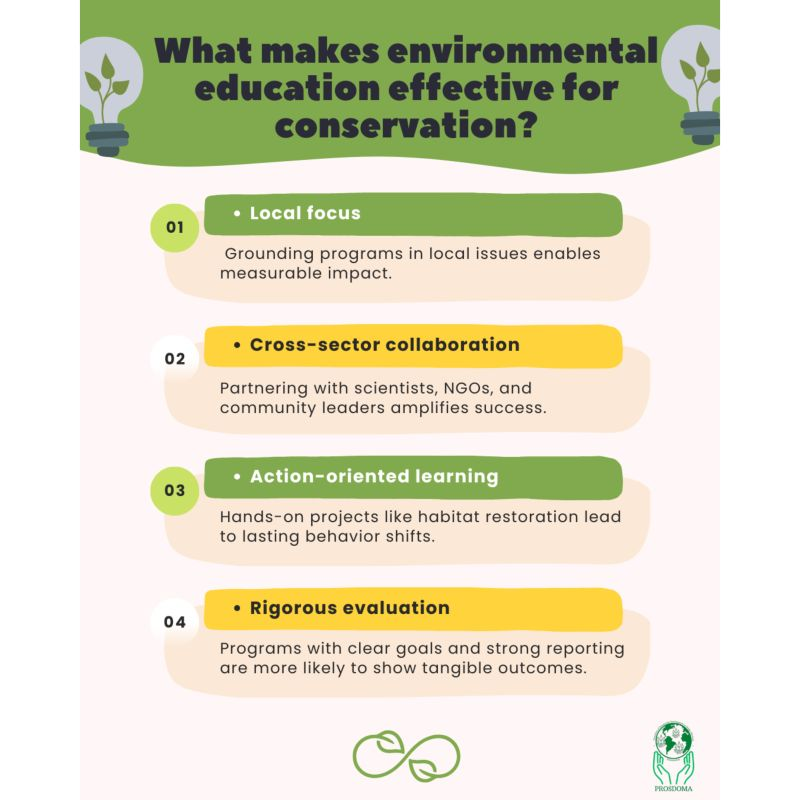
Entonces, ¿qué se debe hacer por el futuro de la agricultura en África?
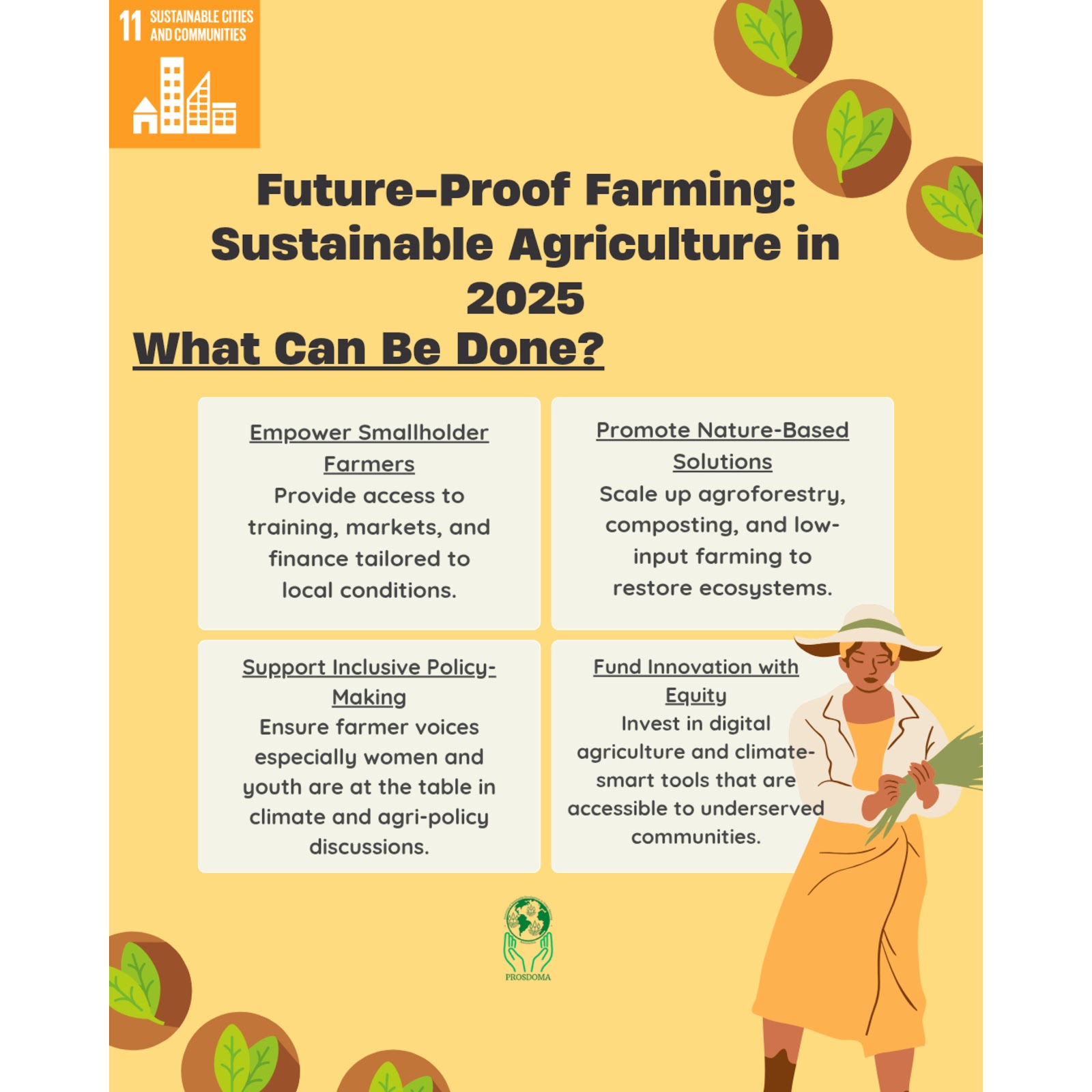
Invertir en infraestructura rural (caminos, agua, electricidad) para aumentar la accesibilidad y reducir la migración del campo a la ciudad.
Apoyar a los pequeños agricultores brindándoles acceso a tierras, financiación y capacitación en técnicas modernas y sostenibles.
Fortalecer las instituciones y cooperativas locales para gestionar los recursos, reducir las desigualdades y desarrollar resiliencia.
Implementar enfoques integrados de desarrollo rural que combinen agricultura, atención médica, educación y acceso digital.
Por eso organizaciones como PROSDOMA son importantes. Su compromiso con la integración de los recién llegados en Canadá y la agricultura sostenible en África las convierte en un puente entre las comunidades globales y la resiliencia local.
Únase a nosotros: https://old.prosdoma.org/
por ED
Fuente:
Nchuchuwe, FF y Adejuwon, KD (2012). Los desafíos de la agricultura y el desarrollo rural en África: el caso de Nigeria. Revista Internacional de Investigación Académica en Educación Progresista y Desarrollo.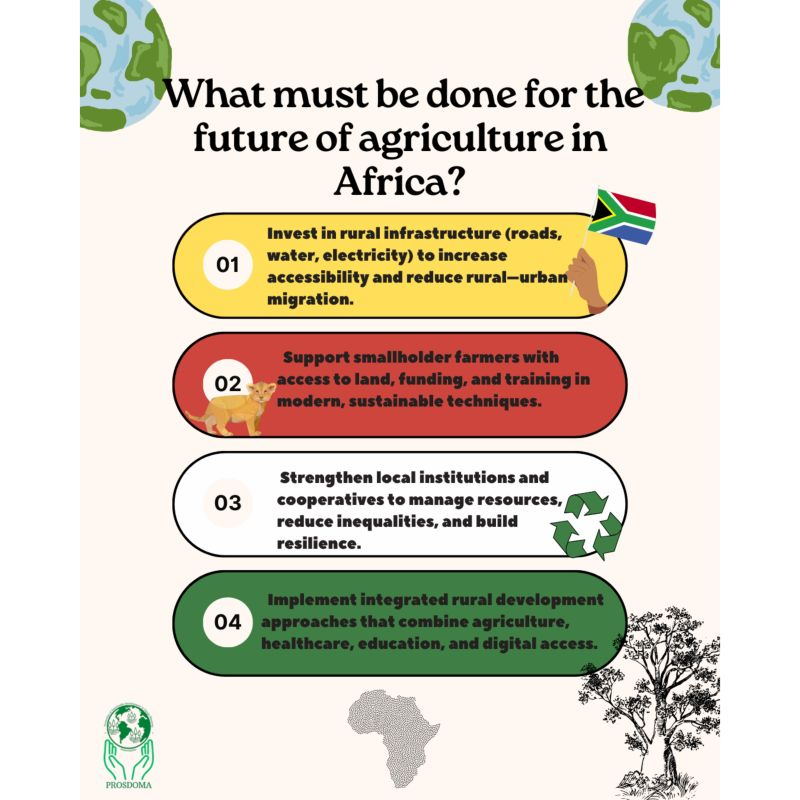

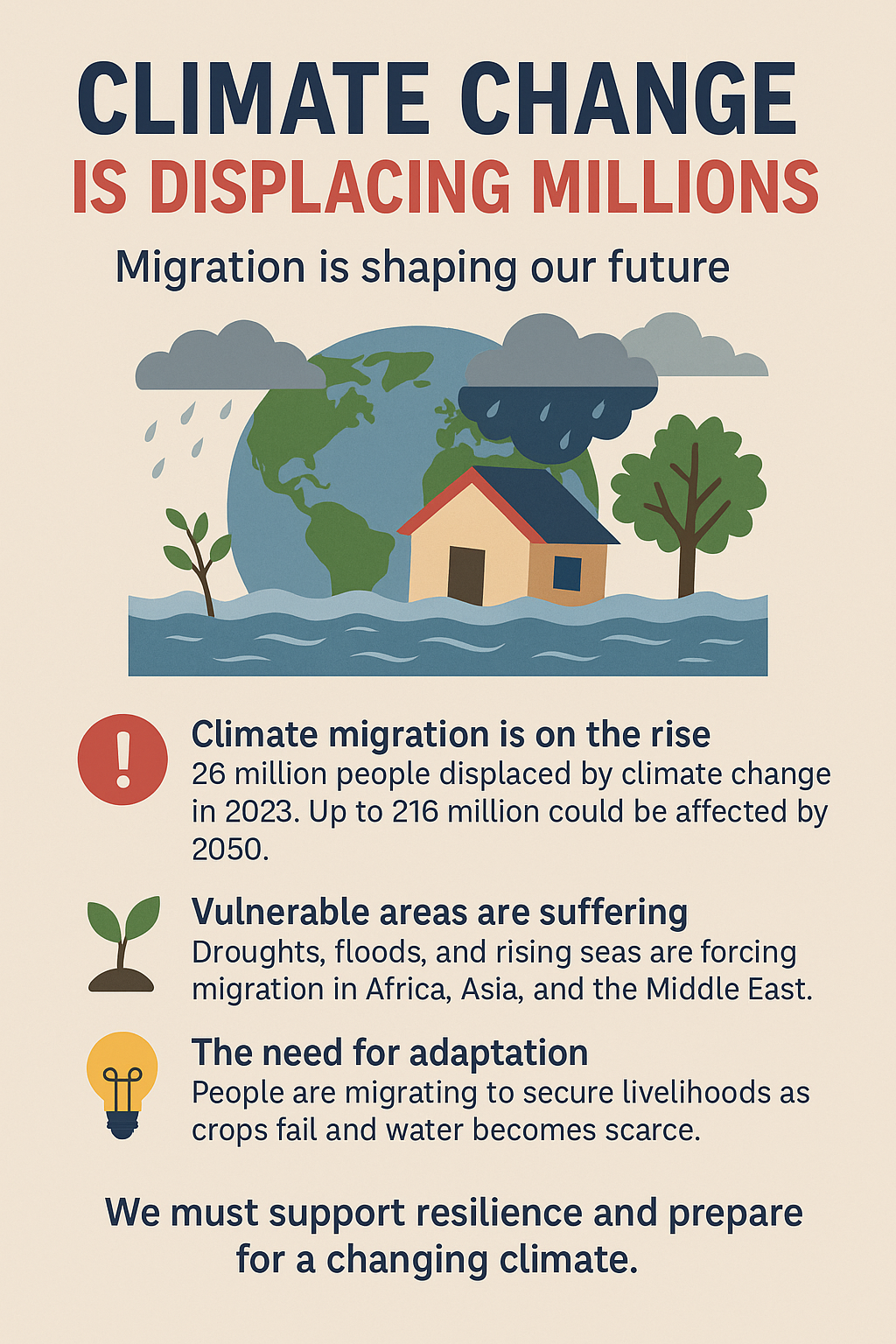
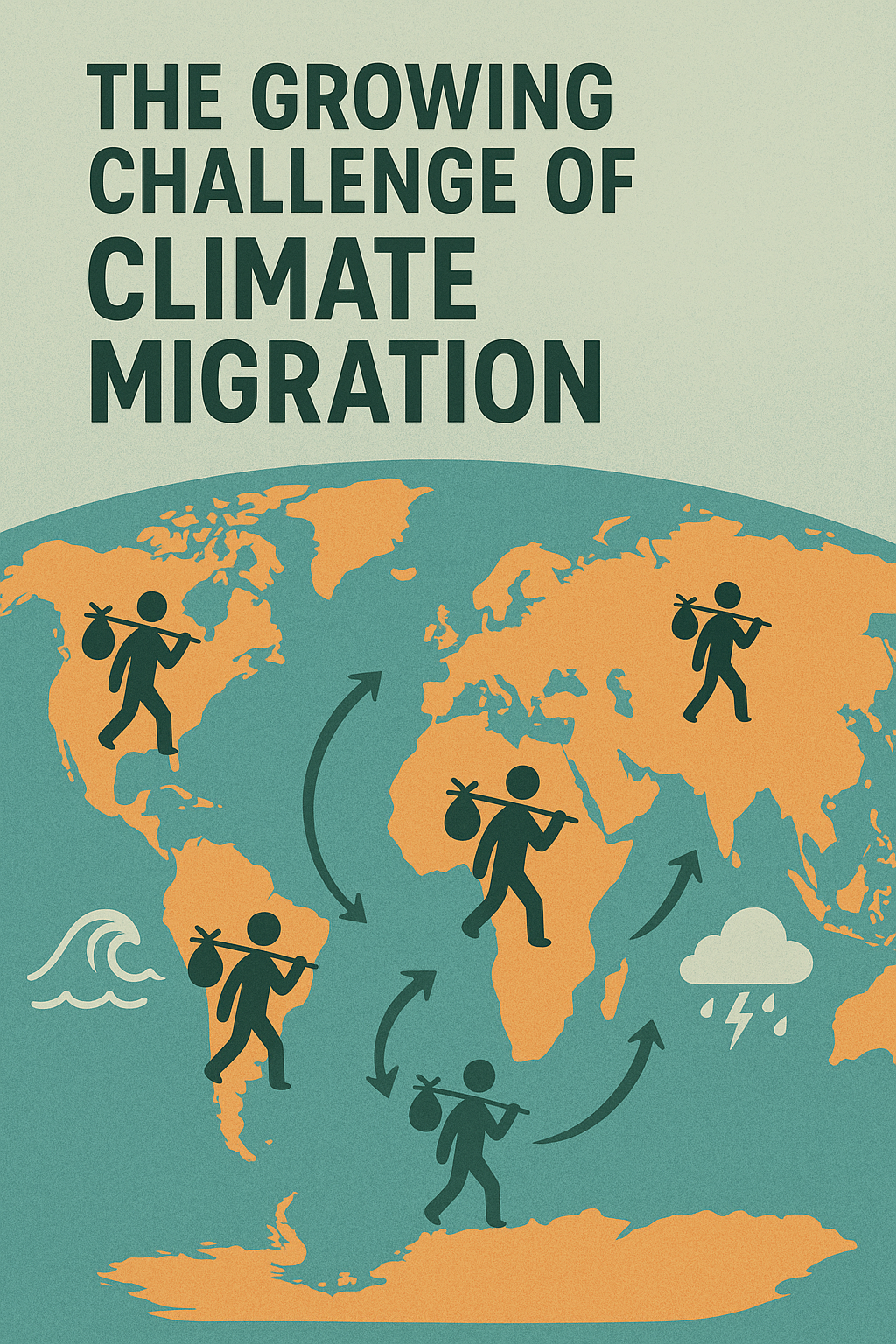
 Desde sequías hasta inundaciones, la gente se ve obligada a abandonar sus hogares en busca de seguridad y estabilidad.
 La migración climática está en aumento: Los fenómenos meteorológicos extremos están provocando desplazamientos masivos. Solo en 2023, 26 millones de personas fueron desplazadas por el cambio climático. Y para 2050, 216 millones de personas podrían verse afectadas a nivel mundial.
 Las zonas vulnerables sufren: Los países de África, Asia y Oriente Medio se enfrentan a graves desafíos climáticos. Desde el estrés hídrico en el África subsahariana hasta el aumento del nivel del mar en las regiones bajas, estas zonas son cada vez más inhabitables, lo que obliga a la población a migrar.
 La necesidad de adaptación: La migración no es solo una respuesta a los desastres; también implica asegurar los medios de vida. Las personas están abandonando las zonas agrícolas donde los cultivos ya no crecen o el ganado no puede sobrevivir. Necesitamos apoyar la reubicación planificada y garantizar la disponibilidad de recursos para ayudar a estos migrantes a integrarse y adaptarse.
 Compromiso de Prosdoma: En Prosdoma, creemos en fomentar la resiliencia. A través de nuestros programas, ayudamos a los recién llegados brindándoles acceso a asistencia en la búsqueda de empleo, asistencia legal y apoyo comunitario para facilitar su integración. También promovemos prácticas agrícolas sostenibles para abordar la seguridad alimentaria en las comunidades afectadas por el cambio climático.
 La crisis migratoria climática exige acciones urgentes. Debemos promover la resiliencia climática, apoyar el desarrollo sostenible y garantizar que las comunidades vulnerables cuenten con los recursos necesarios para adaptarse. Unámonos y construyamos un futuro más sostenible para todos.