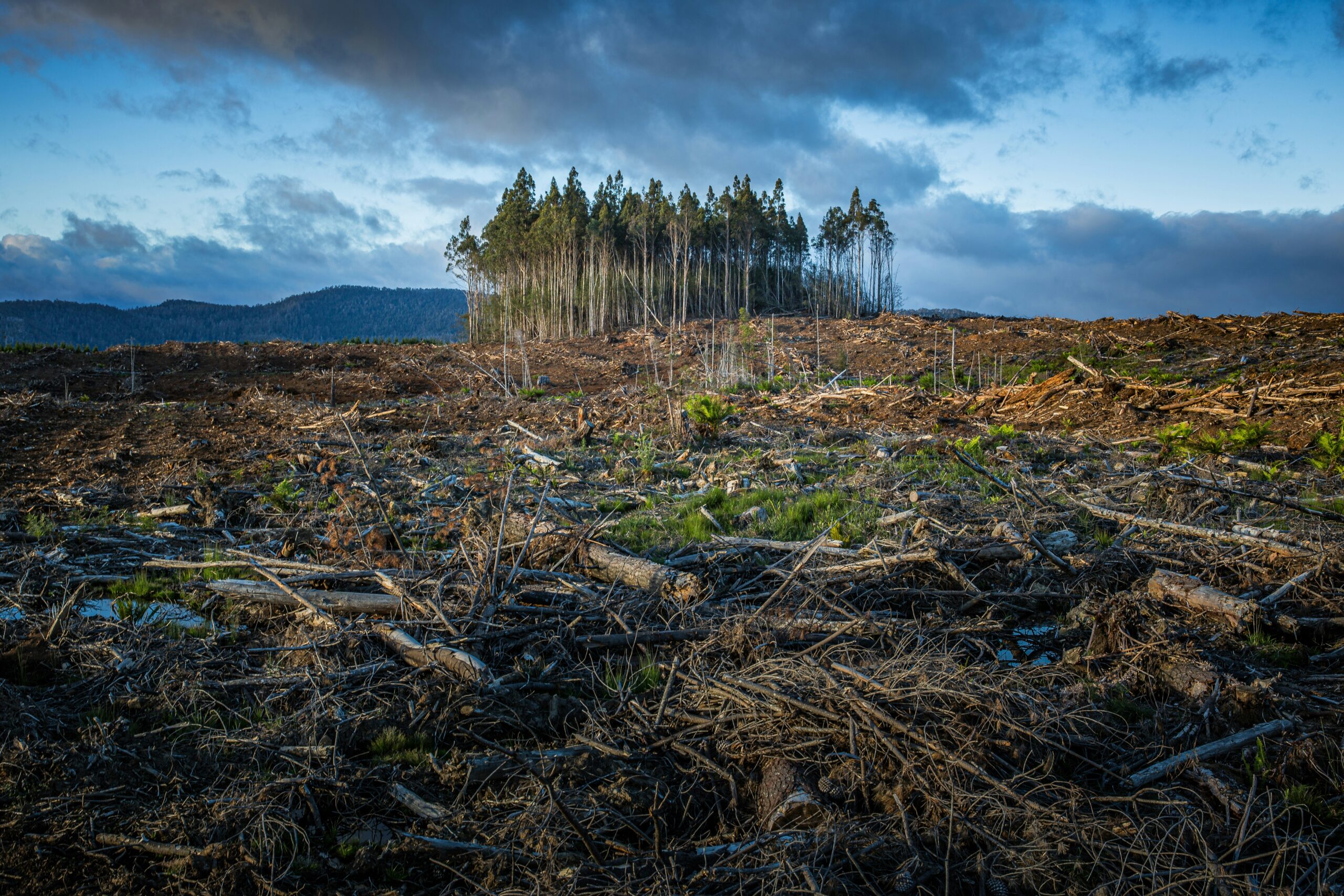
Tree Planting Isn’t Always Climate Action — Unless We Do It Right
Planting trees is often praised as a natural climate solution. But without strategy, science, and sustainability, it can fail — or even backfire.
Recent research shows that while afforestation and reforestation can remove up to 3.6 gigatons of CO₂ per year, poorly managed projects risk reversing their impact through wildfires, droughts, and premature harvesting (Osman et al., 2023).
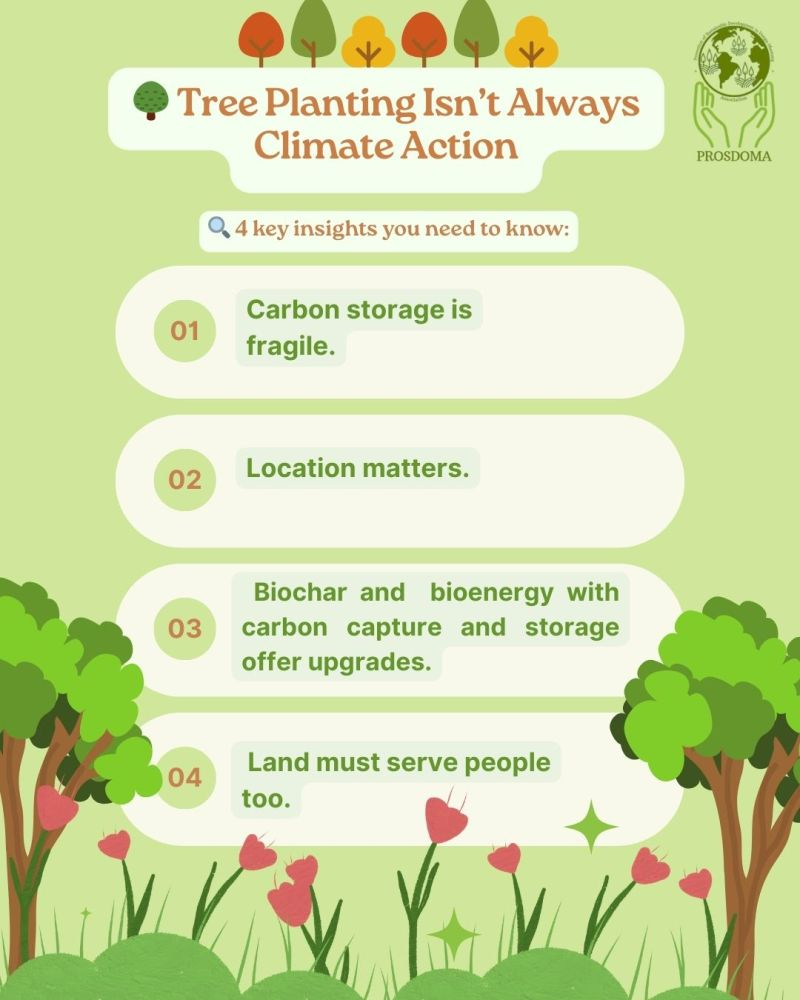
4 key insights you need to know:
1️⃣ Carbon storage is fragile:
Unlike underground storage, forest carbon is vulnerable to both natural and human threats. Long-term permanence requires protection and monitoring.
2️⃣ Location matters:
Tree planting in high-latitude regions may increase local warming due to lower albedo. Tropical regions offer greater CO₂ removal potential — if land use is managed equitably.
3️⃣ Biochar and bioenergy with carbon capture and storage offer upgrades:
By integrating forestation with biochar production or bioenergy with carbon capture and storage(BECCS), we can lock carbon away for centuries — far beyond a tree’s lifespan.
4️⃣ Land must serve people too:
Tree planting should never displace food systems or local communities. Sustainable land use must balance carbon goals with human needs.
At PROSDOMA, we combine reforestation with community equity. Whether planting trees in Cameroon or educating migrants in Canada about climate resilience, we know real solutions root deeply in justice.
Join us: prosdoma.org
by E.D.
Source: Osman, A. I., Fawzy, S., Lichtfouse, E., & Rooney, D. W. (2023). Planting trees to combat global warming. Environmental Chemistry Letters, 21, 3041–3044. https://lnkd.in/dY_uh3UQ
What Makes Healthcare Truly Sustainable? 5 Evidence-Based Priorities
In healthcare, sustainability isn’t just about keeping a project running — it’s about preserving impact where it matters most: patients, professionals, and systems.
Yet according to Lennox et al. (2018), many improvement initiatives in healthcare settings collapse over time, wasting precious time, money, and trust.
So, how do we build healthcare improvements that endure?
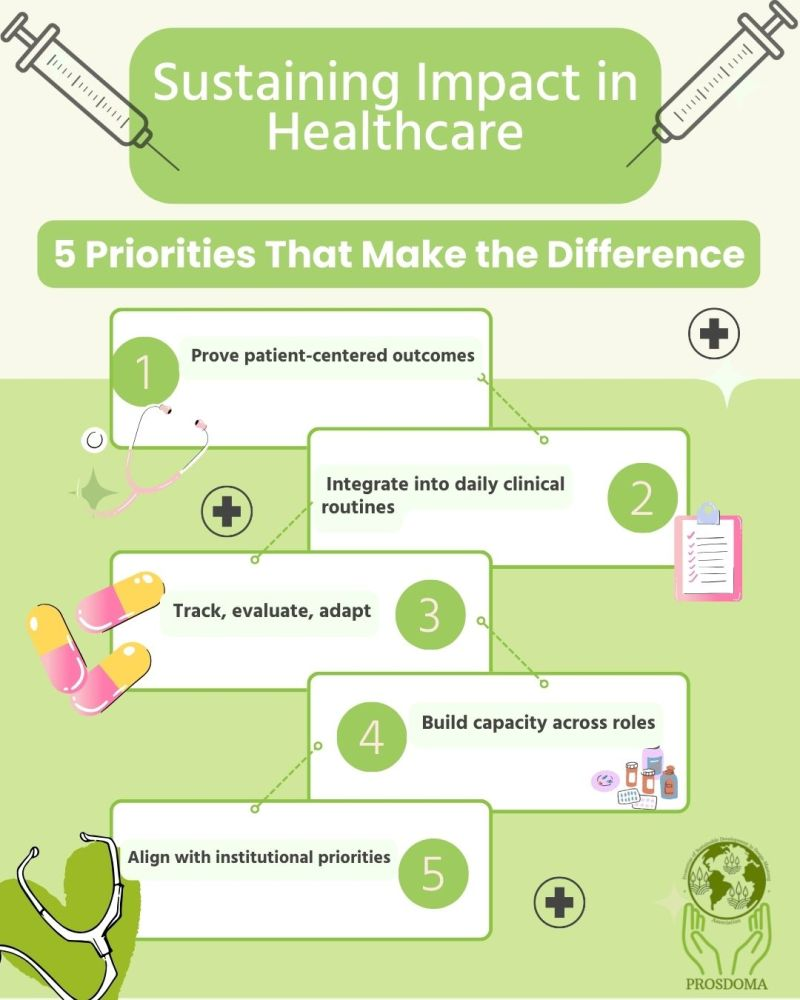
Based on a systematic review of 62 healthcare-specific sustainability frameworks, here are 5 crucial priorities:
1️⃣ Prove patient-centered outcomes:
Interventions must consistently demonstrate improved health results, clinical relevance, and cost-effectiveness to justify continuation.
2️⃣ Integrate into daily clinical routines:
Sustainable healthcare initiatives are those that embed smoothly into existing systems, protocols, and professional practice — not remain siloed or optional.
3️⃣ Track, evaluate, adapt:
Healthcare systems must include mechanisms to monitor clinical effectiveness over time and adjust based on feedback, evidence, or shifting needs.
4️⃣ Build capacity across roles:
From frontline nurses to system administrators, sustainability depends on equipping staff with continuous training and decision-making power.
5️⃣ Align with institutional priorities:
Programs that reflect organisational goals (e.g., reducing readmissions, improving care coordination) are more likely to receive long-term support.
Thus, sustainable healthcare means lasting impact — not short-term projects.
At PROSDOMA, we support patient-centered, evidence-based systems that endure.
Because care must continue, not collapse.
Learn more: prosdoma.org
by E.D.
Source: Lennox, L., Maher, L., & Reed, J. (2018). “Navigating the sustainability landscape: a systematic review of sustainability approaches in healthcare.” Implementation Science, 13:27.
Sustainability in Conflict Zones: What Real Resilience Looks Like
In crisis-affected regions, health isn’t just about hospitals — it’s about systems that protect dignity, promote equity, and grow from the ground up.
According to Ugwu et al. (2025), aligning healthcare interventions with the Sustainable Development Goals (SDGs) is critical to building long-term resilience and peace.
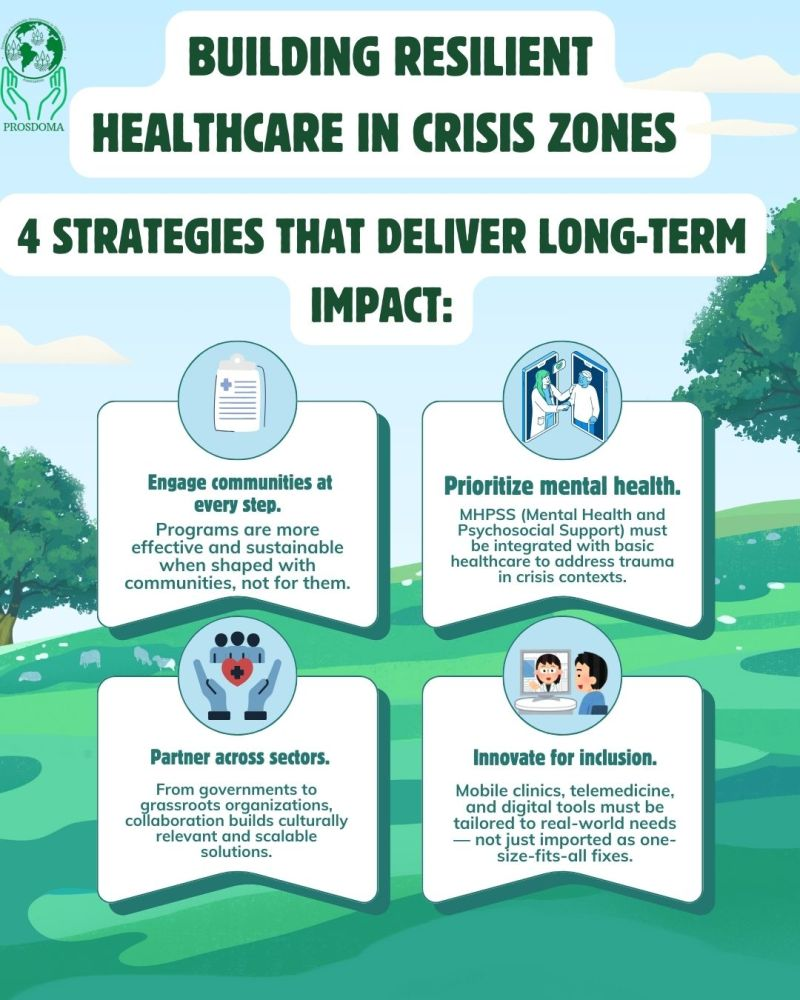
Key strategies that actually work:
1️⃣ Engage communities at every step:
Programs are more effective and sustainable when shaped with communities, not for them.
2️⃣ Prioritize mental health:
MHPSS (Mental Health and Psychosocial Support) must be integrated with basic healthcare to address trauma in crisis contexts.
3️⃣ Partner across sectors:
From governments to grassroots organizations, collaboration builds culturally relevant and scalable solutions.
4️⃣ Innovate for inclusion:
Mobile clinics, telemedicine, and digital tools must be tailored to real-world needs — not just imported as one-size-fits-all fixes.
These lessons align with SDGs 3, 16, and 17 — and are crucial for creating systems that survive disaster and sustain justice.
That’s exactly why we admire PROSDOMA.
Their work — from reforestation in Cameroon to climate education in Canada — doesn’t just tick boxes. It brings global strategies to life by rooting them in equity, community voice, and long-term impact.
Learn more or connect: prosdoma.org
by E.D.
Source: Ugwu, C. N. et al. (2025). “Sustainable Development Goals and Resilient Healthcare Systems.” Medicine, 104(7):e41535.
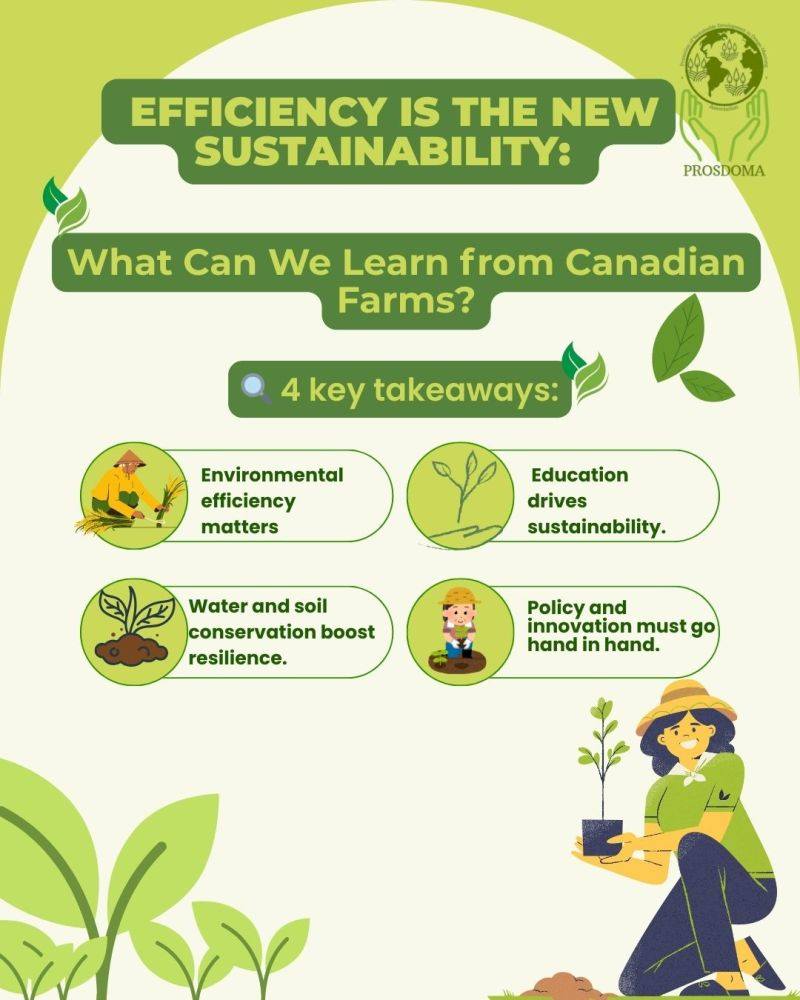
Efficiency Is the New Sustainability: What We Can Learn from Canadian Farms:
In a changing climate, sustainability in agriculture means more than going organic — it means being efficient. But efficiency isn’t just about yields; it’s about using land, water, labor, and energy in ways that serve both people and the planet.
Recent research from Western Newfoundland reveals that while many farms are technically efficient, they still struggle with environmental, cost, and scale inefficiencies — especially due to overuse of fertilizers, under-optimized land use, and lack of climate-resilient infrastructure (Islam et al., 2024).
4 key takeaways:
1️⃣ Environmental efficiency matters:
Producing more while polluting less is the heart of sustainable agriculture. Some farms achieved this through composting, no-dig methods, and integrated systems.
2️⃣ Education drives sustainability:
Farms managed by educated producers showed significantly higher environmental scores — proof that knowledge is power in ecological stewardship.
3️⃣ Water and soil conservation boost resilience:
Techniques like rainwater harvesting and permaculture increased farm efficiency and climate resilience in short growing seasons.
4️⃣ Policy and innovation must go hand in hand:
Government support — through Living Labs and training — plays a vital role in scaling sustainable practices.
At PROSDOMA, we believe sustainability begins with the wise use of resources and grows with local empowerment. Whether it’s climate-resilient farming in Africa or digital education in Canada, we turn knowledge into impact.
Learn more: prosdoma.org
by E.D.
Source: Islam, K., Sabau, G., Dawson, J., Cheema, M., & Daraio, J. (2024). Evaluating agricultural sustainability in Newfoundland, Canada: Insights from a Data Envelopment Analysis (DEA) approach. SSRN.
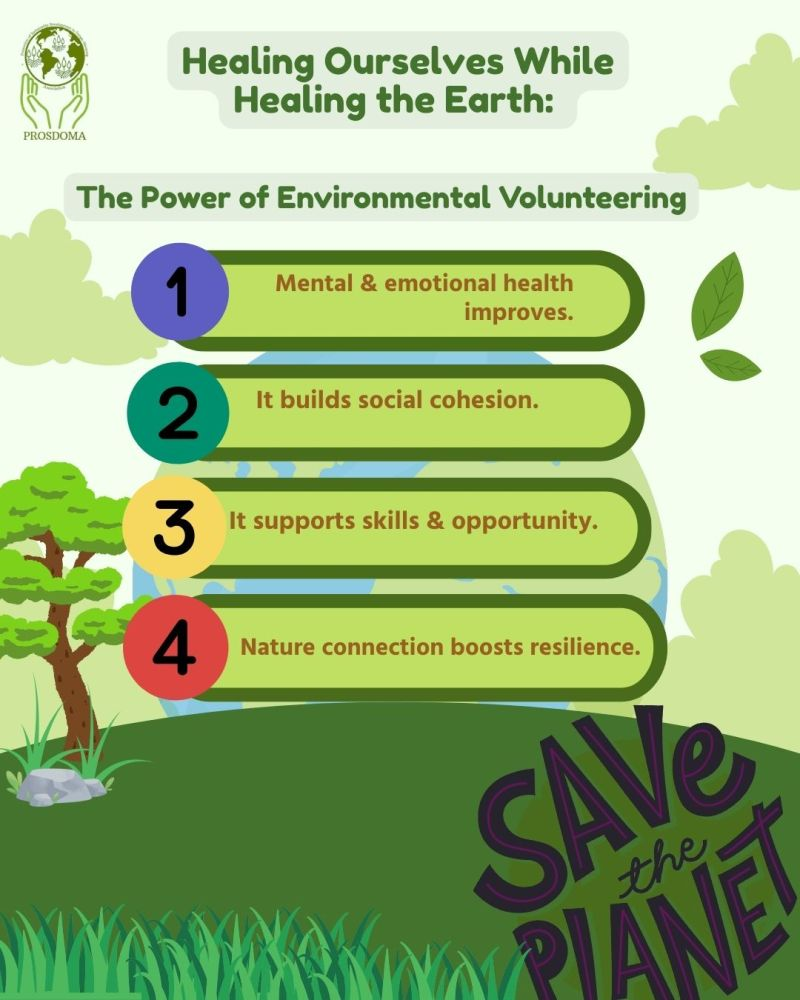
Environmental Volunteering: Healing People While Restoring the Planet
In the face of rising eco-anxiety, social isolation, and climate-related health threats, one powerful yet underutilized solution stands out: environmental volunteering.
Recent research shows that volunteering in nature benefits not only the planet, but also the mind, body, and spirit. According to Patrick et al. (2022), environmental volunteers experience a wide range of co-benefits, including improved mental health, greater social inclusion, and a deeper connection to nature.
Here are 4 key takeaways:
1️⃣ Mental & emotional health improves:
Volunteers report enhanced mood, reduced anxiety, and a sense of purpose — especially among those with prior mental health challenges.
2️⃣ It builds social cohesion:
Environmental activities foster friendships, civic pride, and cultural inclusion — creating shared spaces where all backgrounds feel welcome.
3️⃣ It supports skills & opportunity:
Many gain new knowledge, language abilities, and even employment skills — especially valuable for students and newcomers.
4️⃣ Nature connection boosts resilience:
Regular contact with nature cultivates environmental stewardship and well-being, reinforcing both planetary and personal health.
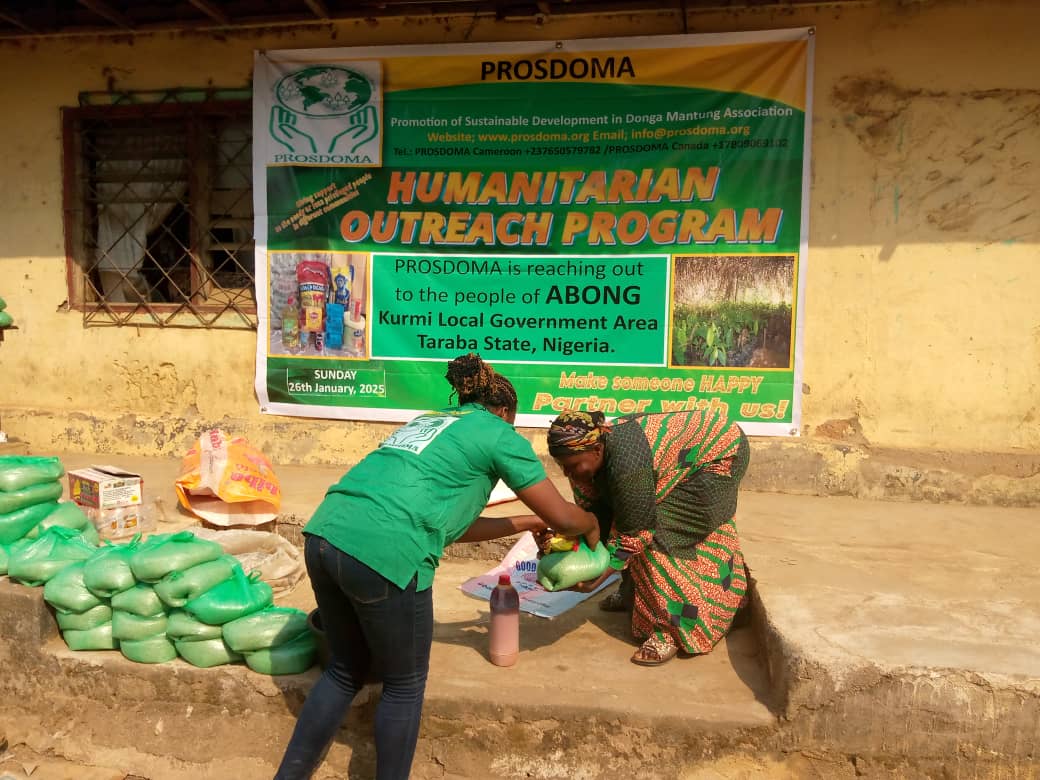
At PROSDOMA, we believe in the power of nature-based solutions. Whether organizing community tree-planting in Africa or supporting eco-literacy for newcomers in Canada, we empower people and ecosystems together.
Learn more or get involved: prosdoma.org/
by E.D.
Source: Patrick, R., Henderson-Wilson, C., & Ebden, M. (2022). Exploring the co-benefits of environmental volunteering for human and planetary health promotion. Health Promotion Journal of Australia, 33(1), 57–67.

 Both need to be tackled together to ensure a resilient future for all. Here’s why:
 Interconnected Challenges
 Addressing both issues together can create new opportunities for a sustainable world.
 Adaptation: A Key Strategy
 The Role of Sustainable Practices

 Why Volunteering Matters: Empower Your Community, Society, and Yourself!
  For the Community
 , organizing events
  , and helping those in need. Without volunteers, many organizations couldn’t function!
 , and support critical initiatives like disaster response
  or environmental protection
  . Volunteers are the true changemakers!
 For You
 , and creates lasting friendships
  . Plus, it’s a great way to expand your horizons and gain experience for your career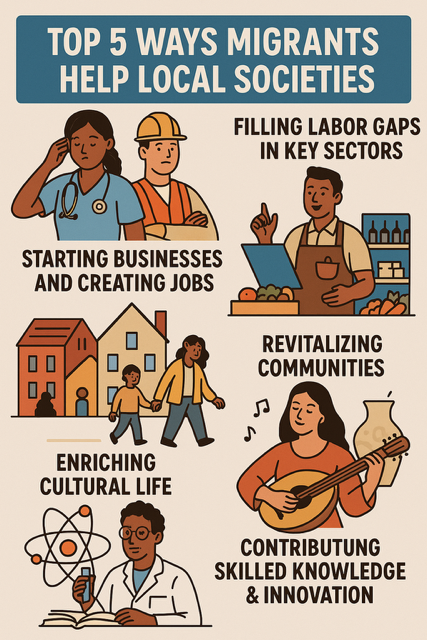
 Filling labor gaps in healthcare, agriculture, and essential services
  Let’s continue to stand up for inclusion, equality, and opportunity.
  Share this to spread awareness and spark change!





 The good news: Every action counts. Whether you’re biking to work or choosing eco-conscious brands, small lifestyle changes can reduce your environmental impact and move us toward a more sustainable future.
 Support sustainable businesses
 Learn more and join us:
  Sources: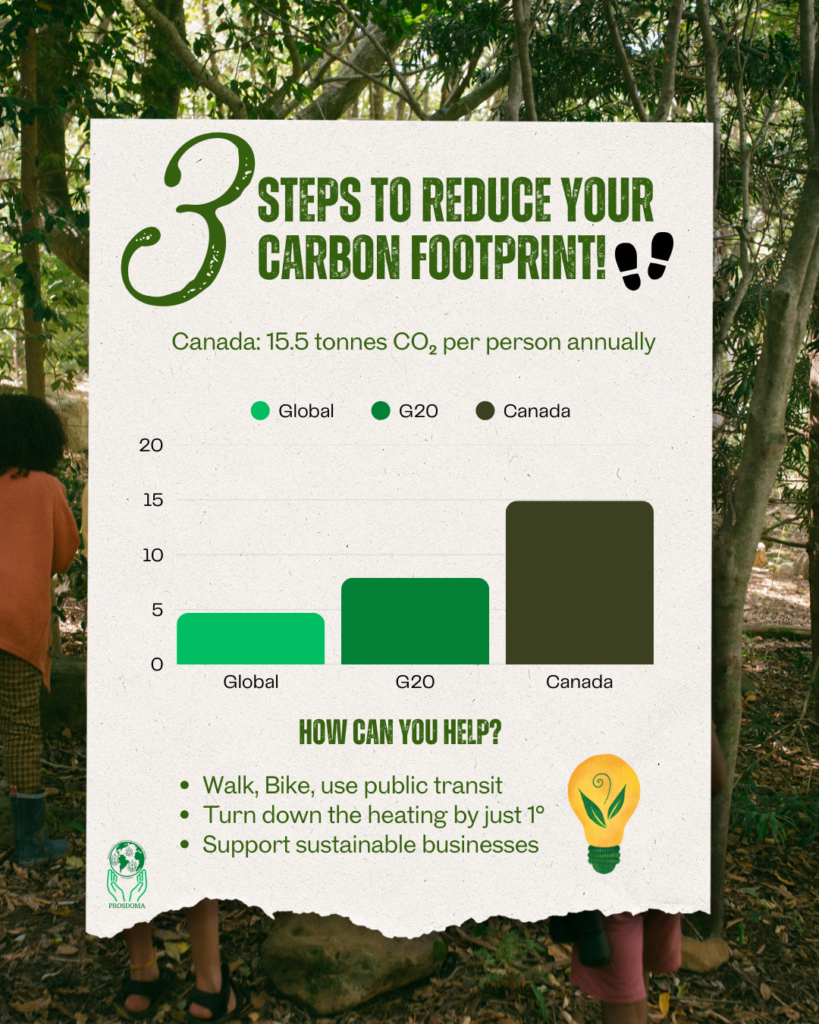
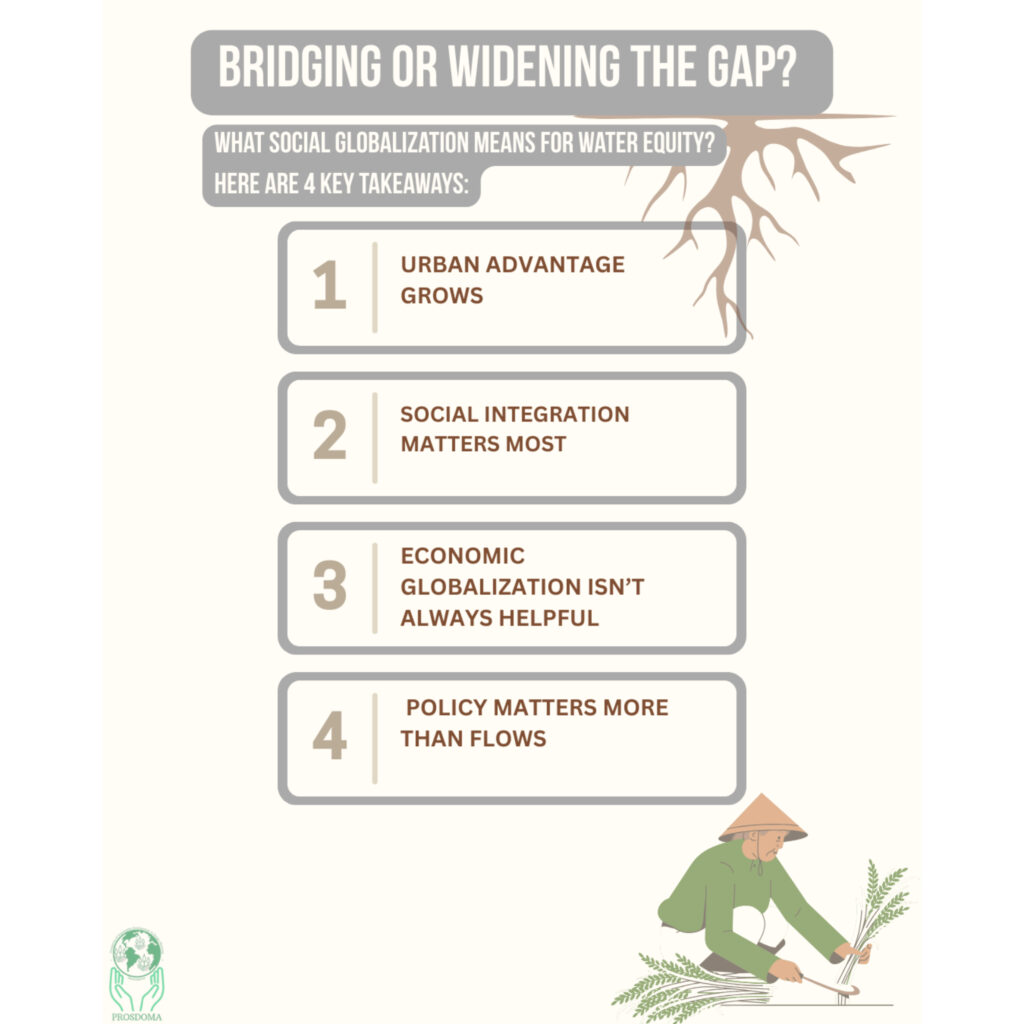
 Recent research shows that globalization plays a complex but significant role in shaping water and sanitation access. According to Fotio & Nguea (2022), social globalization (e.g., cross-border media, migration, information flow) tends to improve access to water and sanitation in both urban and rural areas, but often widens the gap between them.
 Urban advantage grows:
 Social integration matters most:
 Economic globalization isn’t always helpful:
 Policy matters more than flows:
 Join us:
  Source: Fotio, H. K., & Nguea, S. M. (2022). Access to water and sanitation in Africa: Does globalization matter? International Economics, 170, 79–91.
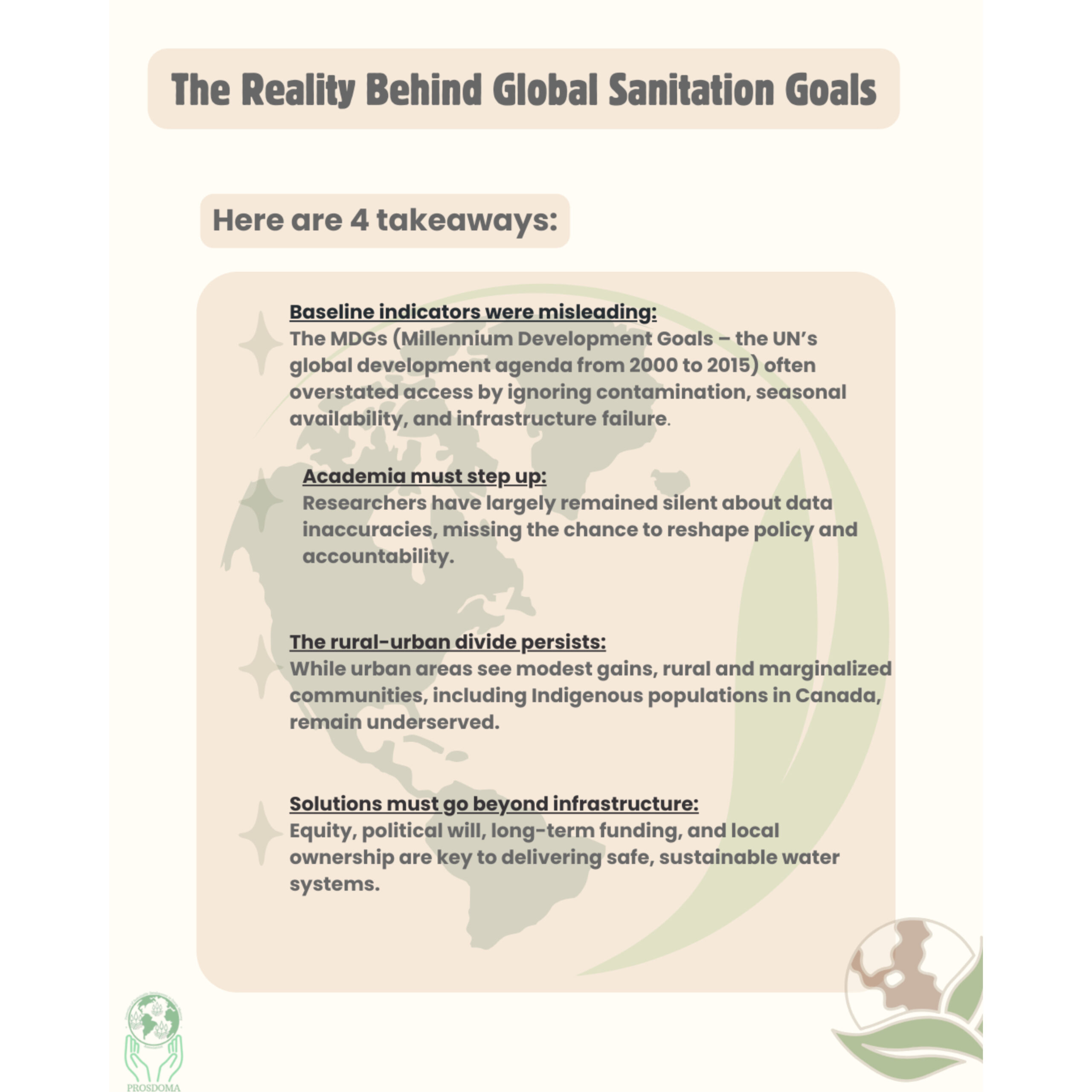
 Here are 4 takeaways:
 At PROSDOMA, we believe access to clean water is a basic human right, not a development milestone to check off. From empowering local communities in Africa to supporting water justice for underserved populations in Canada, we act where data fails and dignity matters.