In the heart of Indonesia’s Papua province, a vast green paradise is under threat. A government-backed project—the world’s largest planned deforestation initiative—is set to clear forests the size of Belgium to produce bioethanol, rice, and other food crops.
While intended to promote food security and renewable energy, this project has devastating consequences for Indigenous communities and the environment.
Centuries-old tribal forests are being bulldozed. Indigenous Papuan families like the Kwipalos are losing access to ancestral land where they hunt, fish, and gather food. Their culture and survival are at risk.
These forests are also home to endangered species found nowhere else on Earth—orangutans, forest elephants, rare birds, and plants—whose habitats are being erased for monoculture plantations.
Experts warn that this “green energy” comes with a high carbon price. Clearing these forests could release over 300 million tons of CO₂, accelerating the very climate crisis biofuels aim to fix.
Reforestation can’t fully restore what’s lost. Old-growth forests regulate water, store carbon, and support biodiversity in ways no plantation ever can.
At PROSDOMA, we advocate for truly sustainable practices—ones that empower people and protect the planet. From supporting eco-friendly agriculture in Africa to raising awareness in Canada, we believe development should never come at the cost of people or nature.
Let’s rethink what sustainability really means. Share this story. Speak out. Support climate justice.
Join PROSDOMA in promoting environmental and social sustainability across continents.
What if economic growth didn’t harm the planet—or leave people behind?
Despite massive investments in sustainable efforts since 2015, we still face alarming inequality and environmental damage. Two-thirds of global wealth created since 2020 went to the richest 1%, while most people still earn less than $10 a day.
It’s clear: our 20th-century economy isn’t fit for the 21st-century world.
A new vision, Sustainomy, offers hope. It’s an economy built on the three Ps: Prosperity, People, and Planet. Instead of choosing between growth and sustainability, it balances both.
Here’s how we can get there: – Move from “Artificial” to “Authentic” Intelligence—using AI to enhance, not replace, human skills like creativity and ethics.
– Invest in human capital by meeting basic needs and improving education and job security.
– Build resilient industries that mix essentials like infrastructure with clean energy and innovative solutions.
– Empower SMEs and middle-income communities, which already drive most jobs and consumer demand globally.
At PROSDOMA, we believe this vision is more than theory—it’s action. Whether supporting newcomers in Alberta or promoting sustainable agriculture in Africa, we strive to connect people with opportunities that benefit society and the environment.
Let’s build an economy that works for everyone—together. Join us in promoting sustainable growth and inclusive development. Follow PROSDOMA to learn more and take part in the change.
What if climate change isn’t just an environmental concern, but a global security threat? That’s the warning from the new Climate Realism Initiative — and it’s a wake-up call we can’t ignore.
Launched by policy expert Varun Sivaram, the initiative challenges traditional thinking. Instead of focusing solely on cutting emissions in one country, it urges a smarter global approach: Accept that global temperatures may rise by 3°C this century Prepare for the impacts: forced migration, food insecurity, extreme weather Invest in tech with real global potential: next-gen geothermal, advanced nuclear, solid-state batteries Make climate a top security priority Use trade to hold high-emission countries accountable
This bold new approach acknowledges that piecemeal solutions aren’t enough. We need to build resilience — now.
At PROSDOMA, we support vulnerable communities in both Canada and Africa to do just that. From training newcomers on essential skills in Alberta to boosting sustainable farming in rural Africa , we help people adapt, thrive, and grow stronger in the face of climate and social change.
Let’s move beyond talk. Let’s act with realism, compassion, and impact. Join PROSDOMA in creating a future that’s not only sustainable, but secure.
With over 60,000 species, Alberta is a biodiversity hotspot. From boreal forests to grasslands, each ecosystem plays a crucial role in maintaining the balance of life.
But this balance is fragile. Climate change, habitat loss, and pollution are threatening native species—some of which are now at risk.
At PROSDOMA, we believe environmental justice includes protecting wildlife and ecosystems that sustain us all. Through our sustainability initiatives, community education, and reforestation projects, we’re doing our part to help biodiversity thrive.
How you can help: – Stay aware of local species & support biodiversity in your area – Give space to wild animals & keep natural areas clean – Report injured/orphaned wildlife to AIWC – Get involved with local conservation & sustainability efforts
When people think about migration, they often imagine paperwork, borders, and legal processes. But for many migrants and asylum seekers, the real challenge begins long after the flights have landed and forms have been filed. Behind every asylum case, job search, and permanent residence application is a person navigating the invisible weight of trauma, uncertainty, and isolation. For migrants and refugees, especially those forced to flee due to conflict, poverty, or persecution, migration is not just a physical transition—it is an emotional upheaval. Globally, up to 30% of refugees and migrants are estimated to suffer from post-traumatic stress disorder (PTSD), 40% from depression, and many more from anxiety and prolonged grief, according to the World Health Organization (WHO). Many assume that once migrants secure legal status, the hardest part is over. But in reality, the trauma of what was left behind doesn’t disappear and the demands of starting over in an unfamiliar system can be overwhelming. There is pressure to find work immediately. To understand complicated government forms. To navigate racism or isolation and to do all of this while grieving home In Alberta, where an increasing number of migrants are resettling in smaller towns and remote communities, the gap in culturally relevant mental health care is stark. Many migrants come from cultures where mental health is stigmatised or misunderstood, making it even harder to reach out for help. While PROSDOMA is widely known for its work in agricultural development—providing training, infrastructure, and services to empower small-scale farmers—it has quietly become a lifeline for vulnerable migrant communities, particularly in Alberta. Between 2024 and March 2025, PROSDOMA filed 16 asylum cases, with 5 individuals successfully granted Protected Person Status, and submitted 7 permanent residence applications, 2 of which have already been approved.Understanding the link between mental health and socioeconomic stability, PROSDOMA combines legal aid with holistic community support. In the past year alone, 14 newcomers were trained in basic computer skills, easing the stress of job searching, 3 individuals secured full-time employment, and 2 found part-time work— restoring a sense of agency and purpose. 5 migrants were given security and first aid training, offering short-term employment opportunities and stability 13 migrants were connected to legal aid, food banks, and shelters, easing daily stressors that often worsen anxiety or depression, 9 individuals received help filing their income taxes, a small but critical act that fosters inclusion and reduces bureaucratic overwhelm. Each of these achievements are more than a number; they are mental health interventions in disguise. Reducing uncertainty, building trust, and restoring dignity are foundational to mental well-being. As Canada continues to welcome migrants fleeing war, persecution and instability, PROSDOMA is showing that healing does not happen through paperwork alone. It happens when newcomers are seen, heard, and supported—emotionally and practically.
One Million Sticks and a Harvest in Bloom
One Million Sticks and a Harvest in Bloom For generations, farming in the remote hills of Ako, a town in the Donga Mantung Division of the North-West Region of Cameroon has been a quiet struggle. Tucked between thick forests and winding dirt paths, the communities here depend on the land but the land has not always been kind. Yields were unpredictable. A bad harvest meant going hungry. There was no training, no support and no access to improved varieties that could survive pests or poor weather. Cassava is not glamorous and rarely makes headlines, but for families in Ako, Nkambe and Ndu, it is life. It is pounded, grated, dried, boiled and turned into everyday meals like fufu and garri. But growing it was always difficult. Farmers used what they had; old, weak sticks just hoping something would grow. With support from government ministries and development partners, Promotion of Sustainable development in Donga-Mantung Association (PROSDOMA), launched a program to help farmers not only grow more but grow smarter. PROSDOMA has distributed over one million improved cassava cuttings to local farmers, completely free of charge. These cuttings are from stronger varieties that could withstand climate changes, resist pests and produce more food. PROSDOMA worked hand-in-hand with farmers, offering training on how to prepare the land, plant in neat rows, manage pests using safe method and store cassava after harvest to reduce loss. Field schools and demonstration plots were set up and farming has became a shared learning experience, not just a lonely chore. Today, the fields in Ako, Nkambe, and Ndu are getting greener, fuller and more hopeful than they have been in years. What was once dry, cracked land now stretches with rows of healthy cassava plants. For farmers who once barely had enough to eat, this is more than just a good harvest, it is the beginning of something new. More cassava meant more food on the table, money for school fees and savings for emergencies. It meant farmers did not have to rely on others to survive. They had something of their own, something they built from the ground up. A stronger harvest brings more than food. It brings dignity, confidence, and independence. It allows parents to dream of a better future for their children. It gives farmers the power to plan ahead, not just worry about surviving day to day. PROSDOMA’s one million sticks has turned into thousands of stories of resilience and renewal.
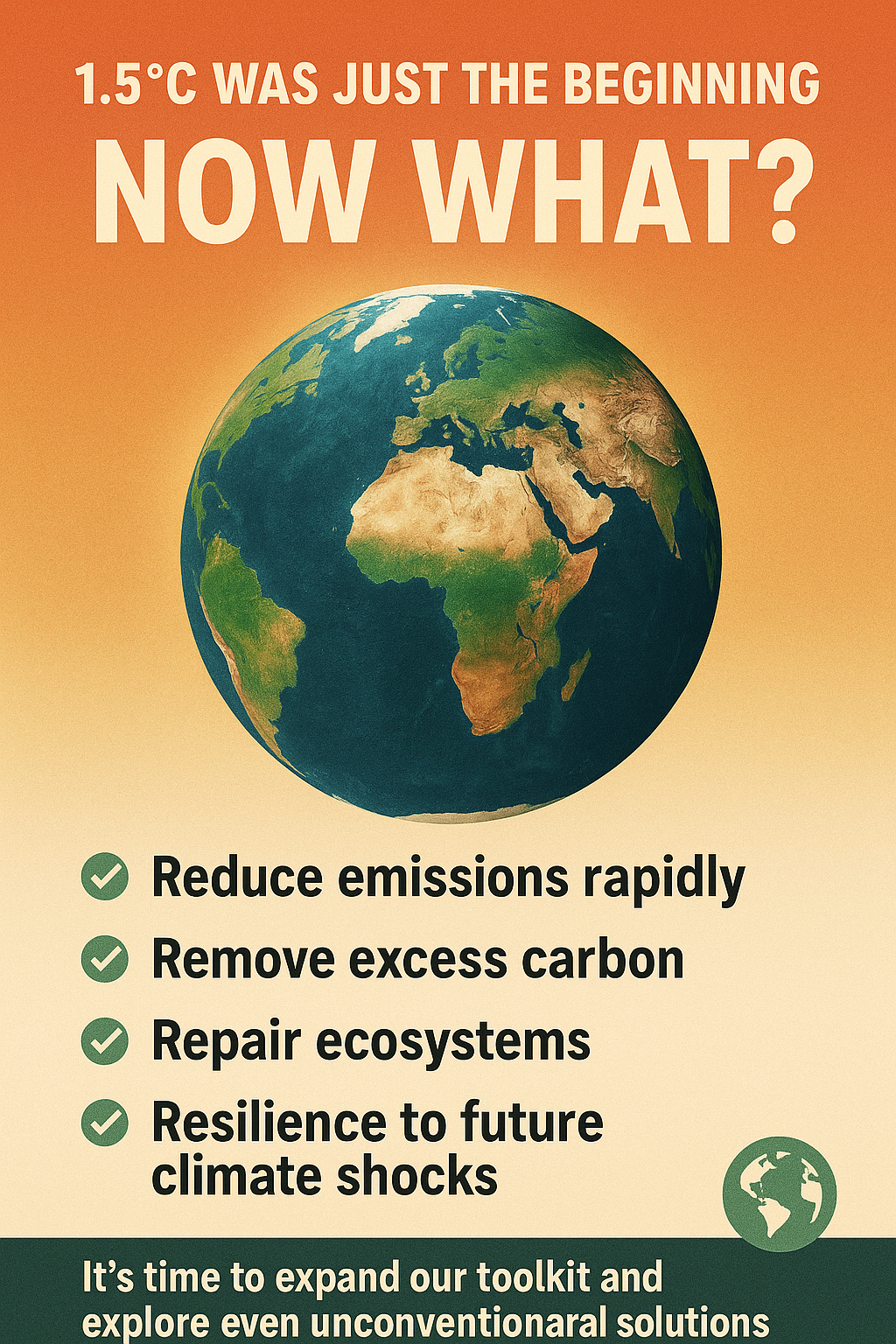
The world has crossed a critical climate threshold — global temperatures have risen above 1.5°C for the first time in history. This isn’t a future scenario — it’s our present. Extreme weather, rising sea levels, and biodiversity loss are no longer distant possibilities; they are real, escalating threats affecting millions across the globe.
Professor Sir David King urges us to embrace a 4R strategy:
It’s time to expand our toolkit and responsibly explore even the most unconventional climate solutions — like sea ice thickening or cloud brightening — not as replacements for emissions cuts, but as necessary complements. Scientific exploration must be transparent, ethical, and include Indigenous and local voices.
At PROSDOMA, we are dedicated to climate justice, empowering communities both in Alberta and Africa. Whether it’s through supporting sustainable farming or raising climate awareness, we stand with those advocating for bold, informed, and inclusive climate action.
The climate crisis demands courage, collaboration, and open dialogue — and the time is now. Join us at PROSDOMA as we push for a just and sustainable future for all. Let’s act before the choices are no longer ours to make.
Starting a new life in a new country is already tough—imagine doing it as a teenager in a brand-new school system
A recent review highlights that newcomer youth often face barriers when trying to access school-based psychosocial support services (S-BPSS), which are crucial for their mental health, integration, and academic success.
What’s standing in their way? Underutilization and discrimination in accessing services Culture shock and adjusting to a new environment Lack of transition planning for school integration Absence of policies based on the real lived experiences of these youth
Despite their growing numbers, newcomer students remain marginalized within many school systems. The review calls for culturally responsive and socially just research that places youth voices at the center of developing support services
At PROSDOMA, we recognize that youth are the future That’s why we advocate for: School integration support Access to psychosocial services for newcomers Training that respects cultural identity and lived experience Programs that empower young newcomers to succeed
Schools should be a place of growth and inclusion, not confusion and isolation. Let’s make sure every newcomer youth in Alberta has the support they need to thrive.
Reach out to PROSDOMA if you or someone you know is struggling with integration in their new country Canada. We’re here to help Source: https://pmc.ncbi.nlm.nih.gov/articles/PMC9597144/#section15-08295735221130442 #YouthSupport #NewcomerVoices #SchoolIntegration #MentalHealthMatters #InclusiveEducation #SupportForNewcomers #PROSDOMA #CultureAndCare #CanadaNewcomers #SocialJusticeInSchools
Every day, refugees arrive in Alberta carrying hope, resilience, and the desire to build a new life in safety. But starting over isn’t easy, and integration is key to success.
Integration isn’t just about finding a job or learning English. It’s about: Feeling safe and accepted Accessing education and healthcare Being part of the community Having a voice in local life
At PROSDOMA, we work hand-in-hand with newcomers to support their journey, while also working with communities to create spaces of understanding, opportunity, and inclusion.
Together, we can build stronger, more vibrant communities where everyone feels at home.
Want to help? Volunteer or simply share this message to spread awareness.
#RefugeesWelcome #Alberta #integrationmatters #StrongerTogether #SupportNewcomers NN
Starting a life in a new country isn’t just about finding a job or a home—it’s also about understanding how to access support in your new environment. But here’s the challenge: many newcomers struggle with what researchers now call Immigrant Settlement Services Literacy (ISSL)
What is ISSL? It’s the ability to know, understand, access, and navigate settlement services effectively—everything from healthcare to housing, education, and employment support.
A recent international review found that language barriers are the biggest obstacle for newcomers trying to access services. This affects their wellbeing and slows their integration.
The research grouped services into: Health services Settlement & legal support Language and information access Social support services
Only 32% of studies identified ways to enable access—meaning we still have a long way to go in making services more inclusive and easier to understand.
At PROSDOMA, we believe that increasing ISSL is essential to building a successful future in Canada. That’s why we: Provide basic computer training Connect newcomers to housing, food banks, and job support Help with legal aid and immigration paperwork Offer information in accessible, friendly ways
We’re committed to reducing structural barriers and empowering newcomers with the knowledge and tools they need to thrive.
If you’re new to Alberta or supporting someone who is, let PROSDOMA be your guide to navigating life in Canada with confidence. Source: https://www.sciencedirect.com/science/article/pii/S2666558121000300#sec0028 #NewToCanada #SettlementSupport #ImmigrantServices #LanguageAccess #CommunitySupport #CanadaNewcomers #PROSDOMA #IntegrationMatters #EqualAccess #SocialInclusion
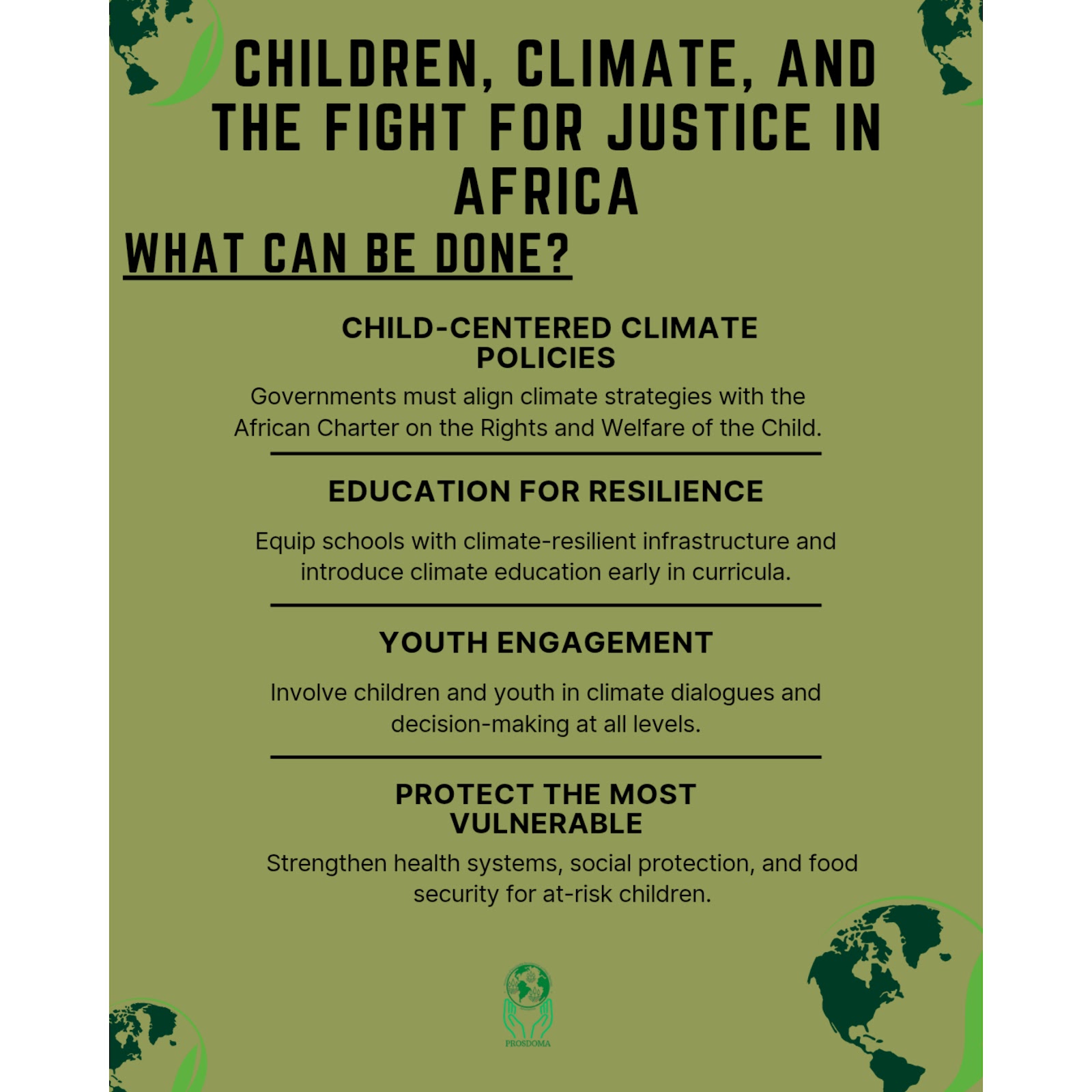
Africa contributes the least to global emissions yet its children bear the heaviest burden of the climate crisis.
According to the African Committee of Experts on the Rights and Welfare of the Child, millions of children across the continent face hunger, displacement, disease, and loss of education due to floods, droughts, and extreme heat.
Climate change is not gender- or age-neutral. It affects the youngest and most vulnerable most severely especially girls, children with disabilities, and those in rural or conflict-prone regions.
At PROSDOMA, we believe climate justice must include child justice. The voices of Africa’s children are too often unheard. It’s time to center their rights in every climate policy, plan, and budget.
✅ What Can Be Done?
1️⃣ Child-Centered Climate Policies
Governments must align climate strategies with the African Charter on the Rights and Welfare of the Child.
2️⃣ Education for Resilience
Equip schools with climate-resilient infrastructure and introduce climate education early in curricula.
3️⃣ Youth Engagement
Involve children and youth in climate dialogues and decision-making at all levels.
4️⃣ Protect the Most Vulnerable
Strengthen health systems, social protection, and food security for at-risk children.
Climate justice begins with child justice. Let’s fight for a future they can survive and thrive in.
African Committee of Experts on the Rights and Welfare of the Child (2022). Continental Study on Climate Change and Children’s Rights in Africa.
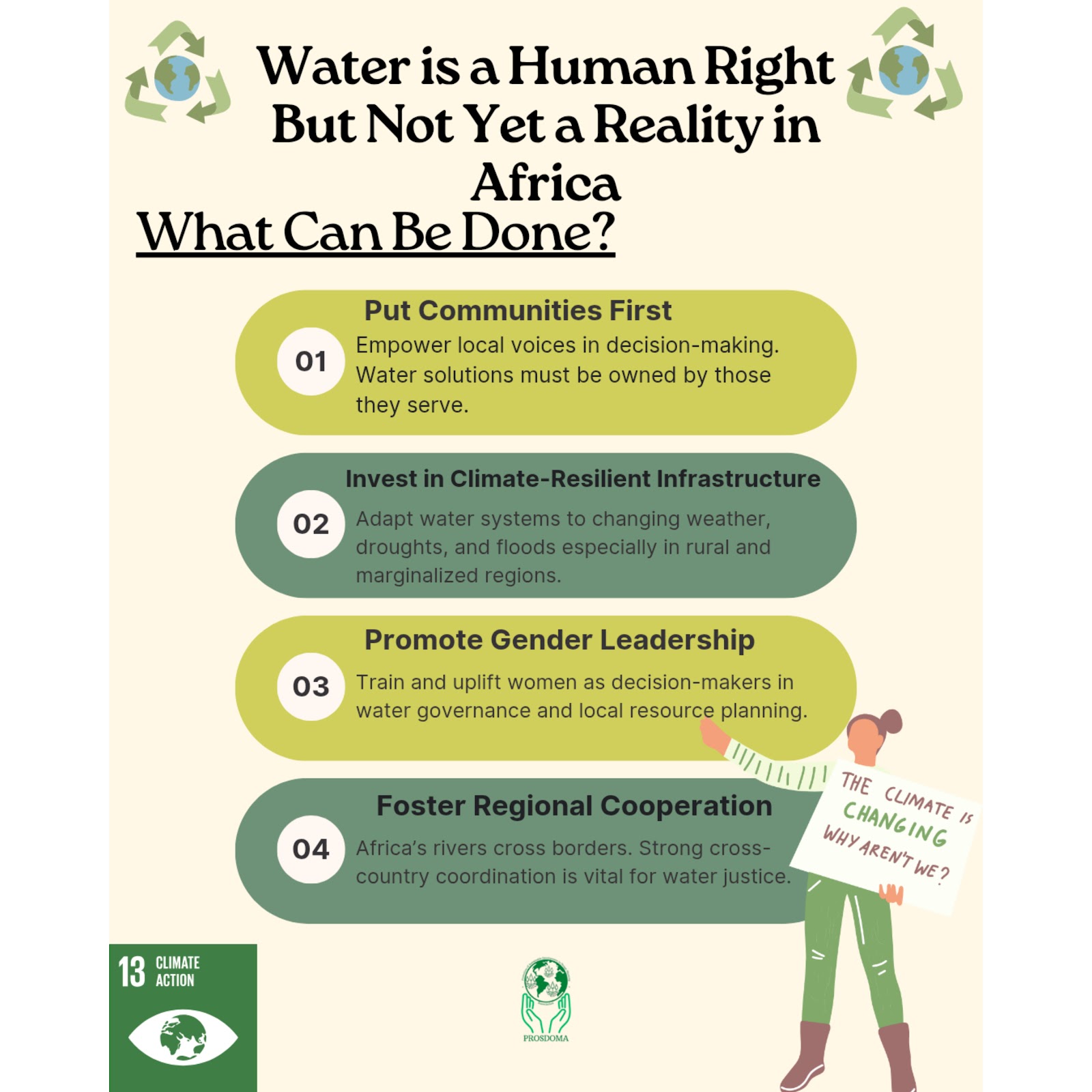
Water is a Human Right But Not Yet a Reality in Africa
Over 300 million people in Africa still lack access to clean drinking water. As we approach 2025, the continent’s “African Water Vision” is more urgent than ever: equitable and sustainable water for all.
1 in 3 Africans lives without reliable access to safe water.
Poor governance and underinvestment deepen inequality.
Women and children walk for hours every day to fetch water.
Water is not just a need, it’s a right. Yet millions are left behind. This is a gendered issue, a climate challenge, and a development emergency.
At PROSDOMA, we echo the African Water Vision’s call to action.
✅ What Can Be Done?
1️⃣ Put Communities First
Empower local voices in decision-making. Water solutions must be owned by those they serve.
2️⃣ Invest in Climate-Resilient Infrastructure
Adapt water systems to changing weather, droughts, and floods especially in rural and marginalized regions.
3️⃣ Promote Gender Leadership
Train and uplift women as decision-makers in water governance and local resource planning.
4️⃣ Foster Regional Cooperation
Africa’s rivers cross borders. Strong cross-country coordination is vital for water justice.
Let’s turn the Vision into Action. The time is now.
African Development Bank & UN-Water Africa (2003). African Water Vision 2025: Equitable and Sustainable Use of Water for Socioeconomic Development.
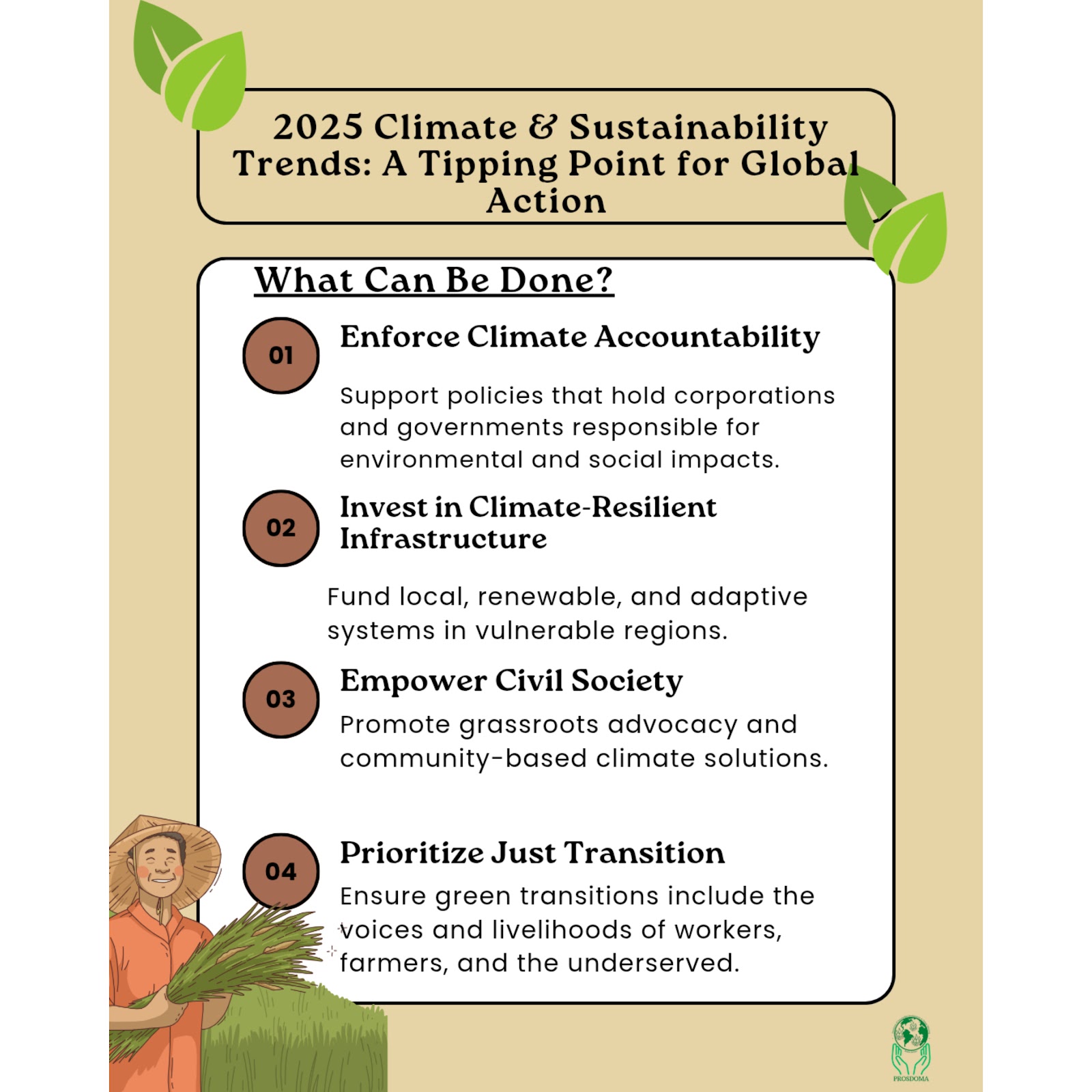
2025 Climate & Sustainability Trends: A Tipping Point for Global Action
The year 2025 is shaping up to be a turning point in sustainability. According to the 2025 Sustainability and Climate Trends report, we are witnessing a simultaneous rise in climate awareness, regulatory pressure, and market demand for sustainable practices but also increasing climate risks and social inequality.
From climate-induced migration to food system disruption, the Global South faces intensified vulnerabilities. Meanwhile, businesses and governments are under mounting pressure to transition toward green economies, ethical supply chains, and inclusive innovation.
The report emphasizes that climate resilience is no longer optional. It’s a necessity — and must include marginalized communities in the solutions.
At PROSDOMA, we believe 2025 must be the year when climate ambition meets social justice. Sustainability isn’t only about emissions, it’s about equity, access, and survival.
✅ What Can Be Done?
1️⃣ Enforce Climate Accountability
Support policies that hold corporations and governments responsible for environmental and social impacts.
2️⃣ Invest in Climate-Resilient Infrastructure
Fund local, renewable, and adaptive systems in vulnerable regions.
3️⃣ Empower Civil Society
Promote grassroots advocacy and community-based climate solutions.
4️⃣ Prioritize Just Transition
Ensure green transitions include the voices and livelihoods of workers, farmers, and the underserved.
Join us in shaping a future that’s not only sustainable — but just.
United Nations Global Compact Network (2025). Sustainability and Climate Trends Paper.
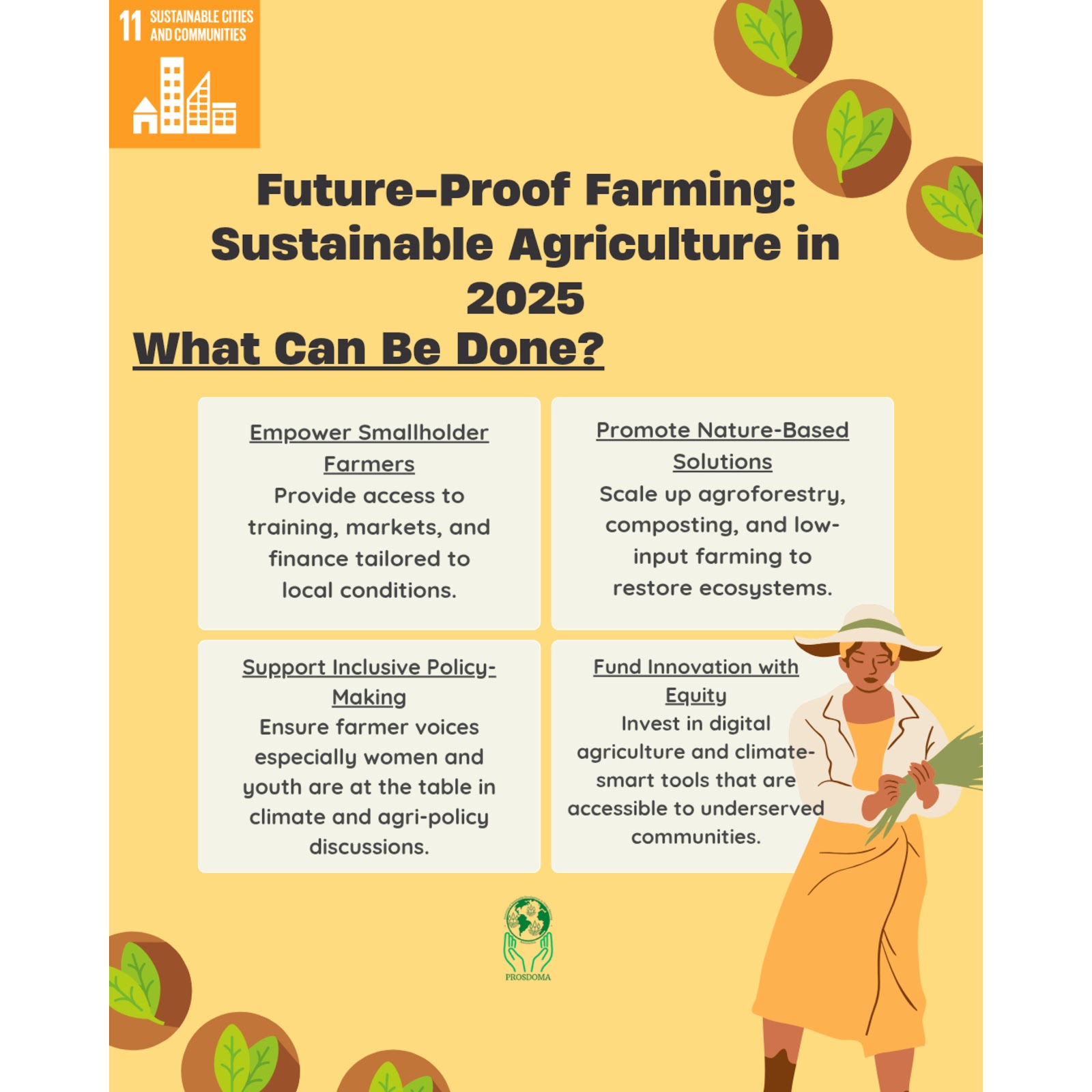
Future-Proof Farming: Sustainable Agriculture in 2025
As the climate crisis deepens and global populations rise, 2025 marks a critical moment for transforming agriculture. The latest Sustainable Agriculture 2025 report emphasizes that conventional farming is no longer viable in the face of land degradation, water scarcity, and rising emissions.
But there is hope. The report showcases how sustainable practices such as regenerative farming, agroecology, and circular nutrient use are gaining ground globally, especially in regions vulnerable to climate stress.
Key to this transformation is local adaptation, technology transfer, and inclusive governance. Yet millions of smallholder farmers remain excluded from the shift, lacking access to finance, tools, and training.
At PROSDOMA, we believe food justice and climate justice go hand-in-hand. A sustainable future starts in the soil — but it grows with equity and inclusion.
✅ What Can Be Done?
1️⃣ Empower Smallholder Farmers
Provide access to training, markets, and finance tailored to local conditions.
2️⃣ Promote Nature-Based Solutions
Scale up agroforestry, composting, and low-input farming to restore ecosystems.
3️⃣ Support Inclusive Policy-Making
Ensure farmer voices especially women and youth — are at the table in climate and agri-policy discussions.
4️⃣ Fund Innovation with Equity
Invest in digital agriculture and climate-smart tools that are accessible to underserved communities.
Join us in growing a resilient, just, and sustainable future.
MIR (2025). Sustainable Agriculture in 2025: Opportunities for Climate Resilience and Equity.
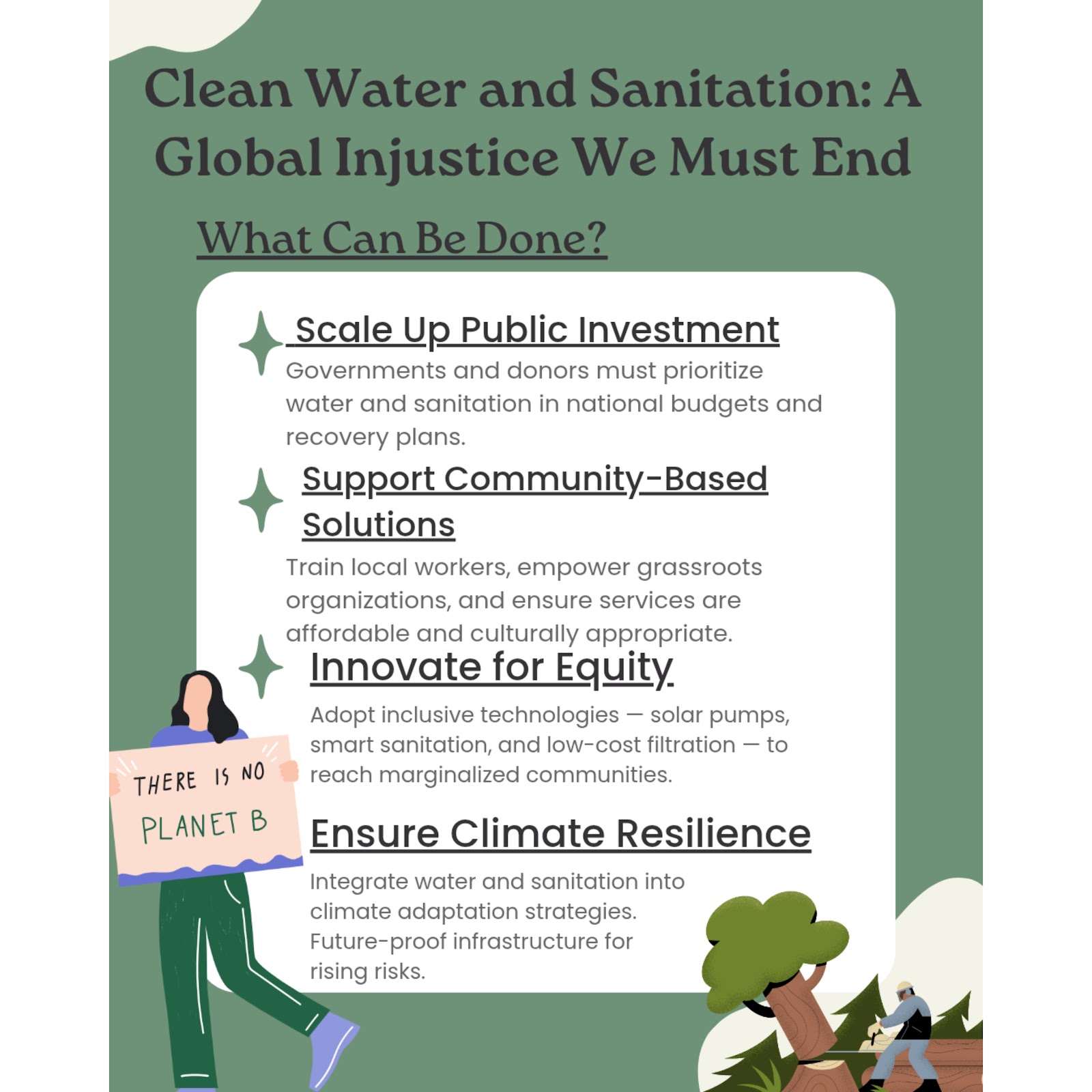
Clean Water and Sanitation: A Global Injustice We Must End
2.2 billion people worldwide lack access to safely managed drinking water, and 4.2 billion are without safe sanitation. This isn’t just a development issue, it’s a human rights crisis.
The UN’s “Still One Earth” report highlights that despite global progress, water and sanitation inequalities persist, especially in low-income regions and conflict-affected areas.
Lack of clean water and sanitation increases disease, threatens education (especially for girls), and perpetuates poverty. Climate change only worsens this reality, leading to more floods, droughts, and displaced communities.
At PROSDOMA, we believe water is a right not a privilege. It’s time for action.
✅ What Can Be Done?
1️⃣ Scale Up Public Investment
Governments and donors must prioritize water and sanitation in national budgets and recovery plans.
2️⃣ Support Community-Based Solutions
Train local workers, empower grassroots organizations, and ensure services are affordable and culturally appropriate.
3️⃣ Innovate for Equity
Adopt inclusive technologies; solar pumps, smart sanitation, and low-cost filtration to reach marginalized communities.
4️⃣ Ensure Climate Resilience
Integrate water and sanitation into climate adaptation strategies. Future-proof infrastructure for rising risks.
Every drop counts but only if it’s safe and accessible to all.

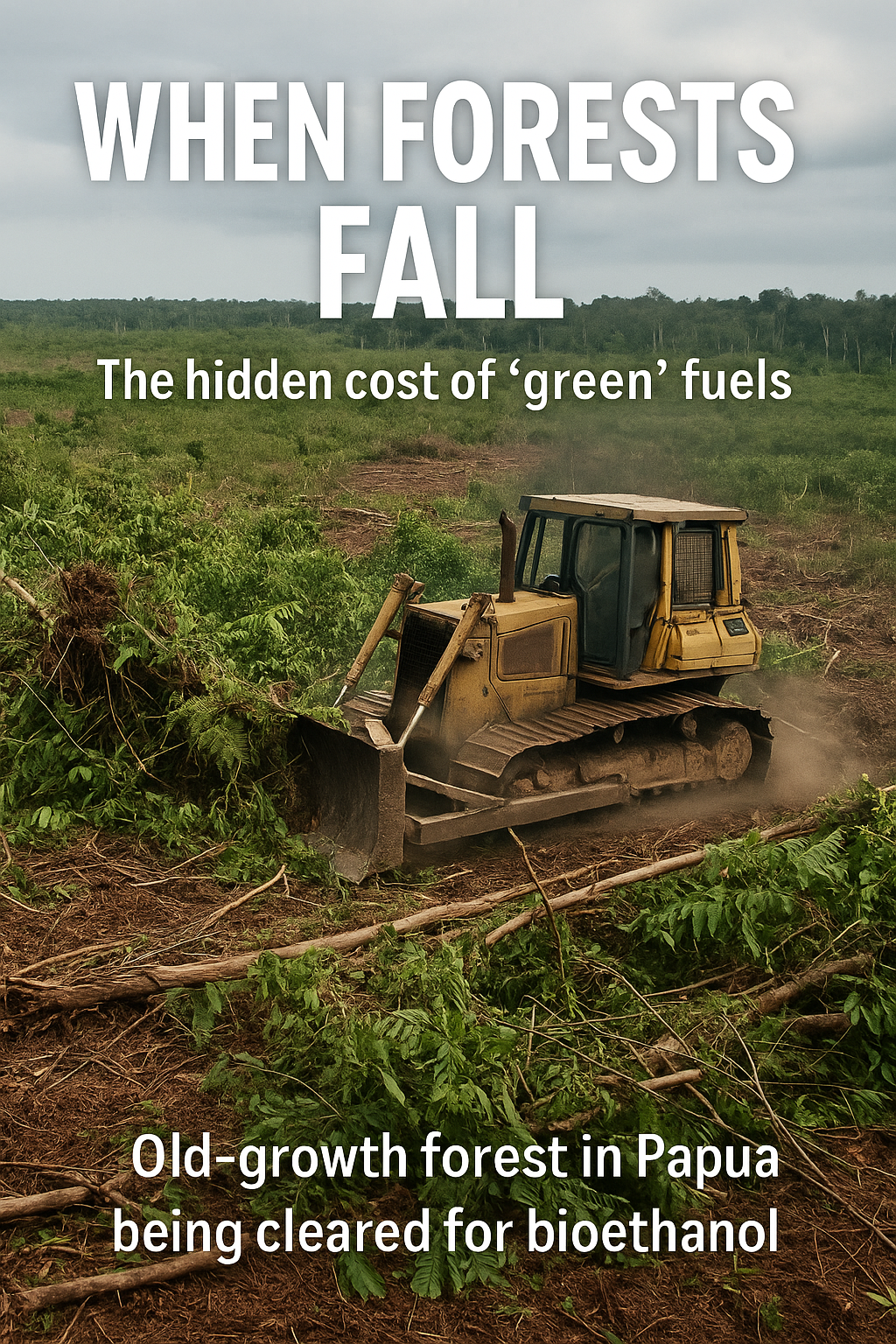

 Centuries-old tribal forests are being bulldozed. Indigenous Papuan families like the Kwipalos are losing access to ancestral land where they hunt, fish, and gather food. Their culture and survival are at risk.
 These forests are also home to endangered species found nowhere else on Earth—orangutans, forest elephants, rare birds, and plants—whose habitats are being erased for monoculture plantations.
 Experts warn that this “green energy” comes with a high carbon price. Clearing these forests could release over 300 million tons of CO₂, accelerating the very climate crisis biofuels aim to fix.
 Reforestation can’t fully restore what’s lost. Old-growth forests regulate water, store carbon, and support biodiversity in ways no plantation ever can.
 Let’s rethink what sustainability really means. Share this story. Speak out. Support climate justice.
 Join PROSDOMA in promoting environmental and social sustainability across continents.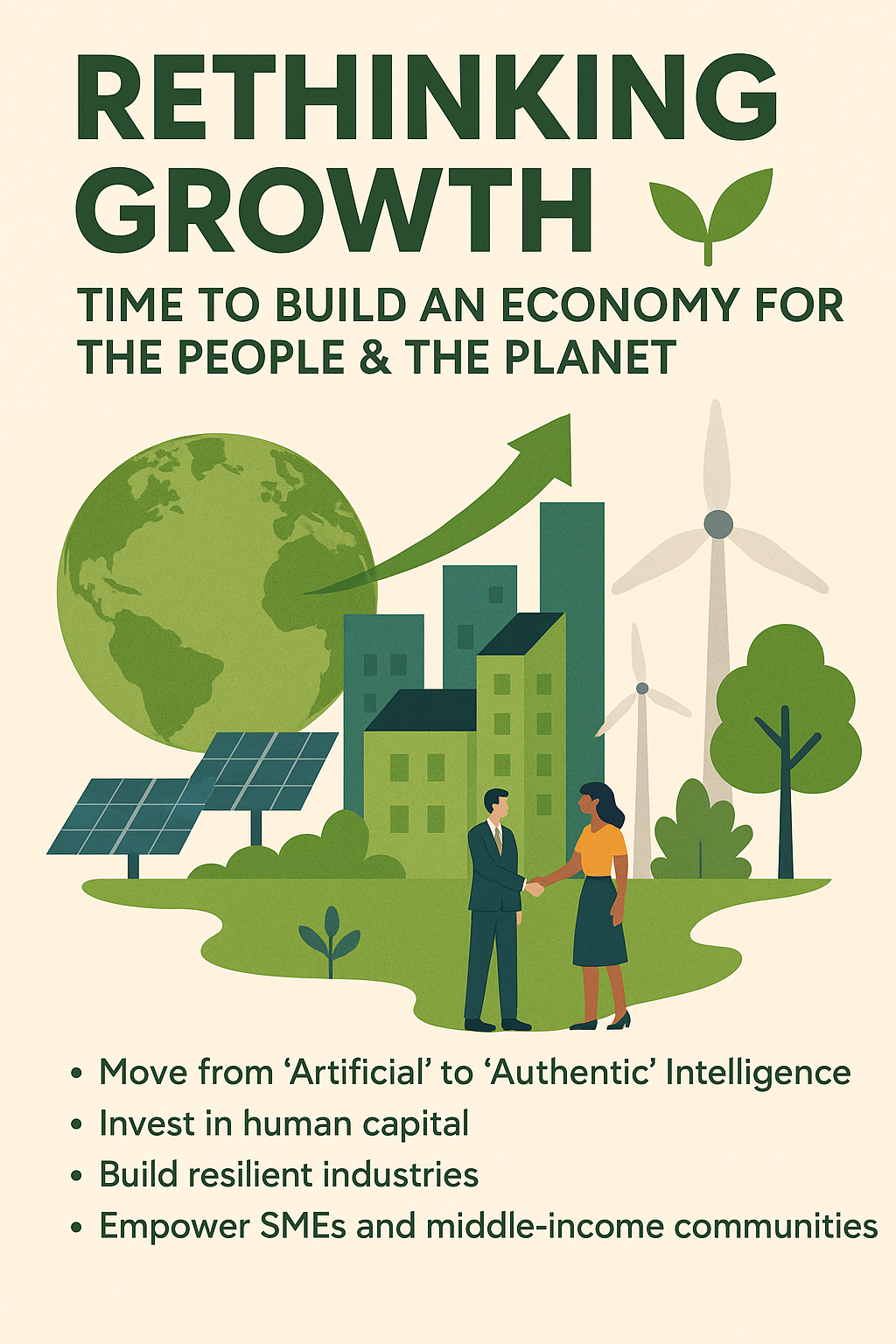
 Here’s how we can get there:
 Let’s build an economy that works for everyone—together.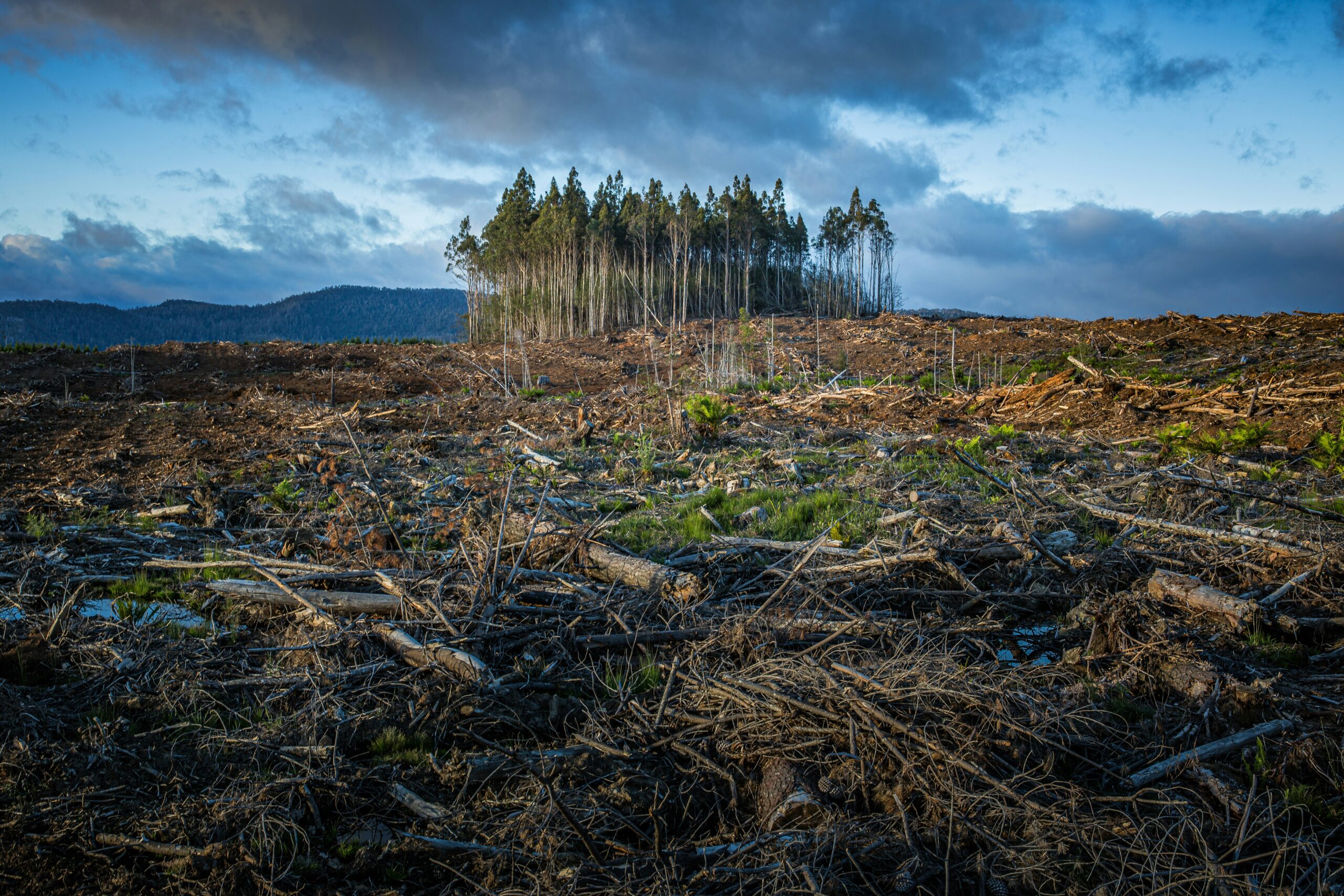
 Accept that global temperatures may rise by 3°C this century
 Prepare for the impacts: forced migration, food insecurity, extreme weather
 Invest in tech with real global potential: next-gen geothermal, advanced nuclear, solid-state batteries
 Make climate a top security priority
 Use trade to hold high-emission countries accountable
 to boosting sustainable farming in rural Africa
  , we help people adapt, thrive, and grow stronger in the face of climate and social change.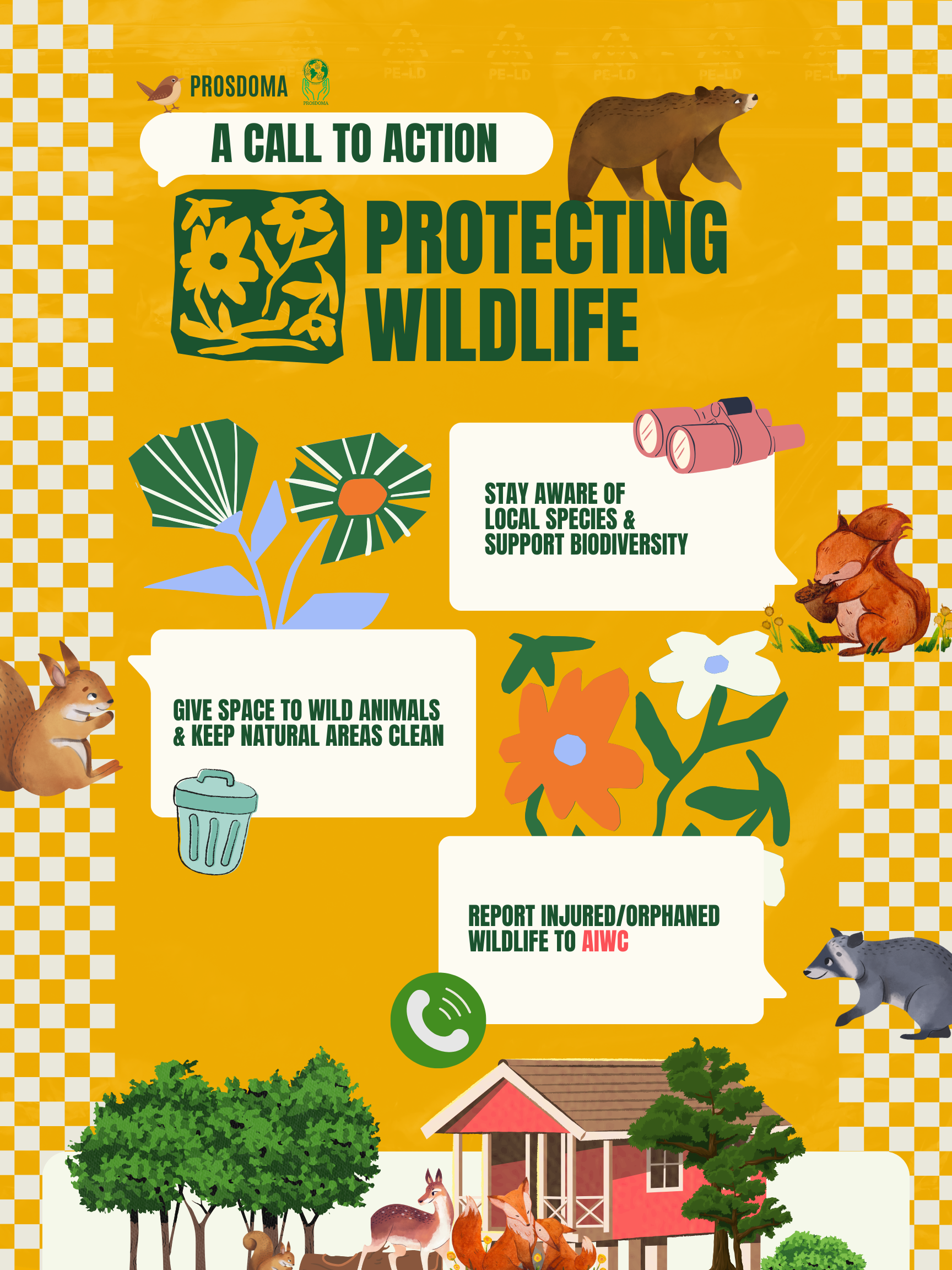
 How you can help:
 Learn more & support our mission:
  Source: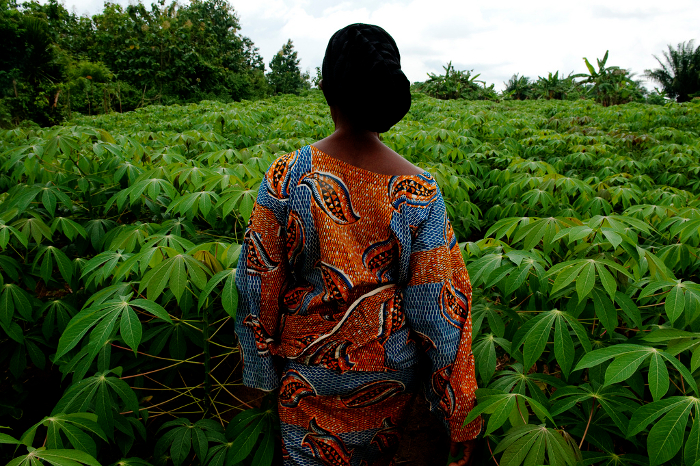


 Reduce emissions rapidly


 Source: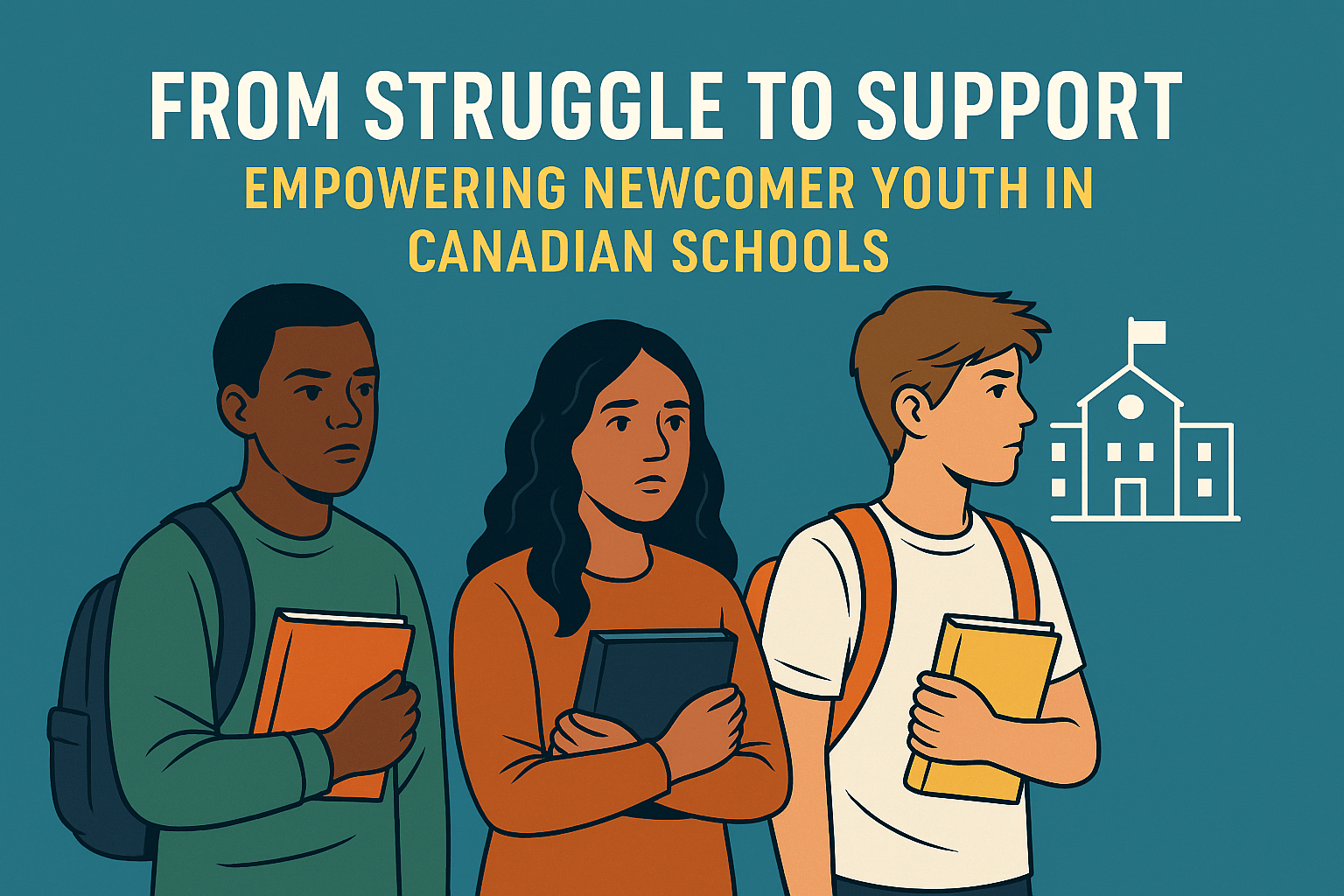


 What’s standing in their way?
 Schools should be a place of growth and inclusion, not confusion and isolation. Let’s make sure every newcomer youth in Alberta has the support they need to thrive.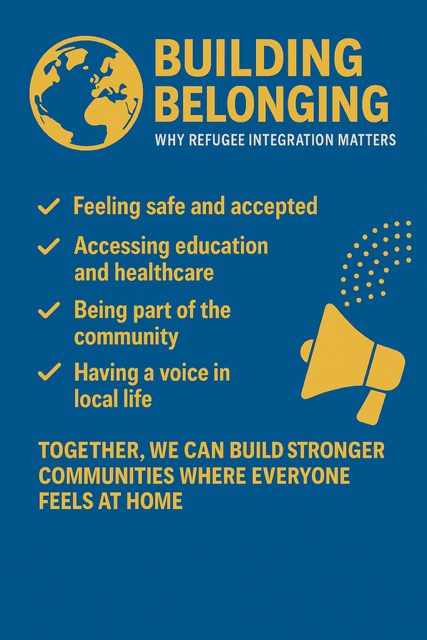
 Integration isn’t just about finding a job or learning English. It’s about:
 Want to help? Volunteer or simply share this message to spread awareness.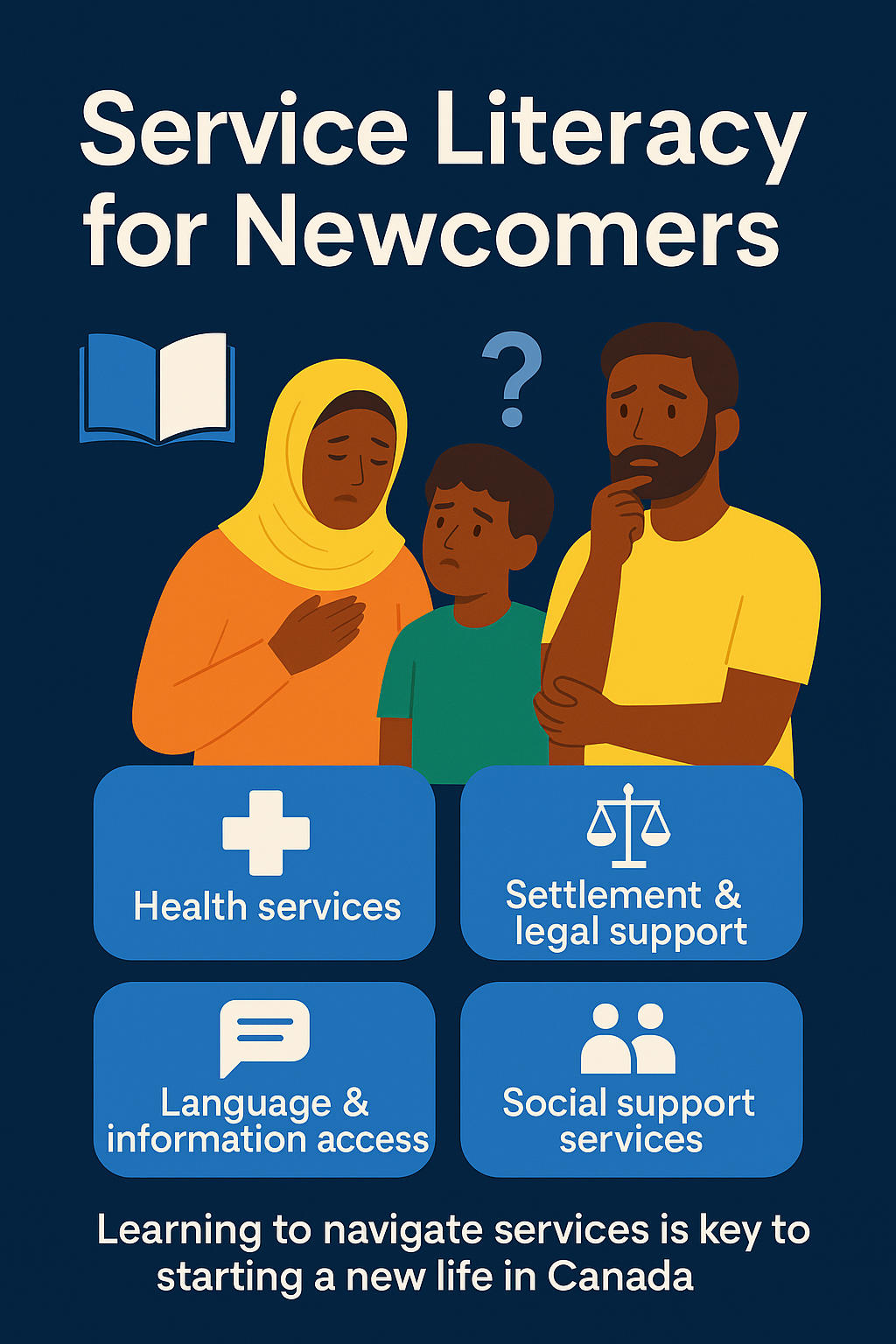

 A recent international review found that language barriers are the biggest obstacle for newcomers trying to access services. This affects their wellbeing and slows their integration.
 The research grouped services into:
 At PROSDOMA, we believe that increasing ISSL is essential to building a successful future in Canada. That’s why we:
 Provide basic computer training
 Connect newcomers to housing, food banks, and job support
 Help with legal aid and immigration paperwork
 If you’re new to Alberta or supporting someone who is, let PROSDOMA be your guide to navigating life in Canada with confidence.